What the extraction pack covers in a laser cutting cell
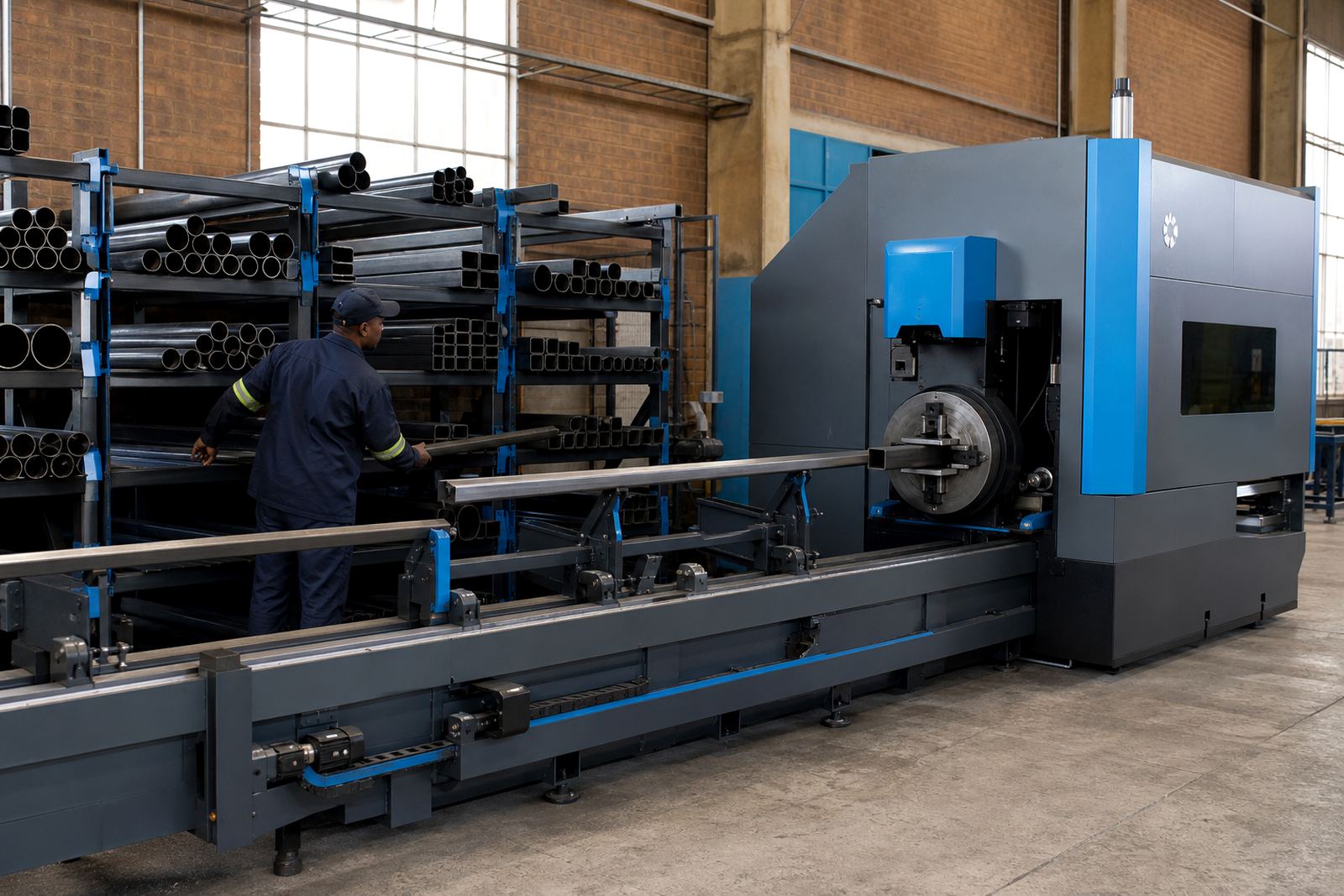
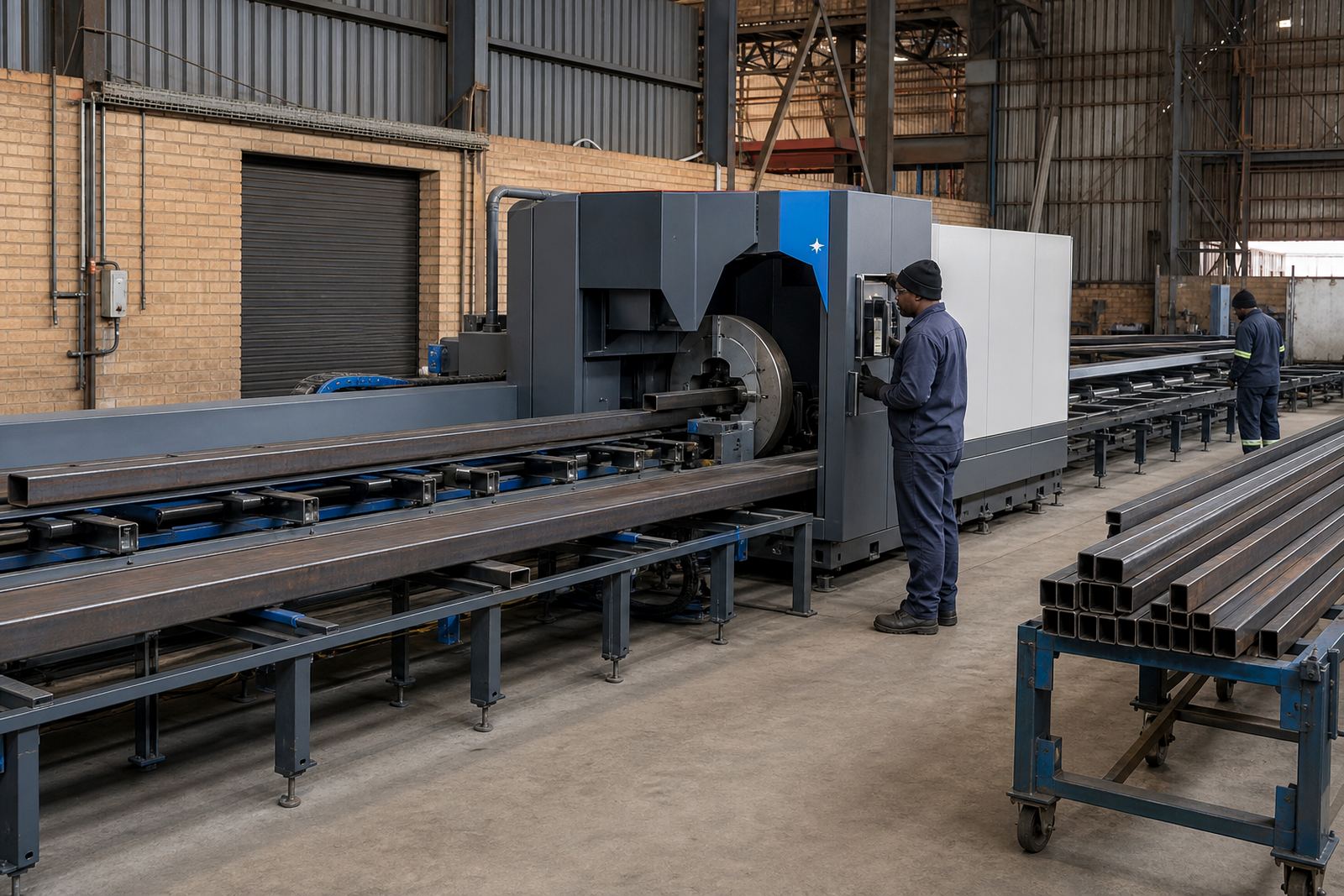
This package is put together for fibre laser tube and profile cutting work, where round, square and rectangular tube, angle and channel can throw off fine dust and smoke at the cut point. The pack is built to sit close to the machine and move airborne material away before it spreads across the loading side, the cut zone and the surrounding floor space.
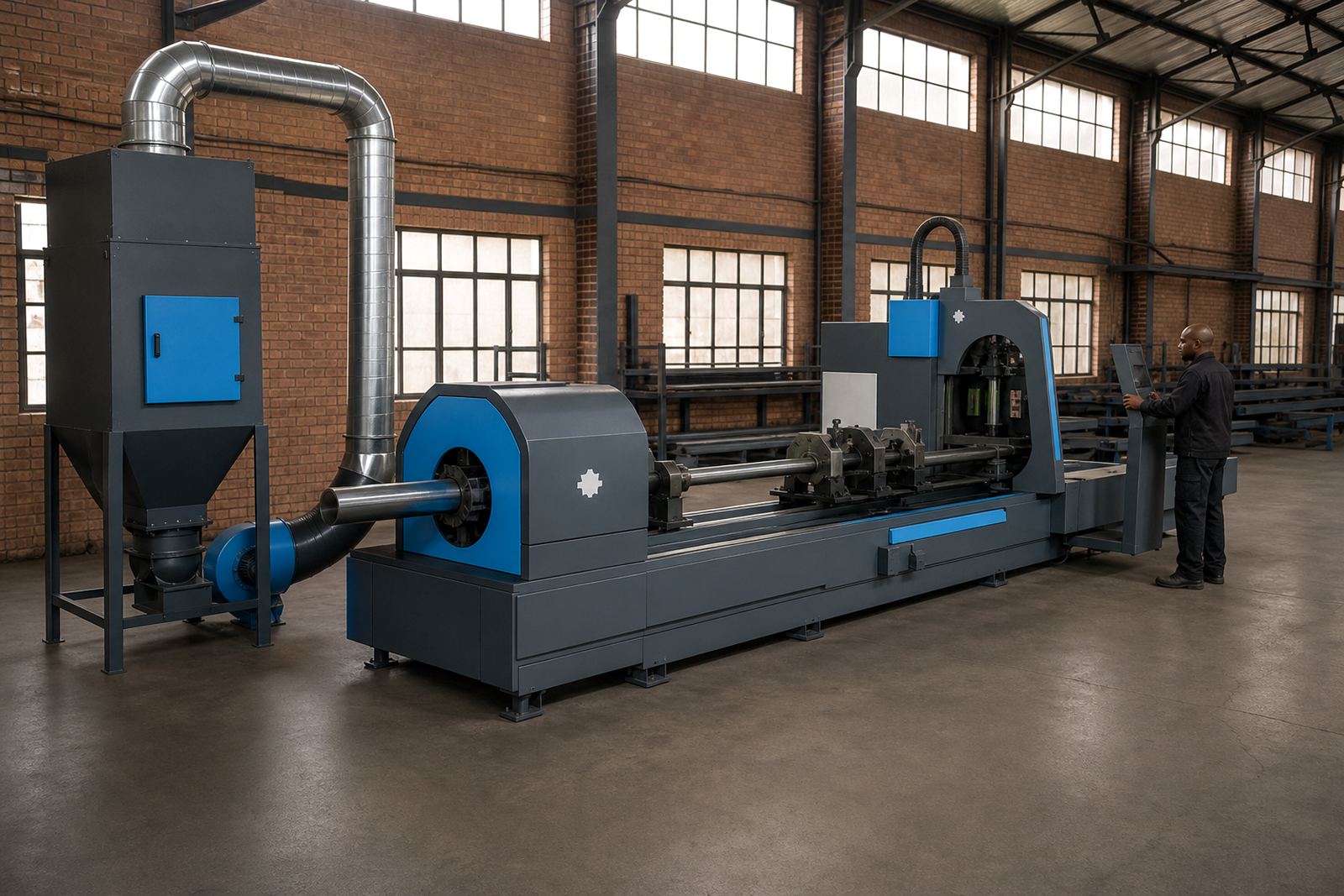
On most jobs the package includes a capture unit, ducting, filters and the fittings needed to tie into the machine area. The exact layout depends on whether the machine is handling lighter job-shop runs or longer production shifts with constant loading and unloading. On thicker material, bevel work and mixed profile batches, the airflow pattern needs more care because the plume can be heavier and carry more grit.
- Capture at the cutting point for tube and profile work
- Filter stages for fine particles and visible smoke
- Duct runs sized to suit the machine bay
- Mounting and sealing parts for a tidy fit
Common sizes and build options
Fume extraction packs are specified to match the machine envelope, the number of cutting stations and the general volume of work in the bay. A compact shop package is usually suited to a single machine cell where tube lengths are shorter and the floor area is tight. Larger extraction setups are better for plants running extended shifts, long stock handling and wider profile variation.
Options can include a standalone unit, a ducted wall or roof arrangement, or a package that ties into a plenum and filter bank sized for heavier use. Where the machine is fitted with a bevel head, extraction placement must allow for the changing plume direction at angled cuts. In coastal areas like Durban or Gqeberha, corrosion resistance and sealed connections matter more because moisture can shorten the life of exposed parts.
- Single-machine extraction packs
- Multi-point ducted layouts
- Filter cartridge or panel configurations
- Corrosion aware fittings for humid sites
Best applications for the pack in day-to-day production
This product suits metal fabricators that cut structural tube, handrailing stock, brackets, frames and profile shapes that produce smoke and fine dust during cutting. It is a practical fit for job shops in Wadeville, Johannesburg and Pretoria, as well as larger plants in Durban, Cape Town, Gqeberha, Bloemfontein and Nelspruit that run a mixed cutting schedule.
Cleaner air around the machine also helps when operators are checking cut edges, removing parts or preparing the next nesting sequence. In a busy fabrication bay, the pack works well where the laser cell sits close to sawing, grinding or fitting areas and the workshop manager wants less residue settling on rails, electronics covers and nearby stock. The system is not about making the whole factory spotless, it is about controlling what the cutting process throws into the air.
Fitting points, power and site preparation
Installation needs depend on the machine layout, the duct route and the extraction load required for the cut programme. The unit needs a suitable electrical supply, secure mounting and clear access for filter changes and internal checks. Where the workshop has a machine pit, overhead crane access or tight rack spacing, the fit-up needs to be planned before delivery so the pipe run, fan position and service access all work together.
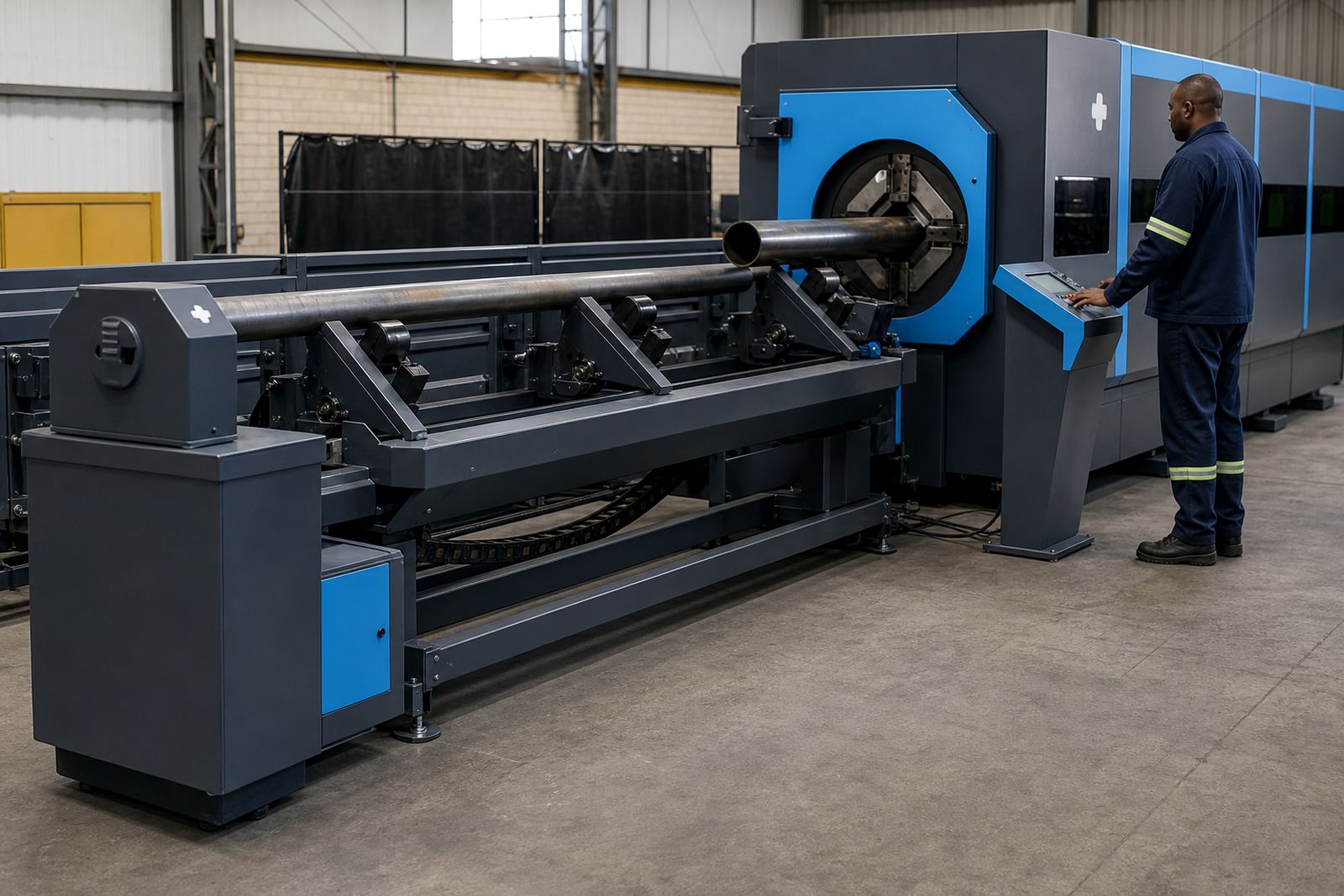
For tube cutting machines, the extraction intake needs to sit close enough to catch the plume without getting in the way of loading lengths or chuck movement. If the cell includes assist gas lines for oxygen, nitrogen or compressed air, those lines must be kept separate from the extraction route so service work stays orderly. Our installation team handles rigging, placement, sealing and commissioning where the pack forms part of a wider machine cell.
- Electrical supply matched to the extraction unit
- Clear service access for filters and fan sections
- Positioned away from loading paths and moving parts
- Separate routing from assist gas and machine cabling
Care that keeps the air handling steady
A fume extraction pack needs regular attention if it is going to keep pulling evenly through the work week. Filters load up with fine metal dust, especially on high-volume production or when cutting galvanised, mild steel or mixed wall thicknesses. The housings, seals and duct joints should be checked for leaks, because even small gaps reduce capture at the cutting point.
Preventive maintenance normally includes filter inspection, fan checks, duct cleaning, seal review and confirmation that the airflow pattern still matches the machine setup. If the operator notices more haze around the chuck side or the cut bed, the cause may be a blocked filter, a loose duct clamp or a change in cutting height. Remote diagnostics can help with control-side faults, while hands-on servicing is used for mechanical wear, damaged filters or alignment issues.
Information we need before selecting the pack
When ordering, we need the machine model, the working envelope and the type of tube or profile being cut. Round tube, square tube, rectangular tube, angle and channel all affect how smoke moves and where the intake should sit. Bevel work, nesting density and batch length also change the extraction requirement.
It helps to confirm the bay dimensions, ceiling height, machine position, filter access space and whether the site sits in a dry inland area or a more humid coastal one. We need to know whether the installation must connect to an existing duct run or whether the package will be installed as a new setup. A proper site assessment keeps the extraction package matched to the actual work, not a guess from a drawing alone.
- Machine model and cutting envelope
- Tube and profile sizes being processed
- Bevel cutting, nesting density and shift pattern
- Available space for fan, ducting and service access
Key facts
| Pack type | Matched fume extraction package for fibre laser tube and profile cutting machines |
|---|---|
| Main use | Captures smoke and fine metal particles during cutting |
| Typical machine fit | Single-cell or multi-machine laser cutting bays |
| Installation needs | Electrical supply, duct routing, secure mounting and service access |
| Options | Standalone unit, ducted layout, filter bank, corrosion aware fittings |
| Service support | Site assessment, installation, commissioning and preventive maintenance |