Long stock, fewer lifts, cleaner flow
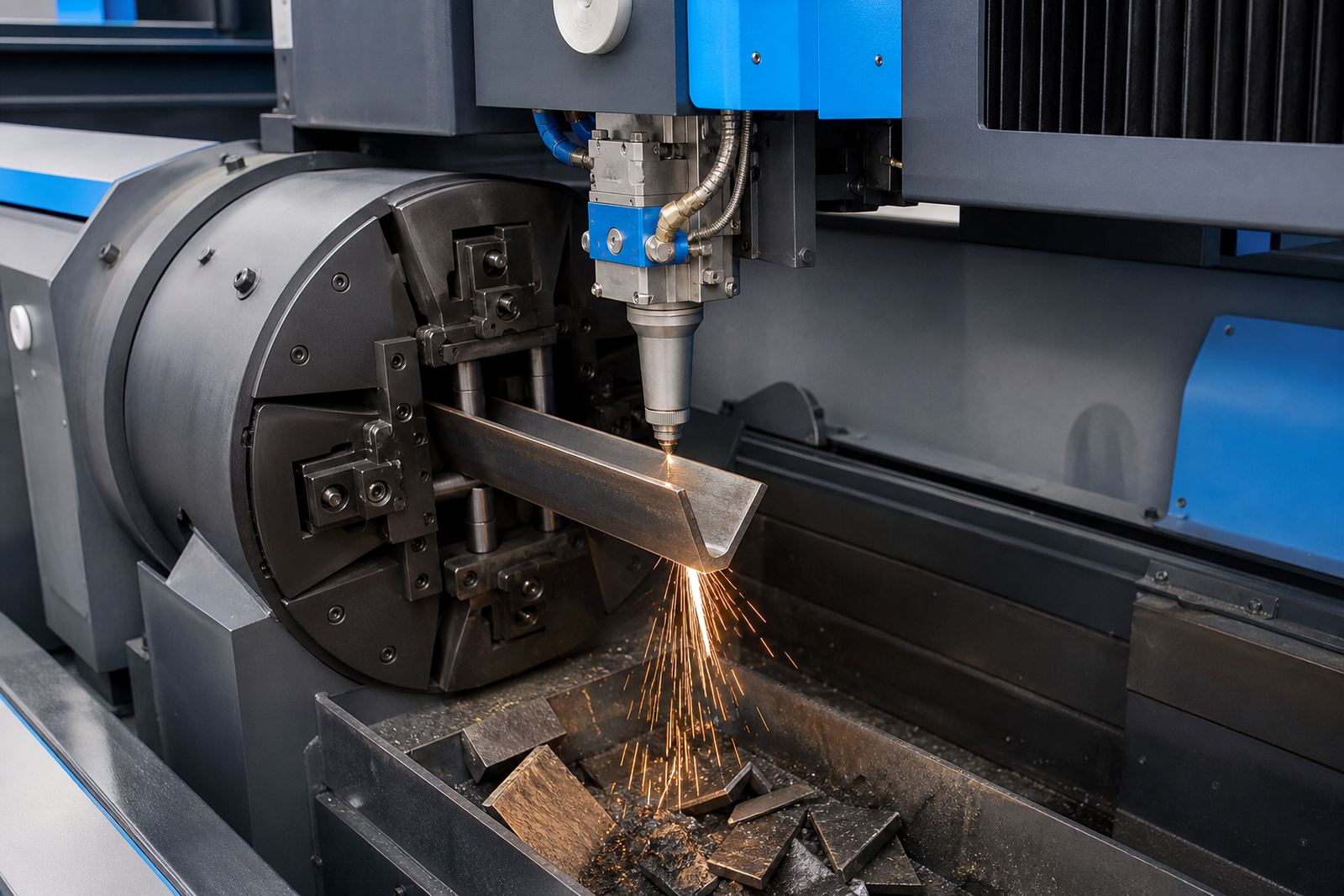
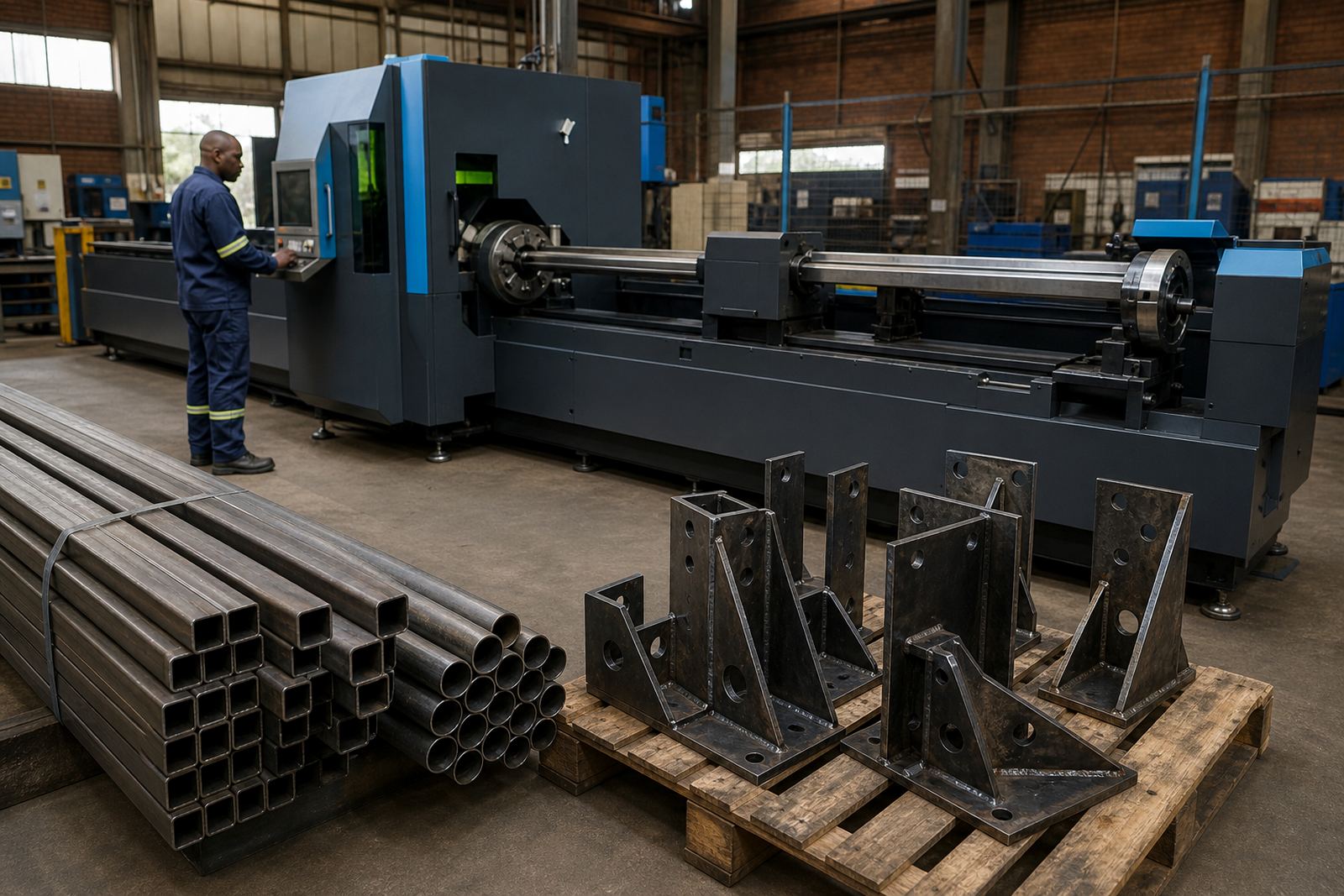
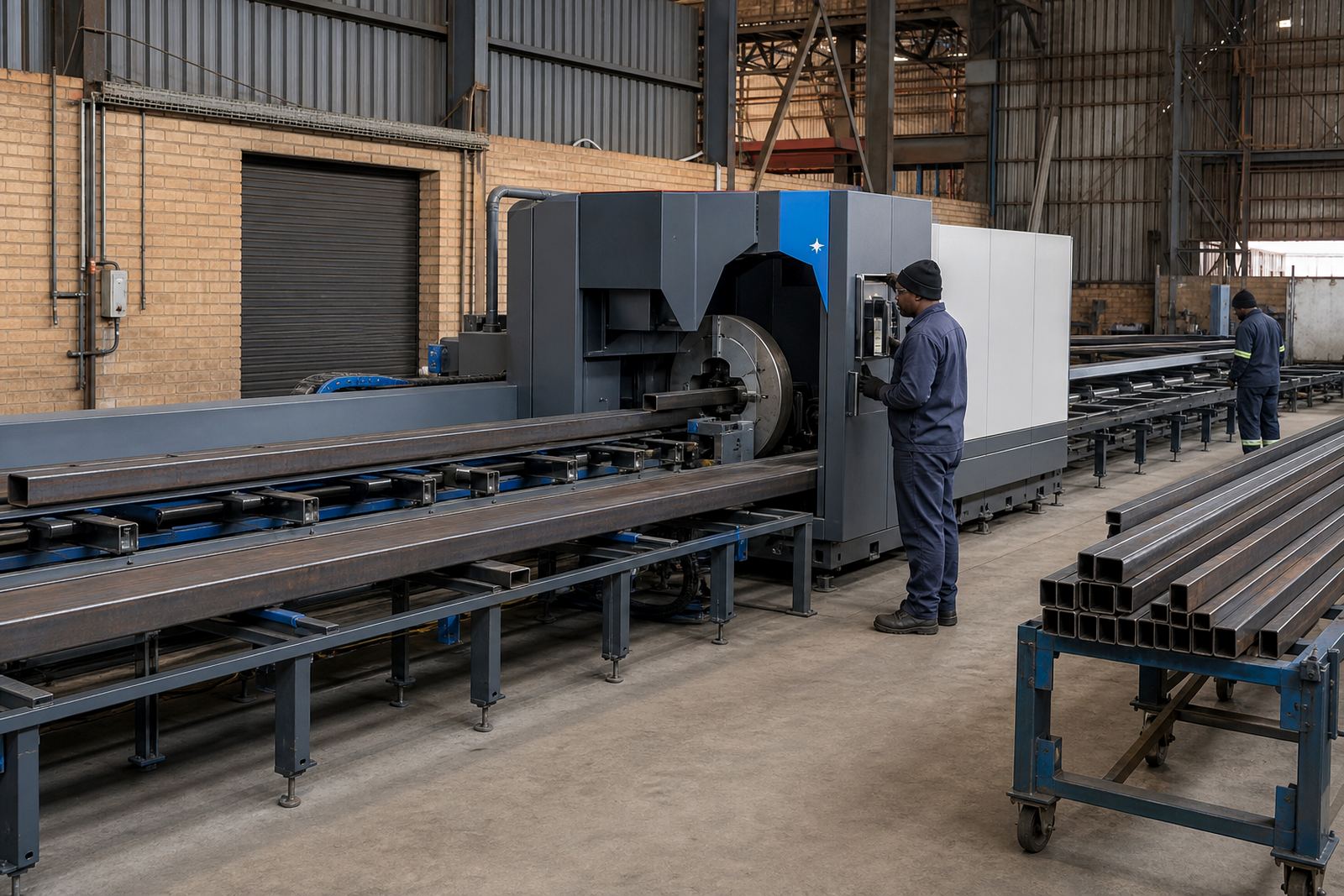
A long bed laser is built for tube, pipe and profile work that arrives in extended lengths and needs stable support from the infeed through to the finished cut. The longer bed lets a fabricator load full bars or long sections with less cutting back and forth, which helps when parts are being prepared for frames, handrails, structural assemblies or repetitive production runs.
On a practical shop floor, the value is in handling. Long lengths of round tube, square tube, rectangular tube, angle and channel stay aligned for longer, so there is less manual repositioning and fewer marks from repeated lifting. That matters on longer parts with holes, slots, mitres and fish-mouth cuts where alignment has to hold over the full length.
- Supports long input lengths for tube and profile cutting
- Reduces manual handling on oversized parts
- Helps keep long runs straight during cutting
- Suitable for repeat work and mixed batch jobs
Cutting envelope and machine options
Long bed laser systems are normally specified by the longest stock length, the tube diameter range and the weight the chuck system must carry. Many fabricators look at 6 m, 9 m or 12 m handling lengths, then match the machine to the workshop flow, crane access and the type of work coming through the gate. The right machine also depends on whether the job mix is mainly tube, structural profile or a combination of both.
Options commonly include automatic bundle loading, servo-driven chucks, support rollers, bevel cutting heads, and software that nests jobs for best use of material. A bevel head is useful where joint prep or angled edges are part of the drawing, while a strong chuck system matters when cutting heavier sections or longer runs with tighter tolerances.
- Common handling lengths: 6 m, 9 m and 12 m
- Tube range can cover small diameter sections through to large structural profiles
- Chuck styles vary for round, square and rectangular tube
- Bevel heads suit angle cuts and weld preparation work
Where this machine earns its keep
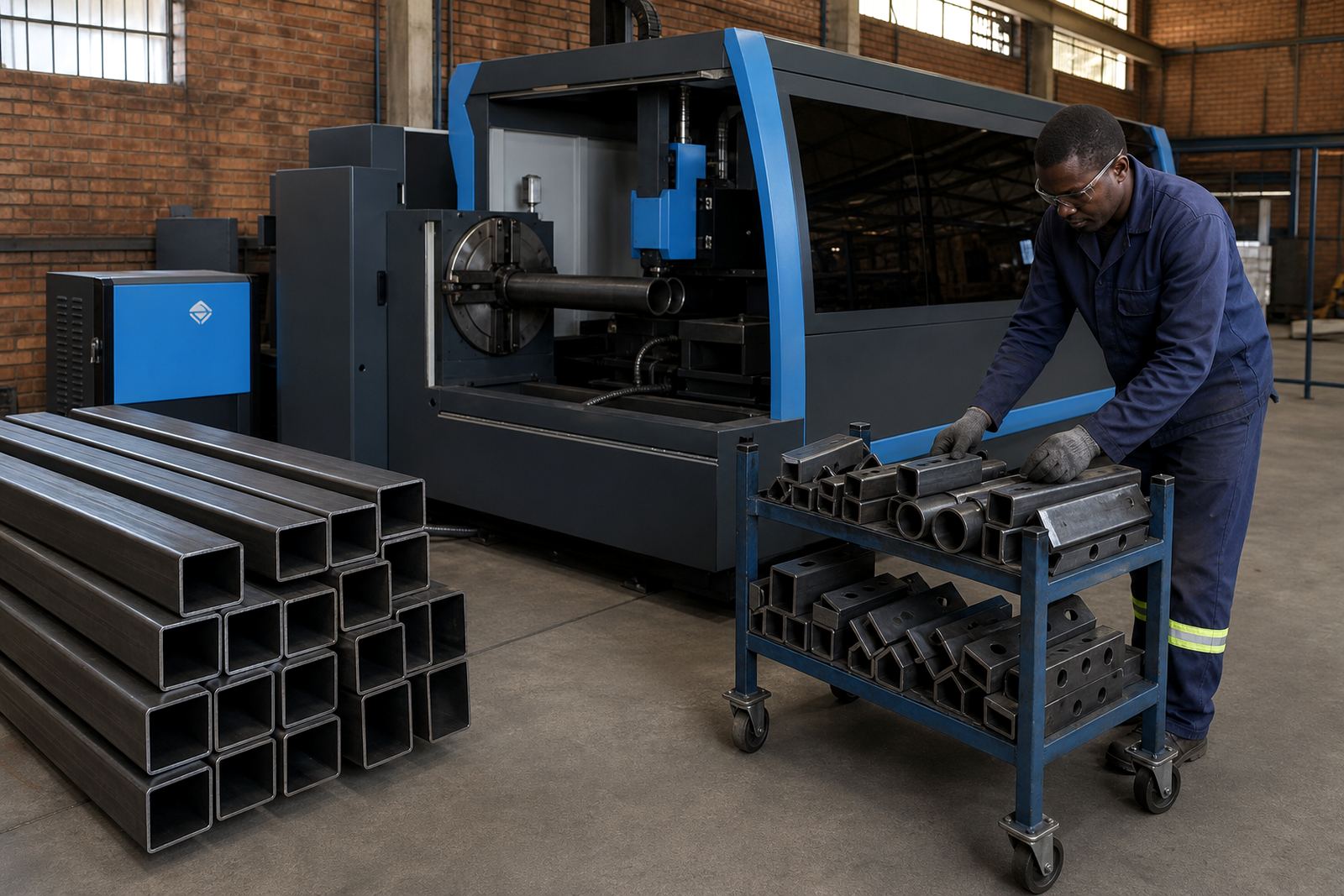
Long bed machines suit metal fabricators who cut railings, balustrades, truck bodies, agricultural equipment, shop fittings, structural frames and process plant parts. They also suit production plants that need repeatable tube components with slots, holes, cope cuts and end prep on the same machine rather than moving stock between different stations.
In Gauteng, a long bed setup often helps when stock is delivered in full commercial lengths and space is tight around the cutting line. In coastal operations around Durban, Cape Town and Gqeberha, the machine layout and storage plan should allow for corrosion control, dry handling and sensible staging of material so longer sections do not sit exposed for too long.
- Metal fabrication shops with mixed tube and profile work
- Production lines needing repeat cuts on long stock
- Frame, railing and structural component makers
- Plants that want less moving of long material between stations
Installation, foundation and utility needs
A long bed laser needs proper floor space, straight access for loading and a clear path for finished parts to move out without congestion. Because the machine handles longer stock, the installation team checks floor loading, overhead clearance, door widths, crane or forklift access and the position of material staging areas before the machine is set down. A stable base helps keep the bed aligned and protects cut quality over long runs.
The machine also needs the right electrical supply, clean compressed air, assist gas arrangements and a safe working area around the cutting zone. Assist gas choice depends on the material and finish requirement, with oxygen, nitrogen or air used for different cutting tasks. Safety fencing, interlocks and extraction planning should fit the layout and the way operators feed and unload longer parts.
- Check lifting points, floor area and access ways.
- Needs suitable electrical, air and gas connections
- Safety guarding and extraction must fit the layout
- Long stock handling should be planned before delivery
Keeping the bed aligned and the cuts steady
Long bed systems work best when the chuck alignment, support rollers and cutting head calibration are checked on a routine basis. For tube and profile work, even a small shift in clamping or head position can show up as an uneven cut, a poor fit at the joint or extra dressing at assembly. Regular maintenance helps hold tolerance on longer jobs where errors can build over the full length of the part.
Operators should keep the bed clear of offcuts, dust and slag, and watch for wear on clamping parts, guide surfaces and drive components. Nesting software settings also need attention, especially when the workshop changes from light-gauge work to thicker sections or when a new batch has different tube sizes. A good care routine keeps the machine set for repeat work and lowers the risk of stoppages that interrupt production.
- Check chuck alignment and support rollers regularly
- Clean the bed, guides and cutting area after shifts
- Review nesting settings when tube sizes change
- Schedule preventive maintenance before wear builds up
Details to confirm before the machine is specified
The right long bed laser starts with the work it must carry. Confirm the longest stock length, the heaviest section weight, the outer dimensions of the tube or profile, the wall thickness range and the cut features needed on the finished part. Round tube behaves differently from square or rectangular tube, and angle or channel often needs a different support and clamping setup.
It also helps to confirm the material mix, the target finish, the available workshop space and whether bevel cutting is part of the normal job list. If the machine is going into an existing line, the team should look at delivery path, unloading method, operator access and storage for raw stock and finished parts. That information shapes the layout, the chuck choice and the level of automation needed for the shop to run cleanly.
- Longest stock length and typical batch size
- Tube, angle or channel sizes and wall thicknesses
- Need for bevel cuts, holes, slots or mitres
- Workshop access, lifting method and floor space
LaserTube support from Wadeville to your floor
LaserTube supplies fibre laser tube and profile cutting machines from Wadeville, Germiston to fabricators across South Africa, with installation, training and support for shops in Johannesburg, Pretoria, Durban, Cape Town, Gqeberha, Bloemfontein and Nelspruit. The team handles site assessment, delivery rigging, commissioning, operator training, nesting training, preventive maintenance, chuck alignment, bevel calibration, assist gas setup, remote diagnostics and breakdown response.
Michael Dlamini leads the business with Anika Kajee on sales, Sibusiso Bhengu on installation, Leanne Mabuza on training, Pieter Visser on service and Ayanda Mashaba on applications. With a long bed machine, that mix counts because the machine, the job drawings and the shop layout must match before the first cut is run.
- Based in Wadeville, Germiston
- Serves South African metal fabricators nationwide
- Supports setup, training and machine care
- Asking about a long-bed machine
Key facts
| Typical stock lengths | 6 m, 9 m or 12 m handling configurations |
|---|---|
| Workpiece types | Round tube, square tube, rectangular tube, angle and channel |
| Cutting functions | Straight cuts, mitres, holes, slots, cope cuts and bevel work |
| Clamping system | Servo or hydraulic chuck options for long sections |
| Assist gas | Oxygen, nitrogen or air depending on material and finish |
| Support features | Rollers, loading support, nesting software and extraction planning |