Thicker tube work without the wobble
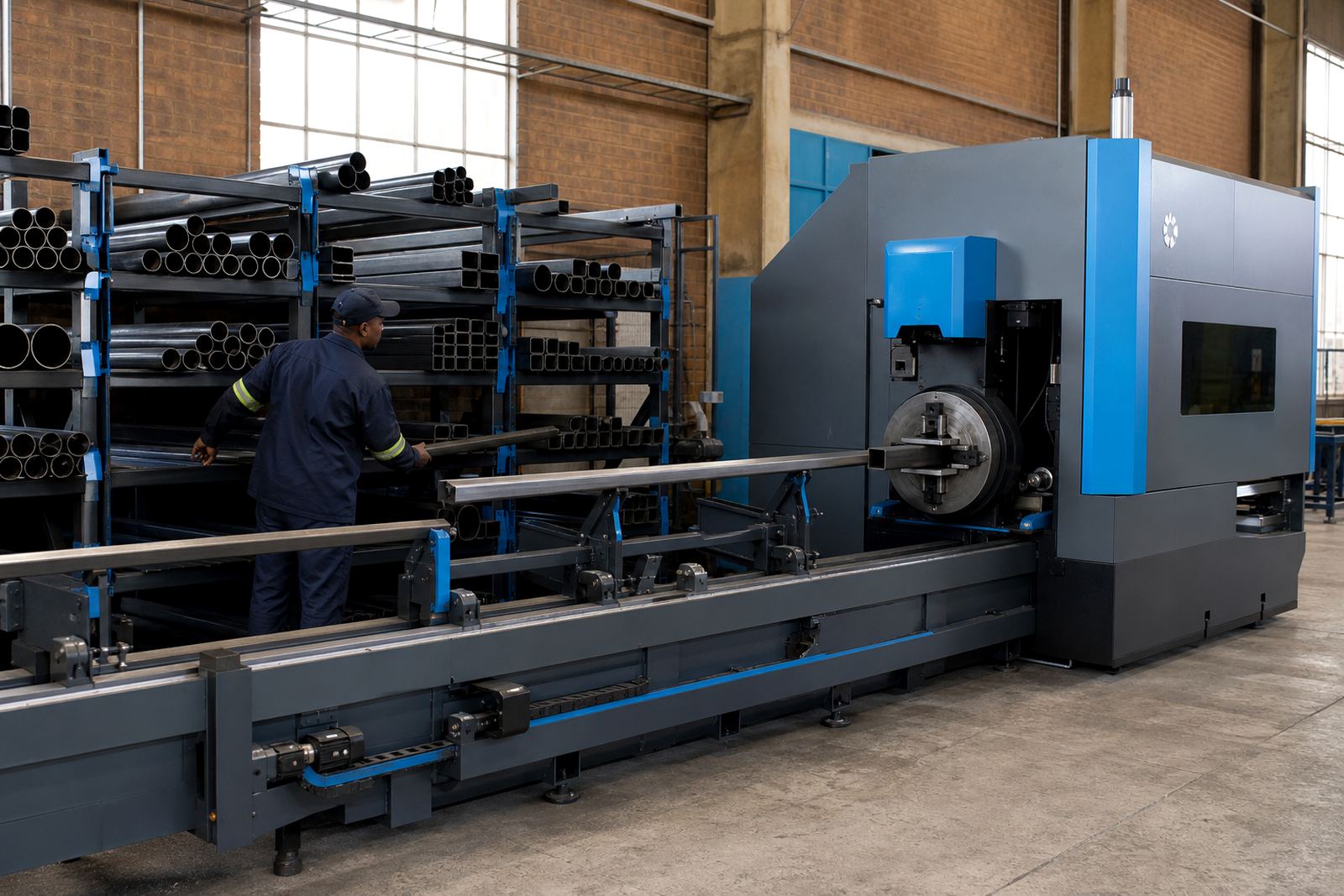
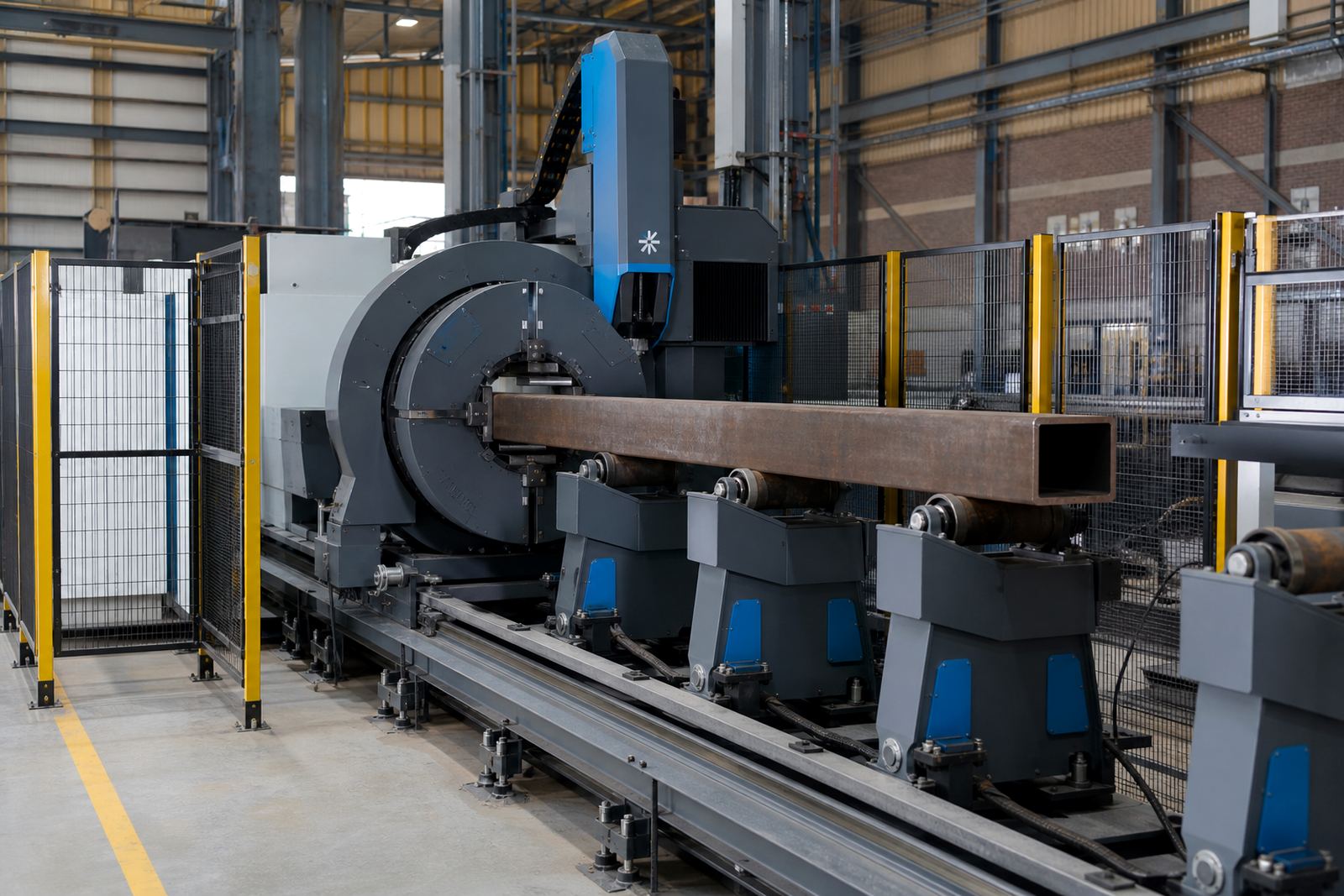
Heavy Wall Laser is built for fibre laser tube and profile cutting on material that carries more weight and resists movement during rotation. The machine package is usually specified with stronger chuck support, firmer bed layout and tube handling matched to heavier wall section, so the part stays centred while the cut path runs around the profile. That matters on structural frames, machinery parts, transport work and fabrication where finish and fit-up need to hold steady.
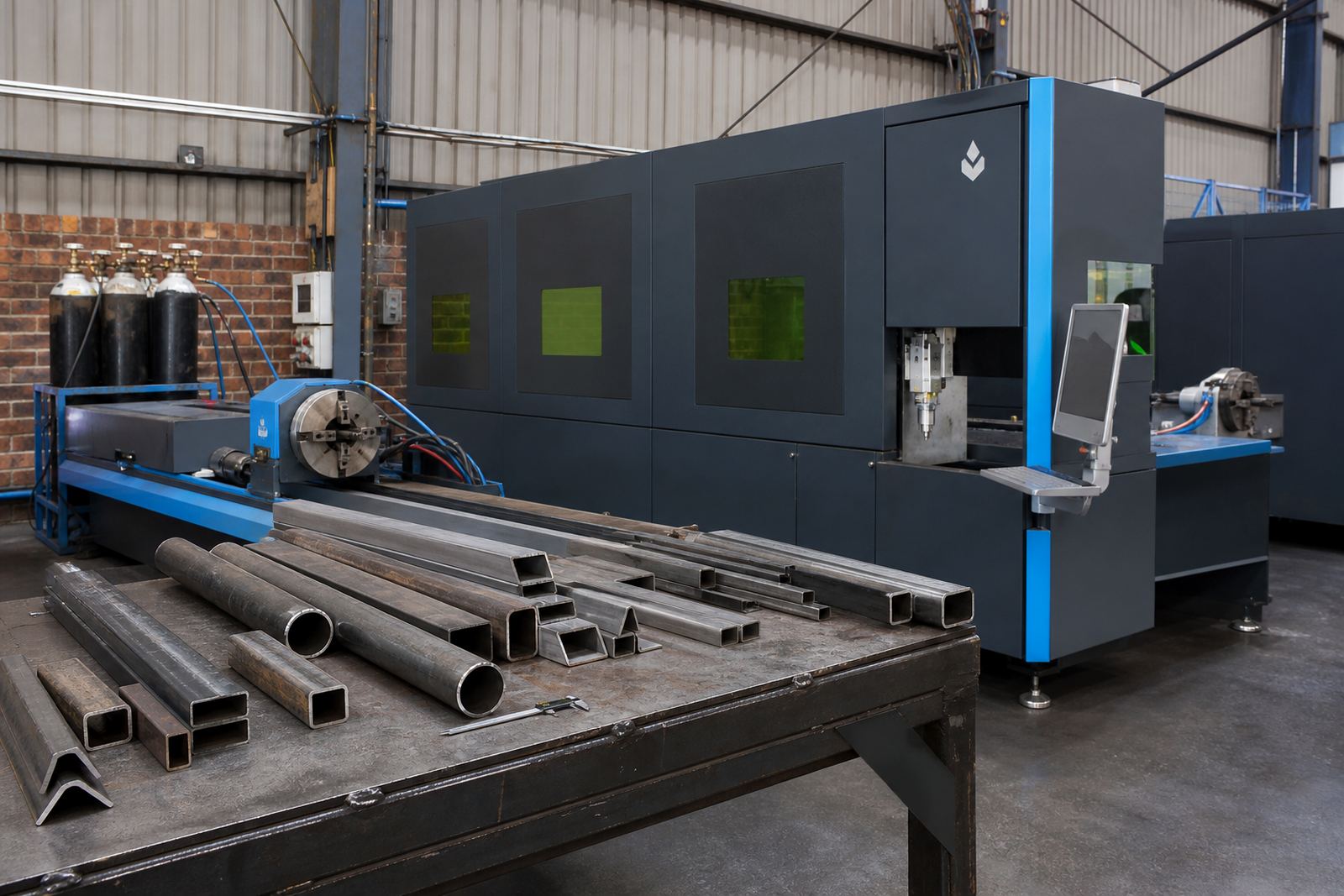
It handles round tube, square tube, rectangular tube, angle and channel, with the cut path arranged for straight sections and shaped members that need accurate edge quality. Wall thickness, overall diameter and section length all influence how the setup is specified, especially when the job calls for repeat loading through a shift. The right choice keeps the tube secure while still allowing sensible loading and unloading on the line.
- Stable clamping for heavier wall tube and section
- Suitable for round, square, rectangular and open profiles
- Set up for repeat production and fabrication batches
- Cut quality depends on tube size, wall thickness and material grade
Chuck layout, support length and cut access
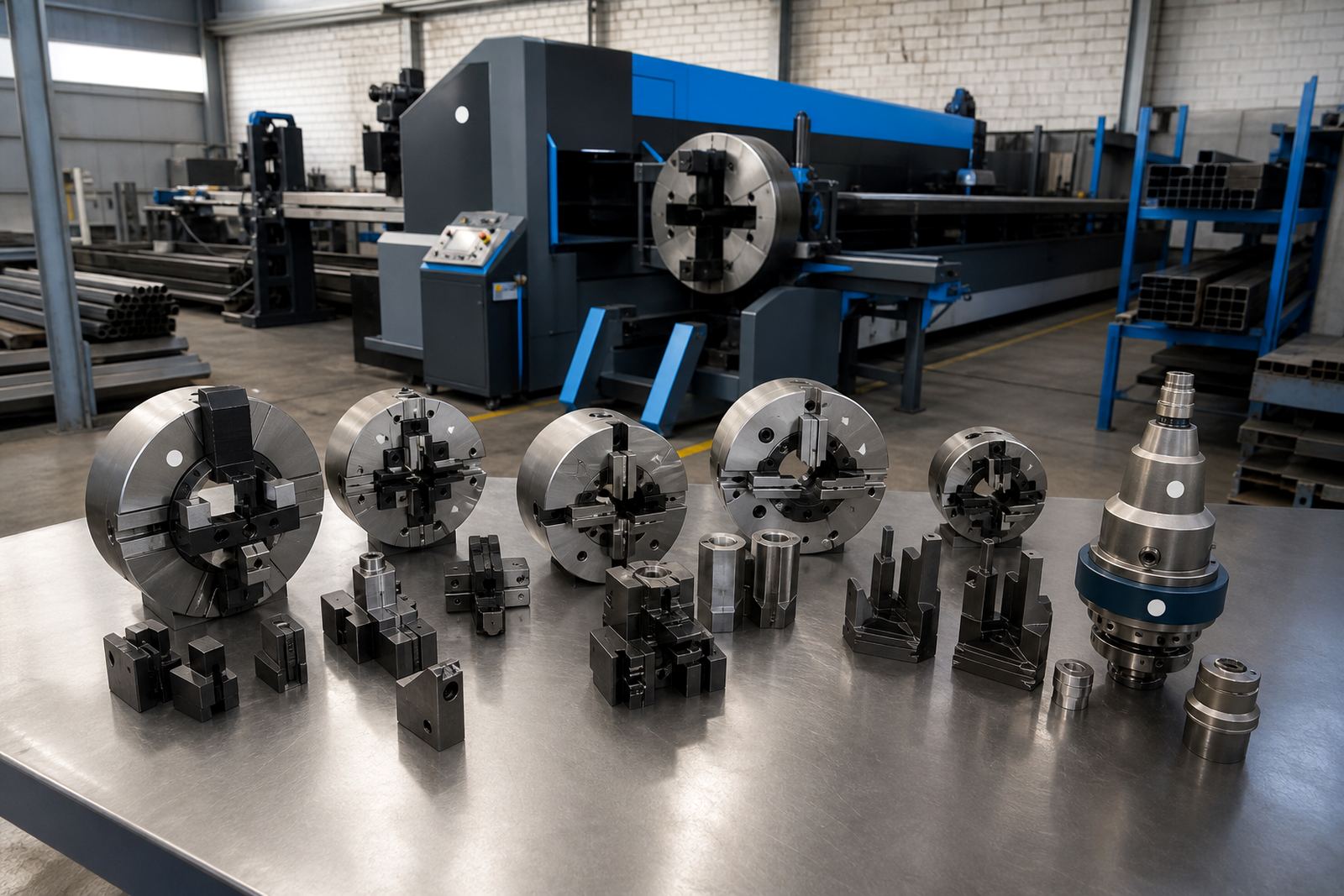
For thick section work, chuck arrangement is not a small detail. Gripping force, jaw shape and the way the tube is supported through the machine affect both accuracy and edge finish. Where the job includes long lengths or mixed section sizes, the machine may need wider clamping range, extended support and enough clearance for the cut head to move around the profile without rubbing or marking the material.
Heavy Wall Laser configurations are often matched to the workshop’s real mix of sizes, not just one type of job. If you run long lengths one day and shorter cut lists the next, the chuck and support setup needs to hold both without fighting the operator. On thicker material, a poor hold can show up as vibration, burrs or small profile shifts that cost time later in assembly.
- Chuck size matched to the section range in use
- Stable grip for heavier wall and larger diameter tube
- Support beds or loading aids for long material
- Clearance for angle, channel and shaped section cutting
Where this machine earns its place
Heavy Wall Laser suits metal fabricators that work with structural tube, handrail components, machinery frames, agricultural parts and general steelwork where the wall section is not light gauge. It is also useful for contract shops that take mixed batches and need clean profile cutting with less manual finishing after the cut. In many yards, the demand is for parts that fit first time and stack neatly for welding or assembly.
It is a practical fit where the material stream includes coated or raw steel tube and profile section that must be measured carefully before cutting. The machine can support production in Johannesburg, Pretoria, Durban, Cape Town, Gqeberha, Bloemfontein and Nelspruit, with installation and operator handover arranged around the site layout and the work that already runs through the shop. Coastal humidity in Durban and Gqeberha also makes storage, machine care and gas handling worth planning properly.
- Structural fabrication and frame work
- Transport, trailer and equipment parts
- General engineering and production shops
- Batch cutting where repeat fit is important
Power, assist gas and cutting setup
Fibre laser tube cutting relies on the right power balance, assist gas and head settings for the material being run. Heavier wall work often needs a careful balance between power level, feed speed and gas pressure so the cut edge stays clean without excessive dross. Oxygen, nitrogen or air may be used depending on the material, finish requirement and wall thickness, and the gas choice can change the final edge quality quite a bit.
Assist gas setup needs correct regulators, clean lines and the right storage or supply arrangement for the shop. For thicker tube, the pressure and nozzle selection must suit the cut program and the section being processed. Safety also matters around beam enclosure, interlocks, extraction, hot cut debris and handling of cut parts, especially where operators move between loading, nesting and discharge through the shift.
- Fibre laser source matched to the material range
- Assist gas setup for steel and section cutting
- Safe enclosure, interlocks and cut area controls
- Extraction and handling set for hot offcuts and scrap
Installation that fits the workshop floor
Heavy Wall Laser needs more than a delivery slot and a corner to stand in. Site assessment helps check floor condition, access for rigging, machine footprint, beam path safety, gas placement and the route for loading tube lengths into the system. In Wadeville and Germiston, many workshops already know the practical issues: door widths, crane access, aisle space and where material will land before it is processed.
Installation includes delivery rigging, positioning, levelling, commissioning and operator training. If the machine is going into an active fabrication shop, the layout must suit the existing flow of raw tube, cut parts and welded assemblies. The team also checks basic utilities, shielding, guarding and the working space around the cut zone so the machine is usable without crowding the rest of the floor.
- Site assessment before delivery and rigging
- Machine installation and commissioning on site
- Operator training for loading, cutting and part removal
- Training on nesting and safe daily running
Care that keeps the cut consistent
Routine care on a heavy wall tube cutter is mostly about holding accuracy and keeping the machine clean enough to stay predictable. Chuck alignment, bevel calibration where fitted, nozzle checks, lens area care and line inspection all help to keep the cut steady. On thicker material, small setup changes can show in the cut edge, so daily checks matter more than guesswork.
Preventive maintenance reduces avoidable stoppages and keeps the chuck system, motion components and cut head in better shape for longer runs. Where the shop uses the machine hard, a scheduled service pattern works better than waiting for visible wear. Remote diagnostics can assist with fault tracing, while breakdown response and service visits help when a job is already on the floor and needs the machine back in line.
- Chuck alignment and bevel calibration as required
- Regular cleaning around the cut zone and optics area
- Preventive maintenance for moving parts and clamps
- Fault tracing through remote diagnostics and site service
Details to confirm before ordering
Thick wall tube work needs accurate job details before the machine is specified. Tube outside diameter, section type, wall thickness, length, material grade and the mix of round, square, rectangular, angle or channel all affect the machine choice. It also helps to know whether the main output is short production runs, repeat batches or mixed fabrication work with frequent changeovers.
For a sensible specification, the cut quality target, required bevel angles if any, nesting method and gas availability should be confirmed too. If the shop handles long stock, the load length and space for discharge need to be known early. That gives a clearer picture of chuck size, bed length, support arrangement and the level of operator training needed for the team on the floor.
- Tube diameter, wall thickness and section shape
- Material grade and surface condition
- Cut length, batch size and daily output pattern
- Bevel needs, gas choice and nesting workflow
Key facts
| Machine type | Fibre laser tube and profile cutting system for heavy wall section |
|---|---|
| Supported profiles | Round tube, square tube, rectangular tube, angle and channel |
| Material range | Heavy wall steel tube and section, subject to final machine configuration |
| Clamping system | Multi-chuck setup with stable grip for larger and heavier profiles |
| Cutting options | Straight cutting, nesting-based production and bevel cutting where specified |
| Services | Services include on-site evaluation, machine installation, commissioning, training for operators, and ongoing maintenance. |