Assisted loading for tube and profile work
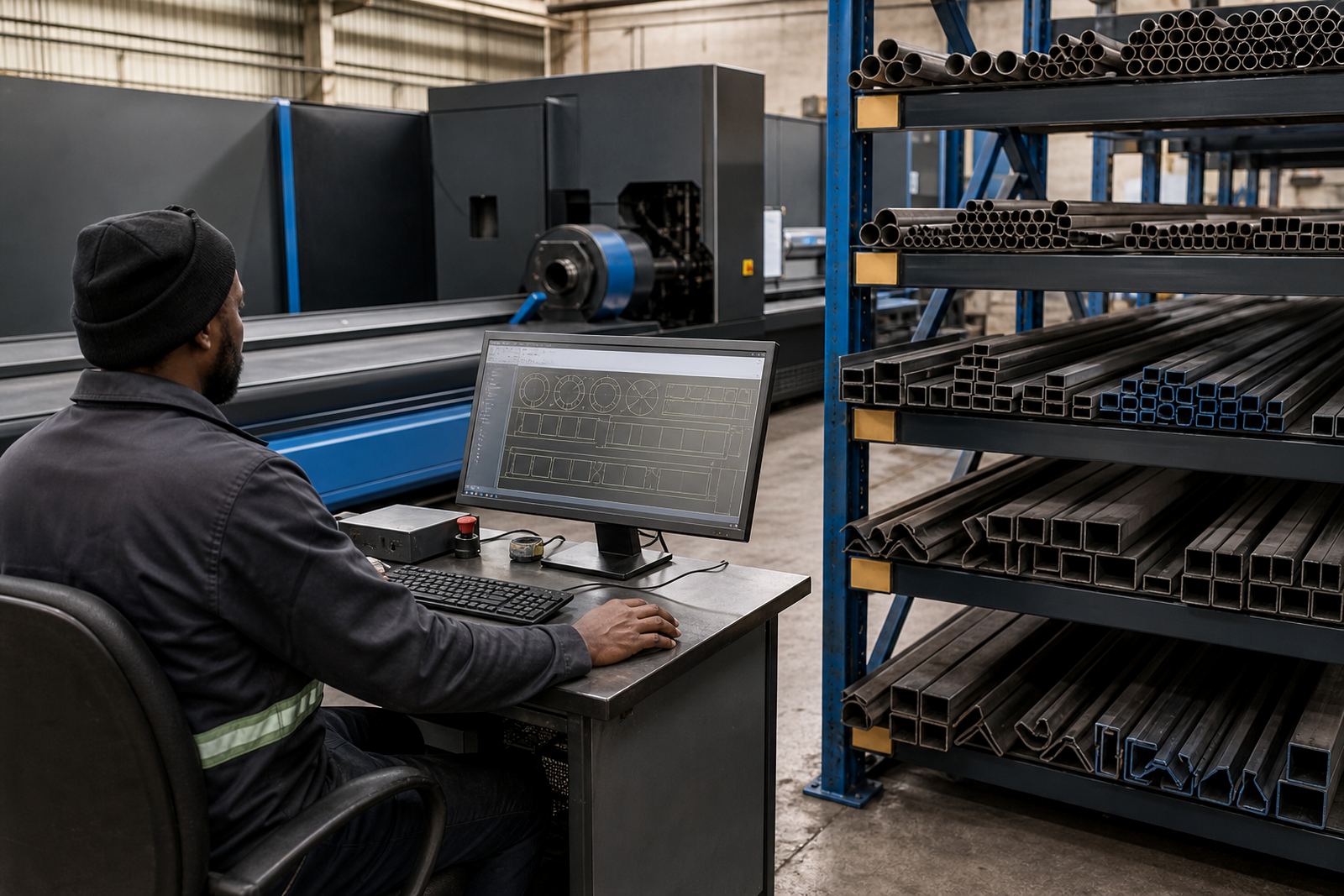
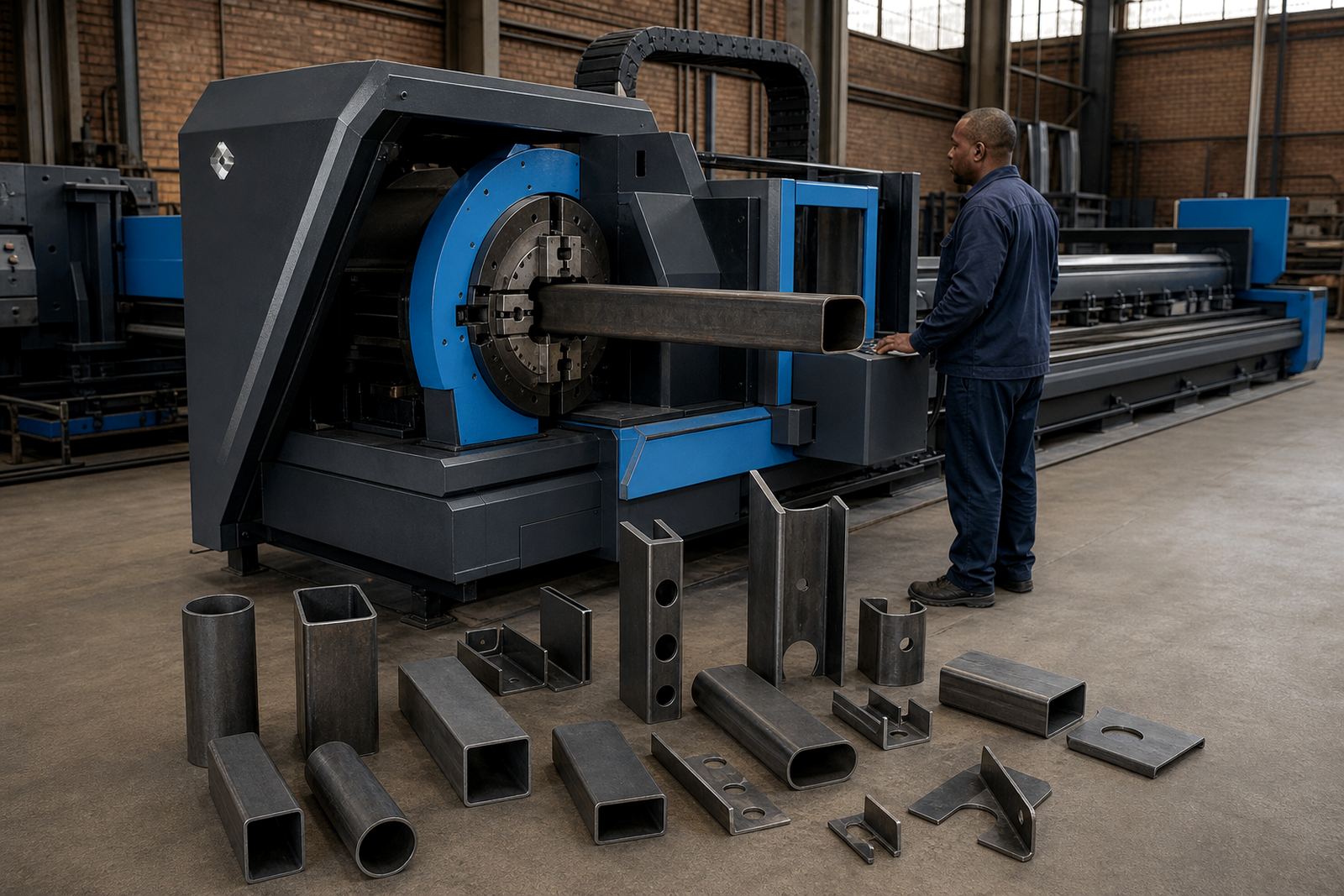
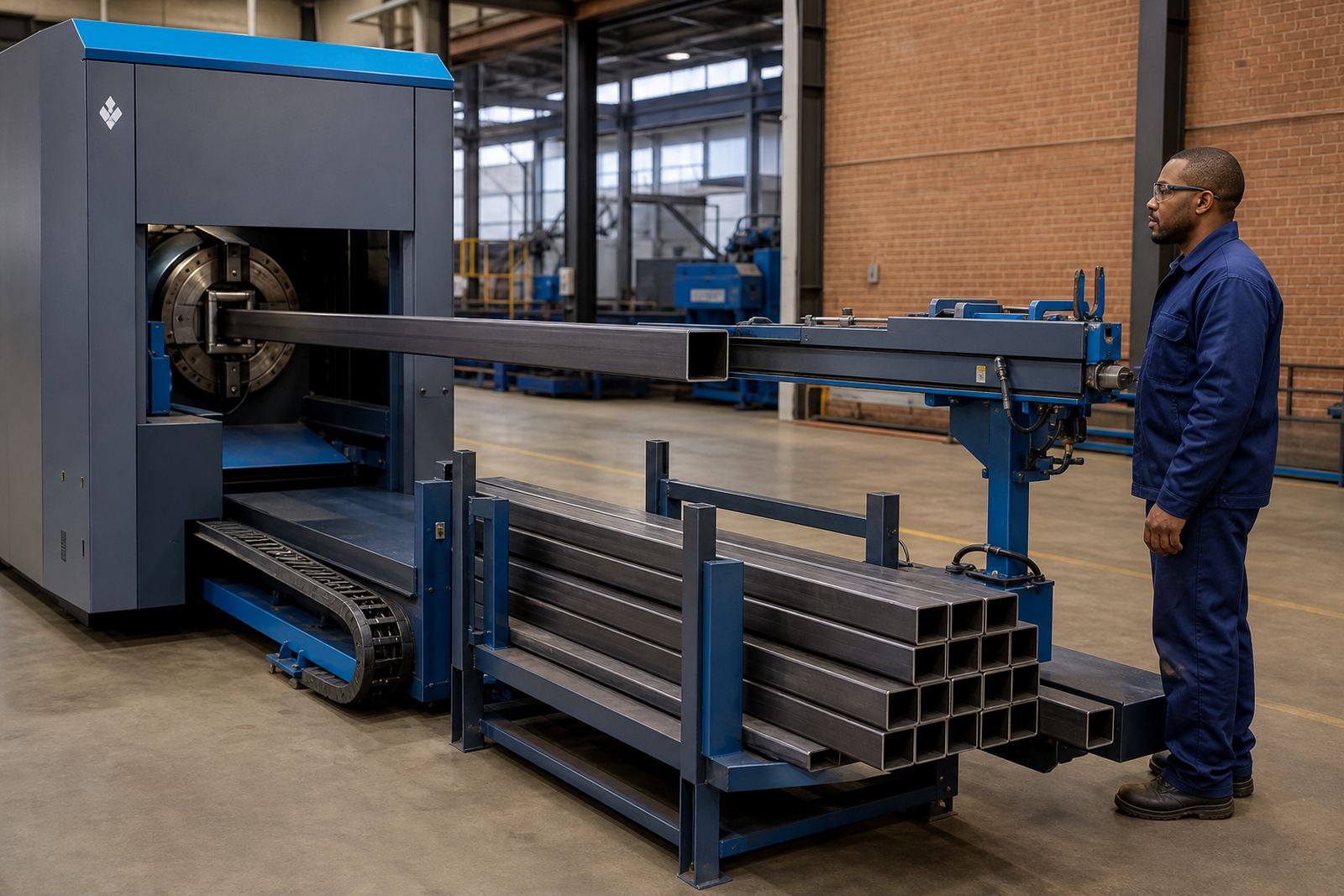
A semi auto loader takes over the heaviest part of tube handling while the operator stays in control of the cut cycle. It is used on fibre laser tube and profile cutting machines where round tube, square tube, rectangular tube, angle and channel need to be presented consistently to the chucks.
The loader brings stock into position, supports the workpiece and helps reduce manual lifting across a shift. That matters in busy fabrication shops in Wadeville, Johannesburg and Pretoria where short runs, mixed sizes and repeat jobs often sit in the same day. The loader is fitted as part of the machine package or added to a suitable tube cutting line, depending on the available infeed space and the material flow around the cell.
On practical jobs, the loader works best when the workshop wants better output and less handling, but does not need a fully automatic bundle line. It suits steel tube, stainless tube and other common structural profiles used for gates, frames, racking, brackets and fabricated assemblies.
Sizes, support ranges and loader options
The right semi auto loader depends on the tube length, outside diameter and the weight the table must carry at loading height. Most systems are set up for standard structural lengths from 6 m stock, with support arms or rollers sized to suit the machine envelope and the tube family being cut.
Common options include adjustable infeed supports, powered transfer sections, centring rollers and loading arms matched to round and rectangular section. For profiles with sharp edges or mixed cross sections, the contact points need to be set to avoid marking and to keep the stock aligned as it enters the chuck area.
- Tube and profile handling for round, square and rectangular stock
- Suitable for angle, channel and other open profiles on the correct machine setup
- Infeed support set for common production lengths and mixed batches
- Alignment aids to help position the workpiece before clamping
- Manual or assisted stock placement, depending on the machine layout
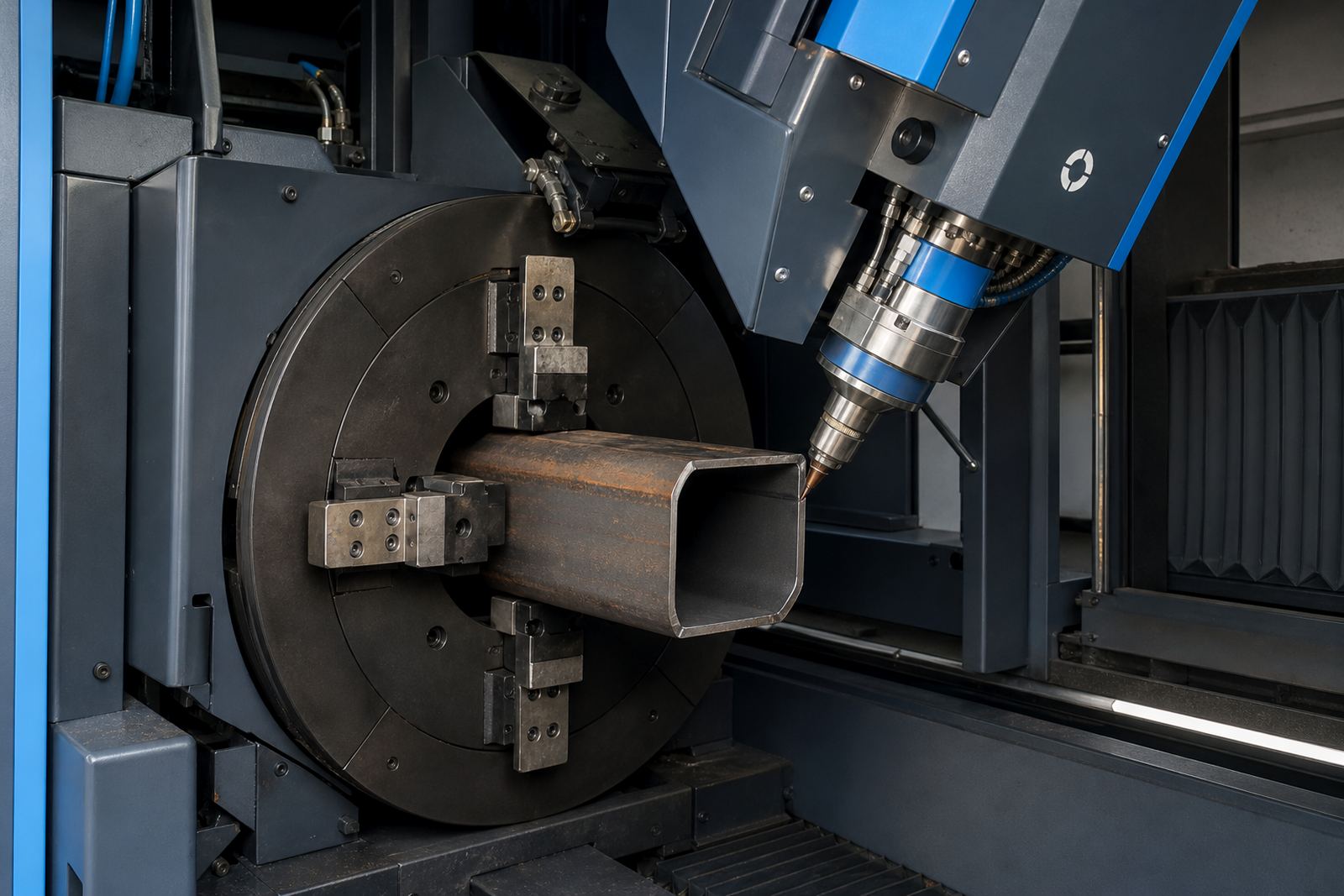
Where the loader is matched to bevel cutting work, the support system must leave enough room for the head movement and the clamp clearance needed during the cut path.
Where the loader earns its place
This option fits workshops that cut more than a handful of tubes a day and want less downtime between parts. It suits fence and gate fabricators, structural steel shops, contract manufacturers, job shops and production plants that handle many short to medium production runs.
In Durban and other coastal areas, the loader also helps when stock handling needs to stay orderly in humid conditions, especially where tube is stored for a few days before cutting. Keeping material moving in a controlled line can reduce mix ups, surface scuffing and unnecessary handling between storing, loading and nesting.
The semi auto loader is a good fit where the machine room has enough clear approach space for infeed and outfeed movement, but the business still wants the operator to set the job, inspect the first part and manage changeovers. That balance works well in shops that need a solid production step without a major change to the whole workshop flow.
Fitting, commissioning and shop layout points
Fitting the loader calls for careful alignment with the tube cutting machine, the chuck centreline and the infeed path. The installation team checks floor space, stock direction, access for lifting gear and the safe travel path for loaded tube. If the machine includes a bevel head, the clearances around the cutting zone matter even more.
Electrical supply to the loader controls and any driven transfer parts must be checked against the machine layout and the site supply arrangement. The loader itself is matched to the cutting cell, not added as a loose accessory, so the brackets, supports and limit settings need to be set properly during commissioning.
- Check infeed length and clear floor space before fitting
- Confirm chuck height, machine centreline and transfer direction
- Set support arms for the tube sizes used most often
- Test loading, centring and clamp engagement before live production
- Verify any interlocks, guards and stop controls at commissioning
LaserTube handles site assessment, delivery rigging, machine installation, commissioning and operator training across South Africa, with support from Wadeville, Germiston to Johannesburg, Pretoria, Durban, Cape Town, Gqeberha, Bloemfontein and Nelspruit.
Running care and day to day upkeep
A semi auto loader stays reliable when the guide rollers, arms and bearing points are kept clean and checked for wear. Tube dust, scale and offcut debris can build up around the infeed area, so a daily wipe and a regular inspection help the loader move smoothly through the load cycle.
Any signs of misalignment show up quickly in the cut quality, especially where the tube enters the chuck unevenly or shifts during clamping. For that reason, preventive maintenance should include alignment checks, bolt inspection, lubrication where specified and a look at the limits and sensors that govern the loading sequence.
If the shop uses mixed material, the team should keep a note of the usual tube weights and lengths for each recurring job. That makes it easier to set the support position correctly and reduces unnecessary adjustment between runs.
Details to confirm before ordering the loader
To size the semi auto loader correctly, the machine team needs a few practical details from the workshop. The most useful details are the tube families, the normal stock lengths, the heaviest section used and whether the line will handle round tube only or a broader mix of profiles.
- Machine model and tube cutting envelope
- Largest and smallest tube or profile section
- Typical stock length and maximum bundle weight
- Material types and wall thickness range
- Whether bevel cutting is part of the work
- Available floor space on the infeed side
- Preferred operator position and material flow direction
Where the workshop runs nesting software, it also helps to confirm the usual job format, clamp positions and any repeat lengths that need special support. That keeps the loader matched to the way the machine is actually used, not just the nominal tube size on paper.
Key facts
| Product type | Semi auto loader for fibre laser tube and profile cutting machines |
|---|---|
| Material forms | Round tube, square tube, rectangular tube, angle and channel |
| Typical stock length | Commonly set up for 6 m infeed, depending on machine layout |
| Handling method | Assisted loading with operator controlled positioning and clamping |
| Integration | Matched to the tube cutting line, chuck height and transfer path |
| Service support | Installation, commissioning, operator training and maintenance support |