Balustrade work that needs clean fit-up, not rework
Balustrade jobs often look straightforward on paper, then turn into time-consuming fitting on the floor. Posts, rails, infill frames and bracket pieces all need the right length, the right hole positions and end cuts that sit square when the installer starts bolting up on site. When the parts are cut on a fibre laser tube machine, the shop can hold those details more consistently than with hand marking and manual cutting.
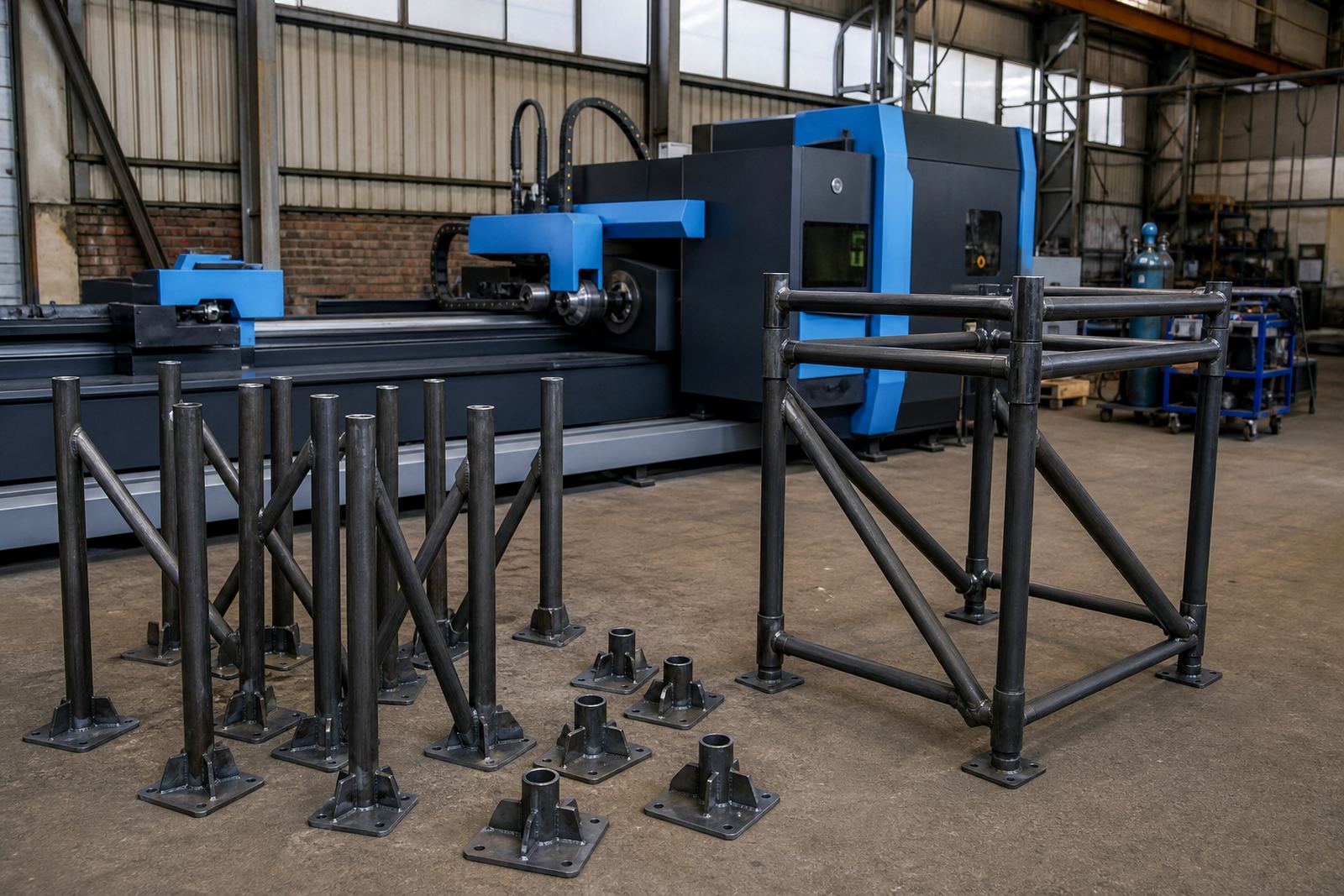
For round and square tube balustrades, the value is usually in repeatable openings, clean mitres and accurate notches for joints, brackets and welded connections. That matters on stair flights, balconies, landing sections and perimeter runs where every extra millimetre shows up at installation. A tidy cut also reduces grinding marks that can be hard to hide once the railing is powder coated or painted.
In Wadeville and other busy fabrication areas around Johannesburg, many shops run balustrade work alongside gates, pergolas and light structural items. A tube laser gives the team one machine for many of those jobs, which helps when the order mix changes from week to week.
Machine set-up that suits tube balustrade production
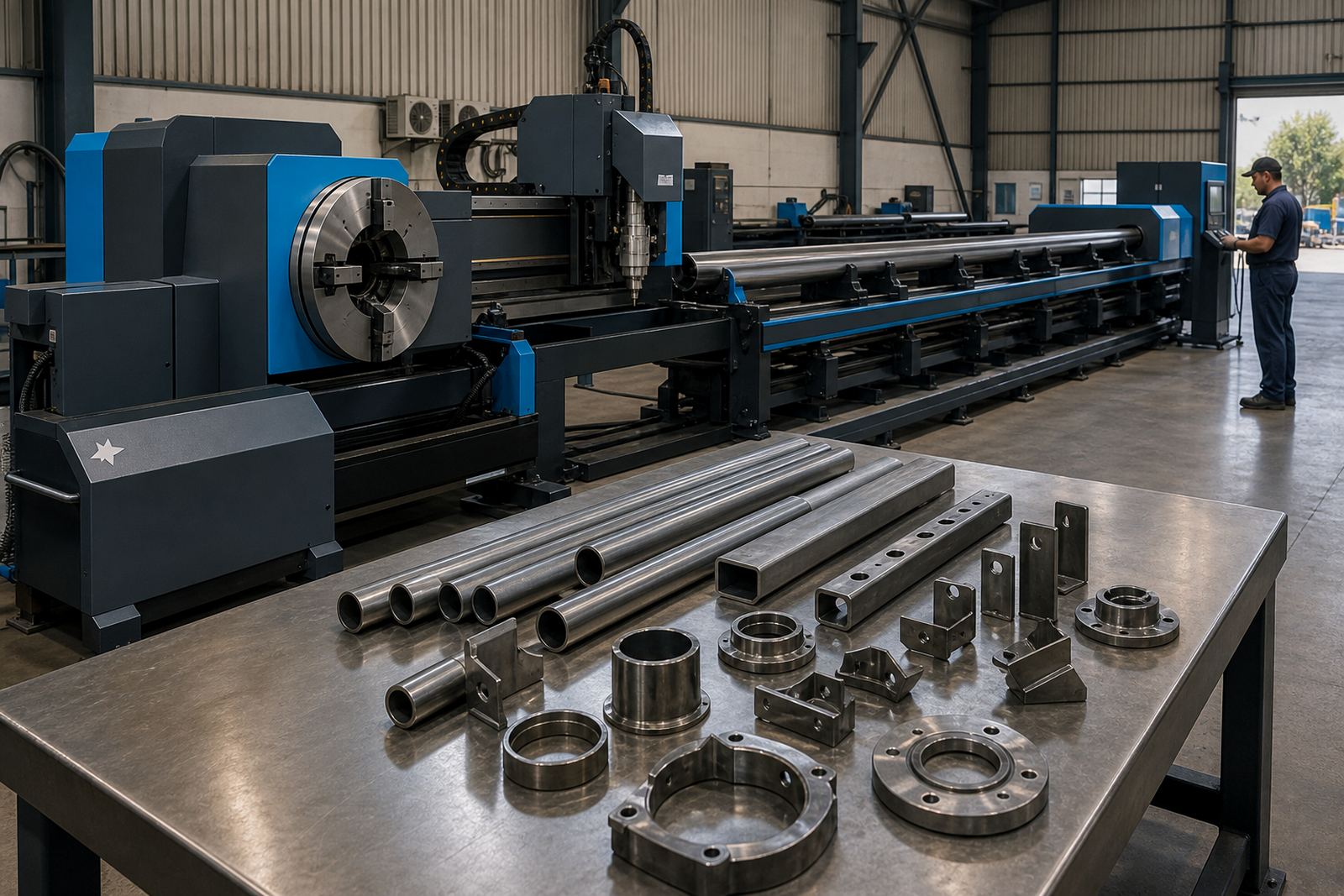
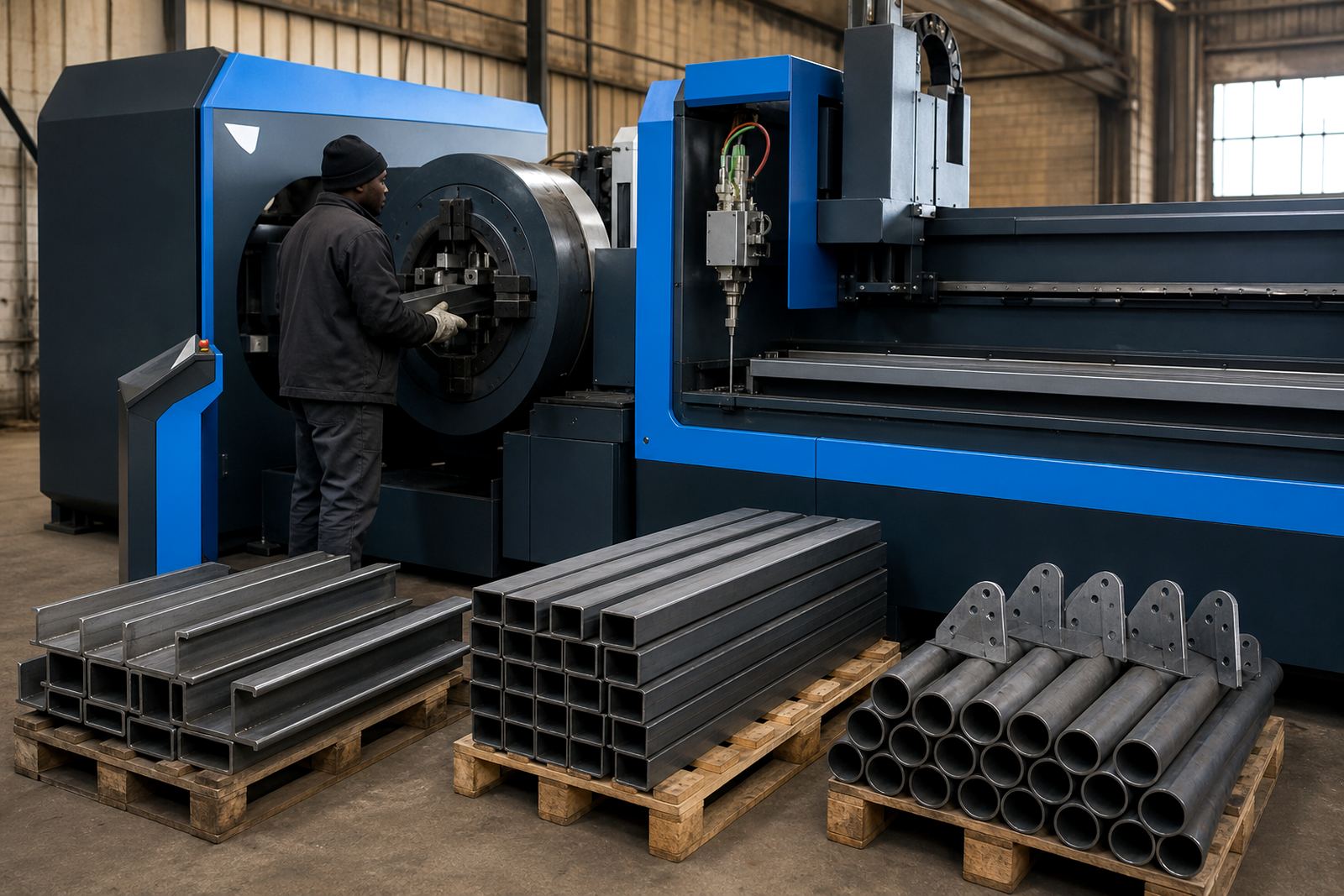
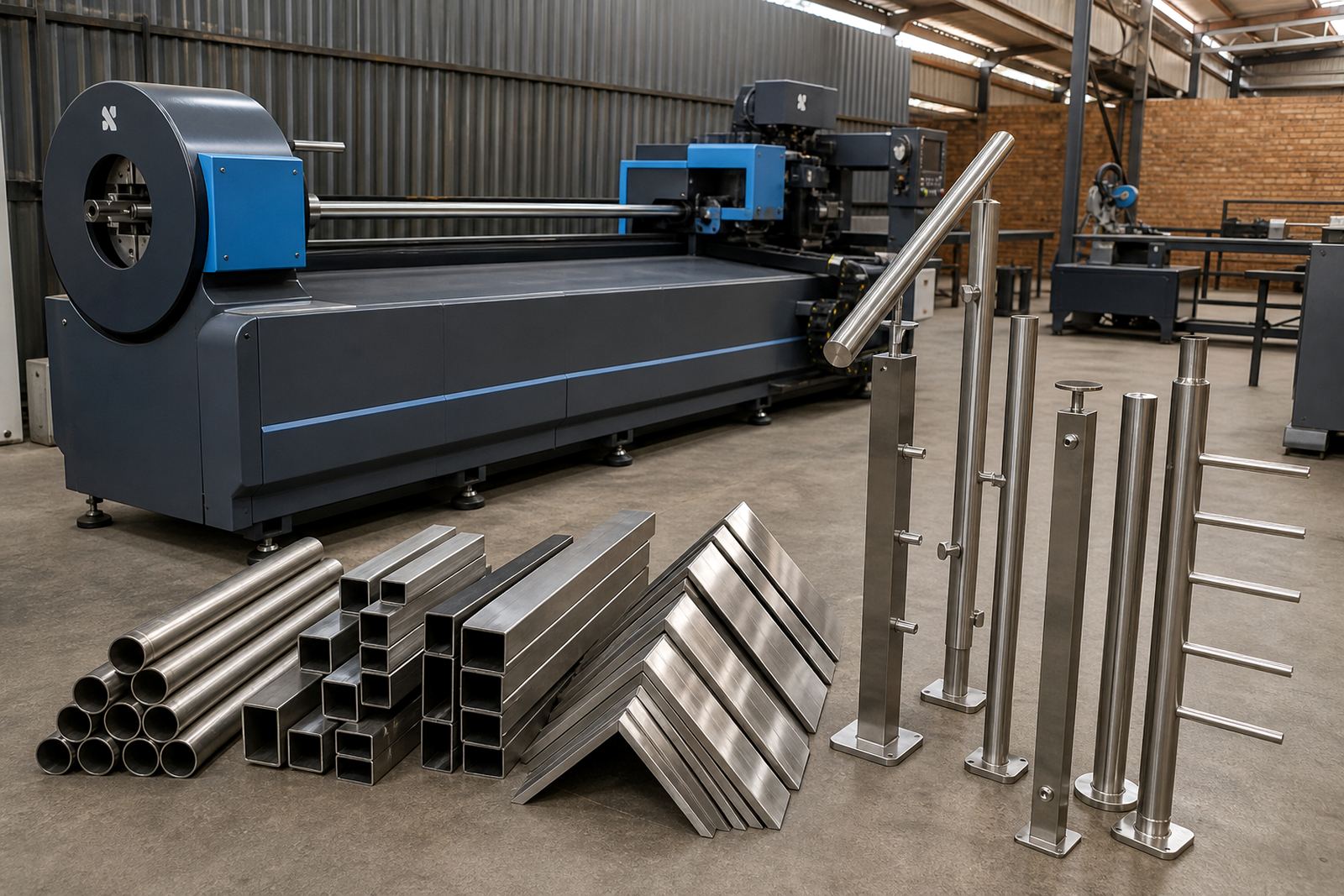
The usual setup for this kind of work is a fibre laser tube machine with an automatic loading and unloading arrangement, rotary chucks for holding the tube and software that nests parts across each bar or length. For simple balustrades, round and square tube are the most common. Rectangular tube comes in for rails, heavier posts and frame sections, while angle and channel show up in brackets, edge supports and support pieces.
Bevel cutting is useful where a joint needs a better weld profile or where the installation detail calls for a specific edge angle. It is not needed on every balustrade job, but on thicker material or more visible architectural work it can make a difference to finish quality and fit. Assist gas choice also matters. Oxygen, nitrogen or compressed air are selected according to material type, edge finish and running cost, with the shop deciding what makes sense for its normal workload.
- Round tube for handrails, upper rails and decorative frames
- Square tube for posts, infill frames and main supports
- Rectangular tube for rails with a wider face or stronger visual line
- Angle and channel for connection pieces, cleats and fixings
- Bevel heads for prepared weld edges and selected angled cuts
Planning the line around real balustrade drawings
Strong balustrade production begins well before any tube goes onto the machine. The drawing set should be checked for rail lengths, post spacing, hole positions, gate tie-ins and any site-specific changes around stairs or landings. If the machine operator has clear part naming and a steady method for sorting cut bundles, the fitting team gets fewer surprises later.
Layout planning also needs to account for the lengths of stock tube coming into the shop. A practical nesting plan reduces offcut waste and keeps the machine working through full bars without unnecessary handling. For shops in Pretoria, Durban or Cape Town, where balustrade projects may vary from townhouse runs to commercial railings, that sort of planning helps keep material movement under control.
On taller jobs, it is worth deciding early whether the balustrade will be built in modular sections or as longer site-assembled runs. That choice affects the number of joints, the use of splice plates and the amount of site welding. A clear production pattern usually saves time at installation, especially when the same design repeats across many floors or units.
Common mistakes that show up on site
Most balustrade problems start with small errors in the workshop. A tube cut that is a little out on angle can cause a rail to sit proud. A hole that is shifted by a few millimetres can turn a neat bracket into a forced fit. When those issues are repeated across a run, the installers end up trimming, filling or reworking parts that should have fitted first time.
A further mistake we often see is using the same approach for every type of tube. Thin decorative tube and heavier structural tube behave differently in the machine, so feed speed, clamping pressure and cutting parameters need to suit the material. Shops that switch between polished visual work and practical steel balustrades should separate their programmes properly, otherwise part quality becomes uneven. A missed label or mixed bundle can also create confusion on site.
- Leaving no allowance for weld shrinkage on jointed sections
- Mixing post pieces with rail pieces in the same bundle
- Ignoring the effect of coating thickness on tight slots or openings
- Cutting every balustrade as if it uses the same tube size
- Skipping test pieces before a new profile or wall thickness
Budget ranges that make sense in rand
The budget for a tube laser setup depends on tube size range, loading capacity, automation level, bevel capability and the amount of training and commissioning needed. For smaller fabrication shops that mainly cut balustrade parts, entry systems may sit in the lower multi-million rand range. Larger production plants, especially those handling longer lengths, heavier tube and more automation, can move much higher.
It is also worth setting budget aside for installation, rigging, initial operator training, nesting training and the first round of preventive maintenance planning. Assist gas setup, chuck alignment and bevel calibration all influence how the machine performs on balustrade work, so they should be part of the commercial discussion from the start. If the shop expects to cut only simple handrail parts, the specification can be leaner. If the work includes architectural railings, heavier sections and mixed profile cutting, the spend rises with the workload.
For many South African fabricators, the better question is not the lowest purchase figure, but what combination of machine size, support and training will keep balustrade work moving with less rework and fewer awkward site fixes.
Support that matters after the machine lands in Germiston or Durban
LaserTube works with metal fabricators across South Africa from Wadeville, Germiston, with services that include site assessment, delivery rigging, machine installation, commissioning, operator training, nesting training, preventive maintenance, chuck alignment, bevel calibration, assist gas setup, remote diagnostics and breakdown response. That support matters on balustrade work because the machine has to hold a repeatable cut day after day, not only on the first sample part.
For shops in Johannesburg, Pretoria, Durban, Cape Town, Gqeberha, Bloemfontein and Nelspruit, the aim is to set up the machine around the parts they cut most often. A balustrade programme should leave the operator with a clear cutting sequence, a sensible nesting pattern and a way to keep chucks, heads and gas settings under control. When those basics are in place, the shop can move between straight handrails, staircase sections and decorative tube work with less interruption.
Balustrades are one of those jobs where the eye catches every flaw. A machine that cuts clean, repeated tube parts gives the fabricator a better starting point before welding, finishing and installation.