When exhaust work needs repeatable tube ends
Exhaust fabrication often starts with short runs of tube, bends, reducers and branch pieces that must fit a vehicle or plant layout without forcing the installer to rework every joint. A fibre laser tube machine can cut round, square and rectangular sections with steady length control, so the parts fit better during tack-up and welding. For ducting and exhaust systems, that matters where clearance is tight and flange faces need to sit square.
Job shops in Johannesburg and Pretoria usually want a machine that can move between one-off repair work and batch runs. Production plants in Durban or Cape Town may need a heavier setup with stronger tube support, reliable chucking and software that nests parts tightly on mixed tube sizes. The right setup depends on wall thickness, part length and how many finished pieces move through the bay in a shift.
Machine features that suit tube and exhaust parts
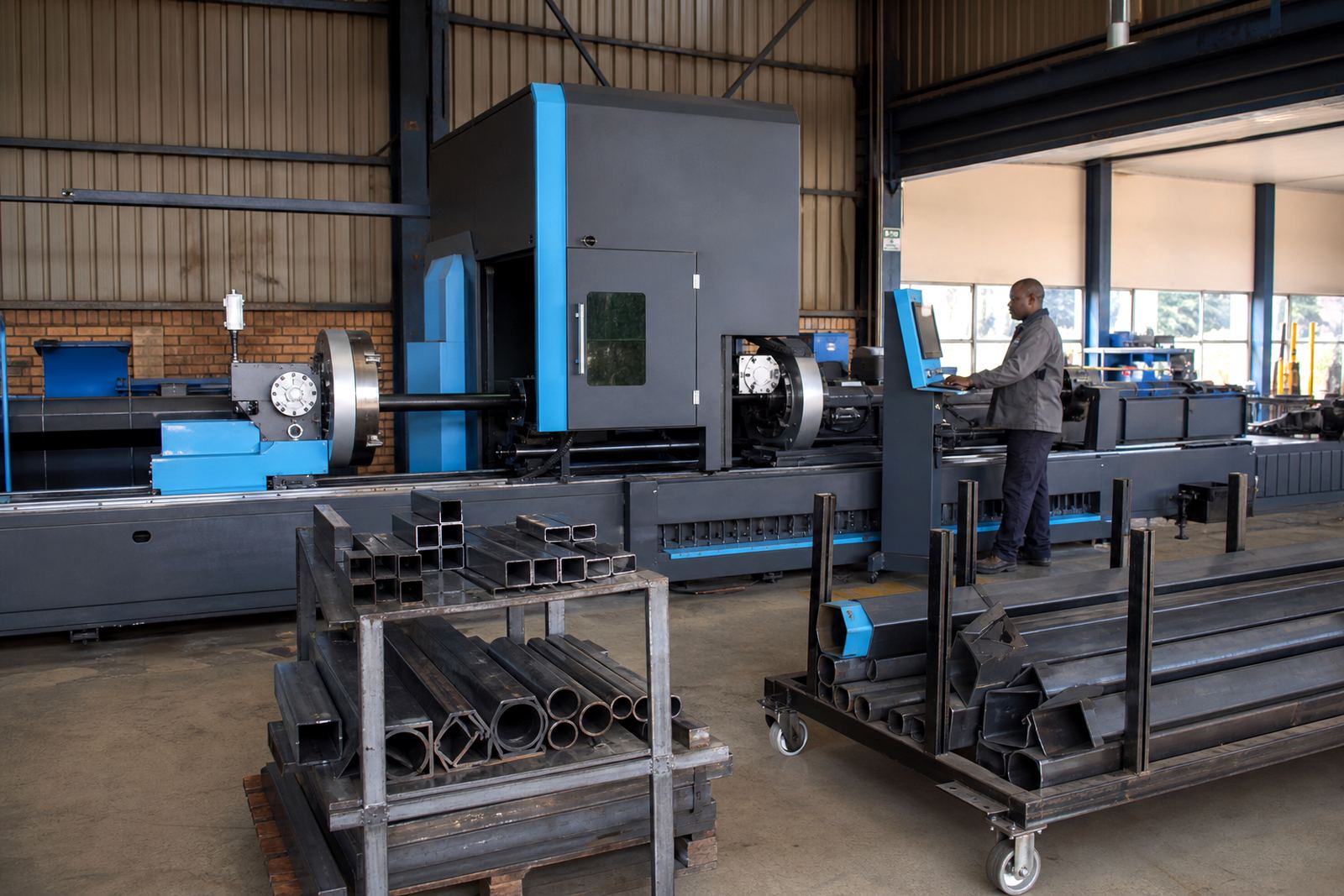
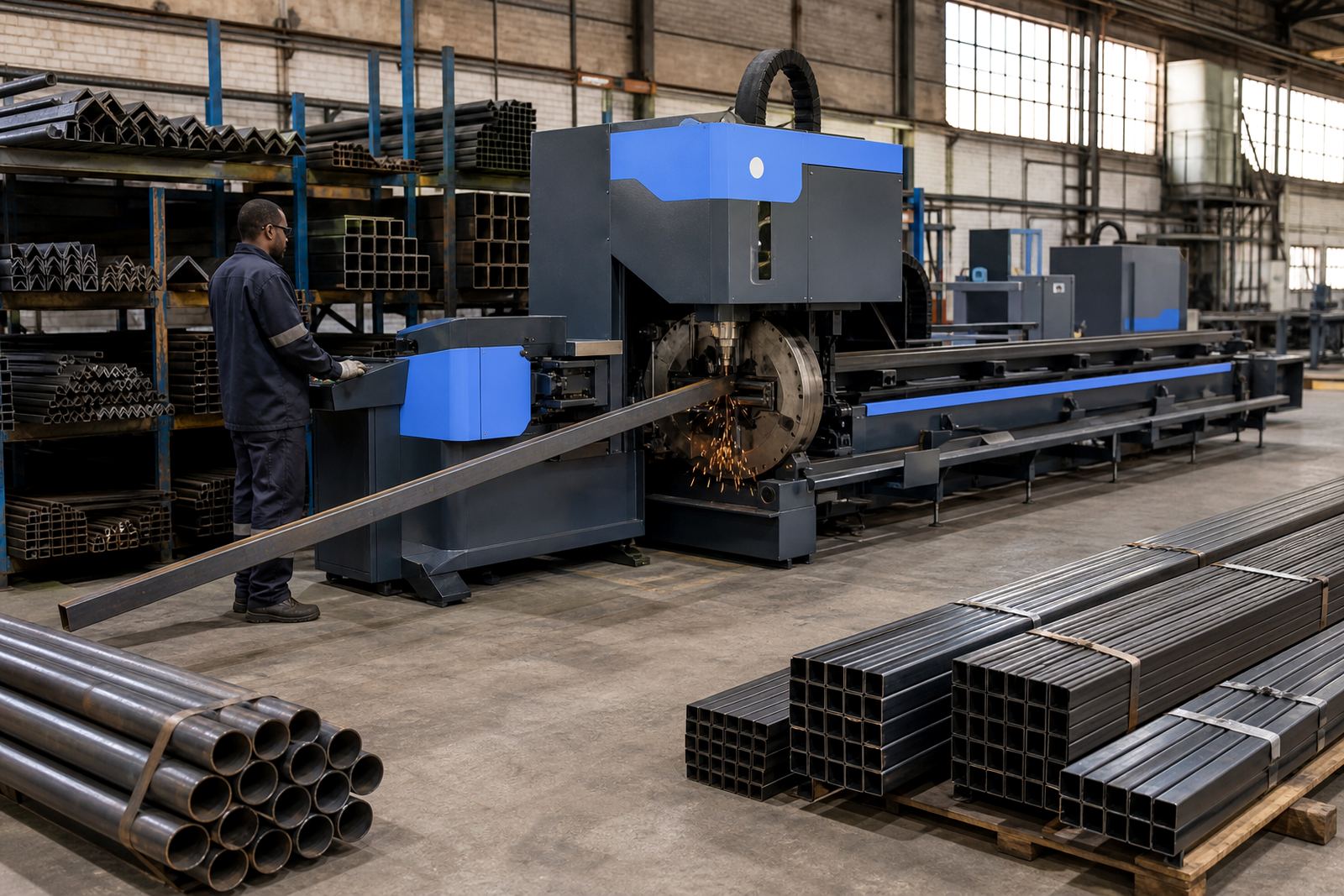
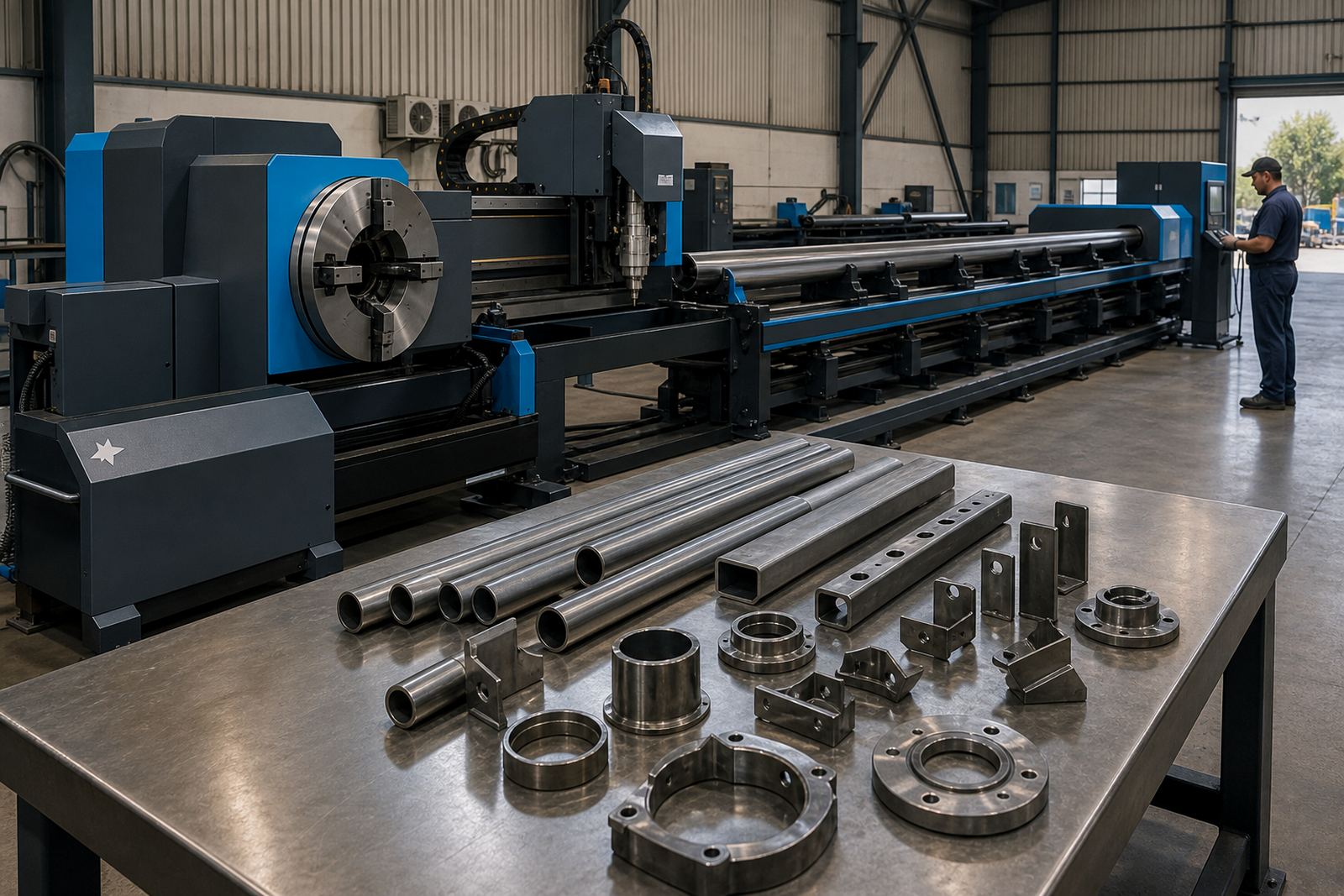
For exhaust tubing, the core machine set normally includes a fibre laser source, rotary chucks, tube supports, extraction, cutting head controls and nesting software. On many jobs a bevel head is useful too, because angled cuts help on branch connections, merge pieces and welded joints that need a better fit. A good chuck setup matters just as much as the cutting head, because poor grip can mark thin wall tube or leave the part out of line.
- Rotary chucks for round, square and rectangular tube
- Supports for long lengths and lighter wall sections
- Bevel cutting where the joint design calls for it
- Nested part layout for better material use
- Assist gas setup for clean cut edges and less dross
- Guarding and interlocks for safe shop-floor use
In exhaust work, assist gas choice affects edge finish and cut speed, while safe enclosure and clear loading paths keep operators away from pinch points and hot cut parts. Where tube lengths are awkward, the machine layout needs enough infeed and outfeed space to keep handling smooth.
Layout choices for Wadeville shops and larger plants
Space planning changes the whole job. A compact shop in Wadeville may have to place the loader, machine bed and unloading area in a straight line to save floor space, while a bigger plant in Gqeberha or Bloemfontein might separate raw material storage from the cutting cell. Either way, the tube path should be short and uncluttered, with enough room for bundle loading, part sorting and offcut collection.
Before installation, LaserTube looks at floor level, access for rigging, ventilation, gas storage positions and where the operator stands during loading. That assessment helps avoid bad positioning that slows the shift or creates unsafe lifting angles. A machine that suits exhaust tubing still needs proper support around it, otherwise even accurate cutting turns into handling problems and scratched material.
- Keep raw tube close to the loader but clear of walkways
- Place finished parts where welding and assembly start
- Leave enough room for long stock and offcuts
- Separate gas bottles or bulk gas equipment as required
- Plan service access around the rear and sides of the machine
Common mistakes on exhaust tubing jobs
The most common trouble starts before the first cut. Some teams send mixed tube sizes through one layout without checking clamp clearance, so the chuck marks the surface or the cut position shifts. Others ignore bend direction and weld allowance, then discover the branch angle no longer matches the vehicle or ducting frame. That leads to grinding, re-cutting and wasted tube.
Another issue is poor nesting. Short exhaust parts can look easy, but they eat material when the software layout is set badly or the operator does not account for remnant use. Cutting too many small parts from the wrong length also clogs the job flow, because sorting and label control become harder. Training helps the team understand how each part sits in the program before the machine starts cutting.
For maintenance, the usual misses are worn chuck jaws, poor alignment and neglected gas setup. On tube machines these faults show up as tapered ends, inconsistent squareness or edge finish that needs extra cleanup. A planned service routine keeps the machine closer to its original cut quality, especially on regular exhaust work where the same sizes return often.
What the budget normally covers in rand
Budgeting for exhaust tubing work depends on machine size, automation level and the mix of tube and profile cutting required. A smaller machine for job shop use may sit in a lower entry bracket, while a production setup with longer loading systems, bevel capability and more advanced nesting software will move higher. The purchase price is only part of the picture, because delivery rigging, installation, commissioning and training need to be included from the start.
Typical projects can land in broad bands such as R1,5 million to R4 million for lighter shop-focused systems, R4 million to R8 million for mid-range production machines, and above that where automation, bigger beds or specialised tube handling are included. Site conditions, gas arrangement, tooling and access also shape the final figure. Exhaust work itself may not need the biggest machine in the room, but it does need one that suits the part sizes you cut most often.
Preventive maintenance, chuck alignment, bevel calibration and breakdown response should also be allowed for in the yearly running budget. That keeps the machine set for accurate tube ends instead of chasing faults after they show up in production.
What a clean exhaust cutting cell should produce
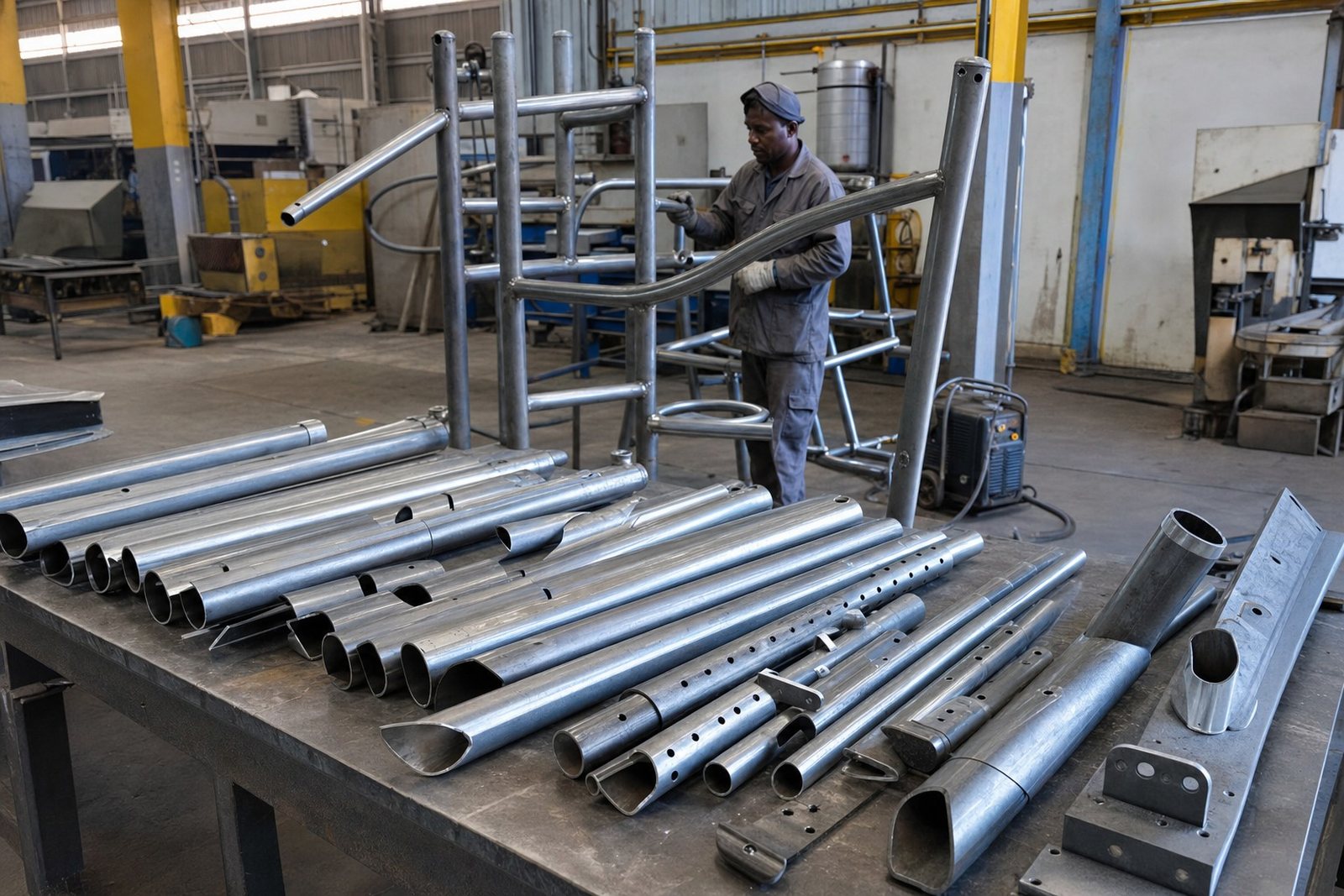
When the setup is right, the shop should see cleaner fit-up, fewer re-cuts and easier welding at the assembly table. Exhaust tube parts arrive at a consistent length, branch angles sit where they should and the operator can follow the nesting plan without guessing. For fabricators in Johannesburg, Durban or Cape Town, that kind of control helps keep work moving through the bay with less manual trimming.
- Shorter fit-up time on tube and ducting assemblies
- More consistent end preparation for welders
- Better use of stock lengths and remnant pieces
- Less grinding after the cut
- Clearer part flow from cutting to assembly
LaserTube supports installations, operator training and nesting training across South Africa, with service support for machines in Wadeville, Germiston and surrounding industrial areas. The aim is to match the machine set to the tubing mix, the workshop space and the volume of exhaust work already on your floor.