Frames That Hold Their Line In Wind and Traffic
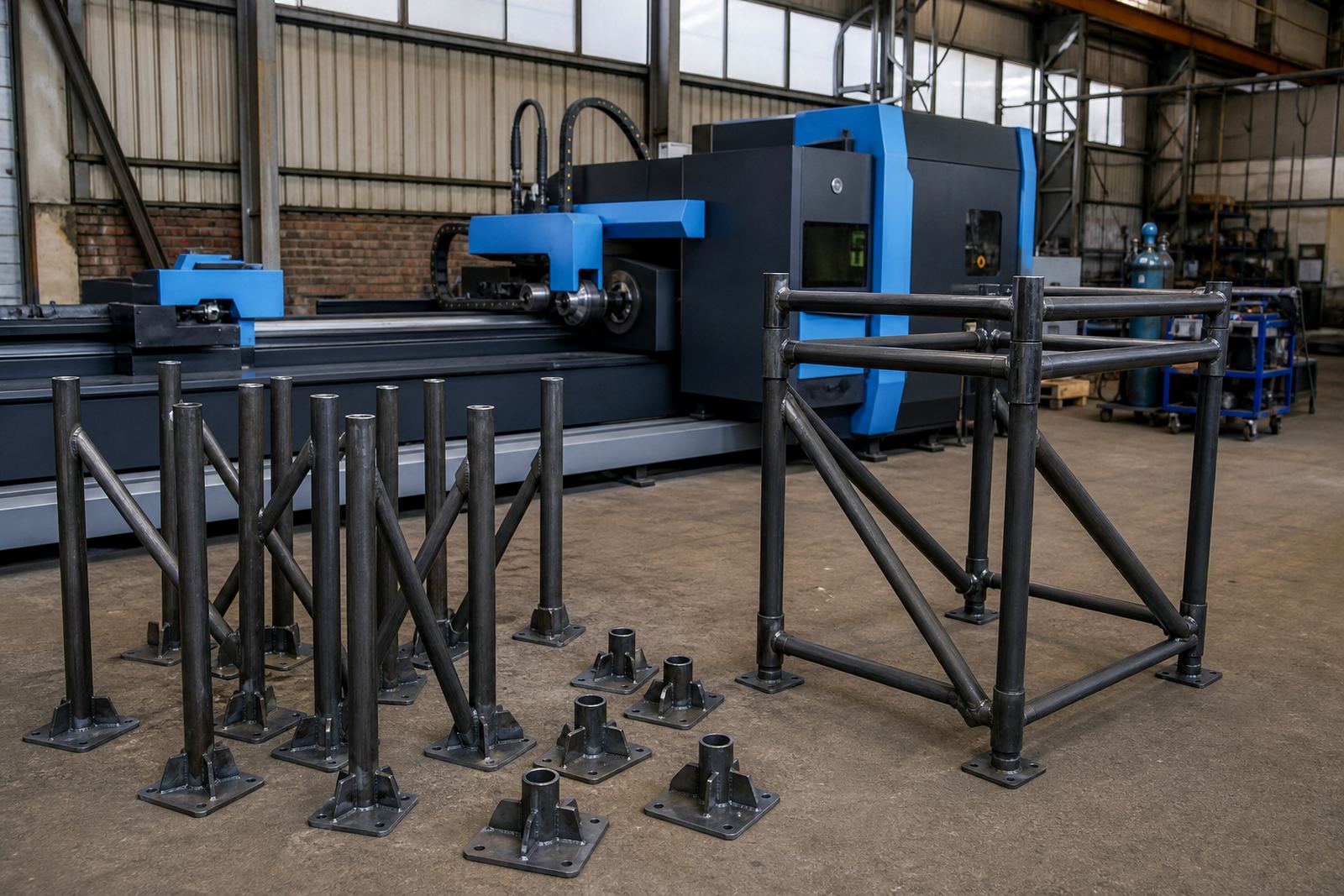
Sign fabricators often work with tube frames that must stay square after welding, transport and installation. That matters on roadside pylons, retail signs, kiosk housings and gateway structures where a small error turns into twisted cladding or uneven panels. Fibre laser tube cutting gives cleaner ends, tighter fit-up and less hand dressing than sawing and drilling alone.
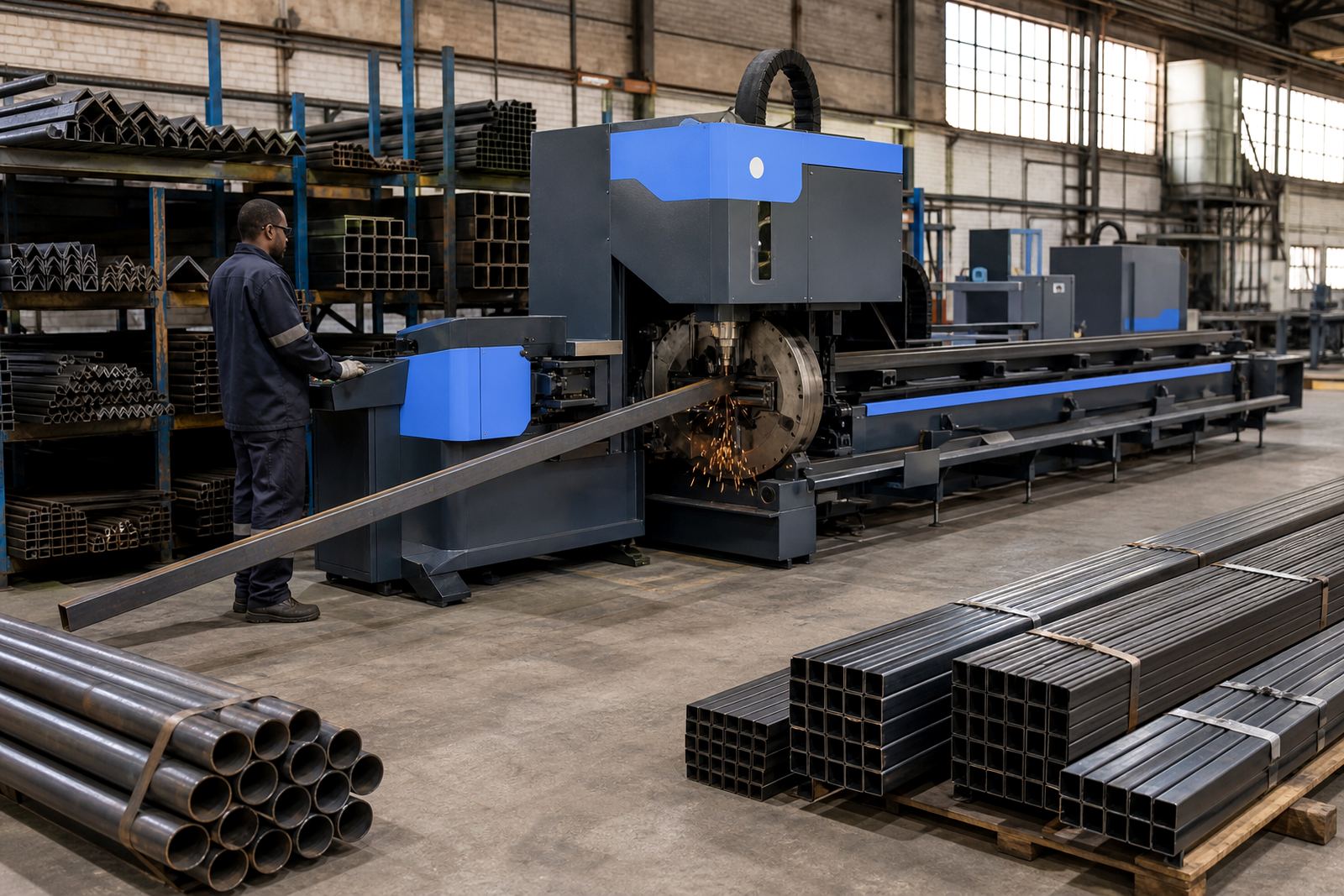
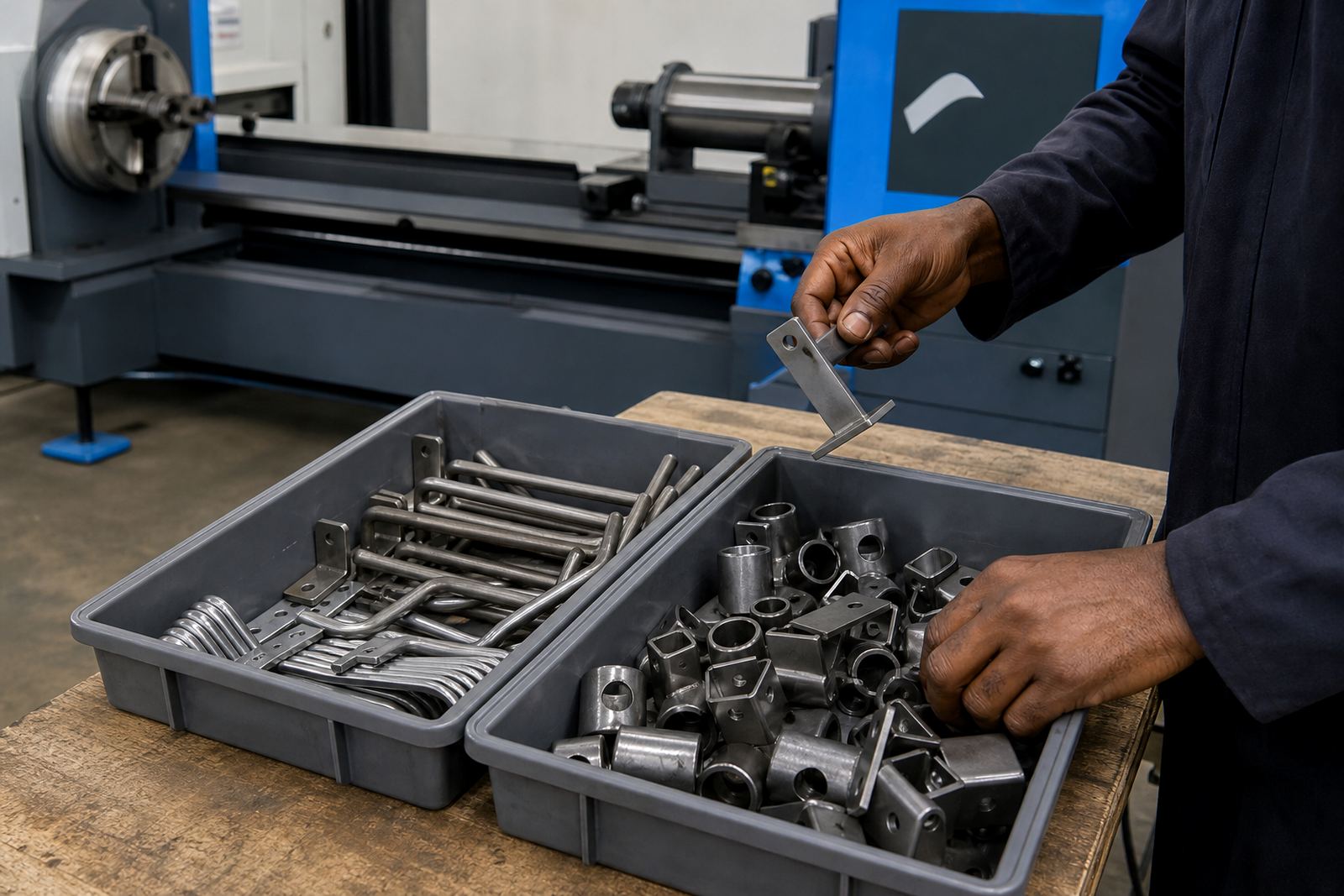
On these jobs, the machine usually cuts the main frame members, gussets, mounting plates and bracket parts from the same nesting plan. Round tube, square tube, rectangular tube, angle and channel can all be handled in one production flow, which helps when a sign base has mixed sections and stiffeners. For coastal work in Durban or Gqeberha, clean cut edges and controlled handling also help reduce rework where corrosion can start at rough edges.
A Typical Machine Set for Sign Work
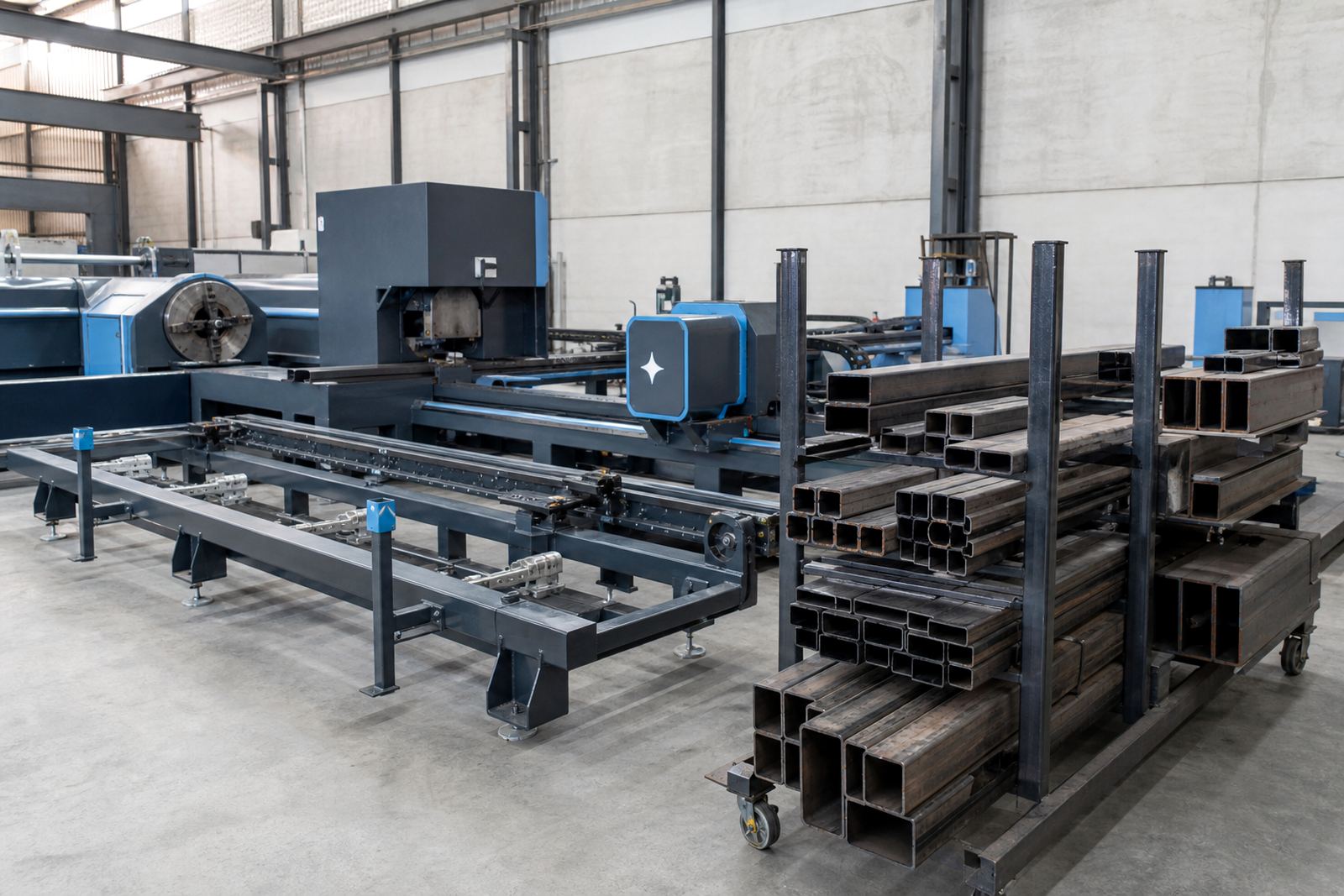
Most sign shops do not need a huge line to start cutting useful parts. A practical setup often includes a fibre laser tube cutter with automatic loading support, servo driven chucks for tube holding, and software that nests parts tightly to reduce offcuts. Where signs use angled faces or decorative frame details, a bevel head can help prepare edge geometry for better welding or fit-up.
- Single or dual chuck tube holding for straight, stable cutting
- Nesting software for mixed sign parts and short offcuts
- Bevel cutting for joints that need better weld access
- Assist gas setup for clean edges and sharper cut quality
- Safety guarding, interlocks and clear extraction planning
For fabricators running both sign frames and light structural work, a profile cutting machine can sit alongside the tube machine where flat plate parts are part of the same job. That keeps shop flow neater and reduces the stop start handling that eats time on busy contracts.
Layout Choices That Save Metal and Hand Labour
Sign structures are often made from repeated frame modules, so the workshop layout should support batch cutting and easy part sorting. Put long stock close to the infeed area, keep finished parts near welding benches, and make room for cut bundles that can be marked by project before they move to fabrication. When the line is cramped, offcuts get mixed, parts go missing, and the fitter ends up checking lengths twice.
Plan the machine around the longest section you expect to process, then allow space for loading, unloading and safe walking room around the cutting zone. If your work includes tall sign posts or kiosk columns, check ceiling height, door access and rigging path before delivery. In Gauteng workshops around Wadeville, Johannesburg and Pretoria, floor loading and forklift movement are just as important as cut quality because the machine has to sit where material movement makes sense.
- Keep tube storage close to the machine but out of the travel path
- Mark zones for raw stock, cut parts and weld prep
- Allow access for maintenance around chucks and the cutting head
- Check the route for delivery rigging before the machine arrives
Common Slip-Ups on Sign Projects
One common mistake is underspecifying the tube wall thickness for the sign frame. A light kiosk frame may look fine on paper, then flexes once cladding, lighting and fasteners are added. Another mistake is ignoring hole accuracy for anchor plates and bracket faces, which leads to slotting on site and more time at installation.
Shop teams also sometimes forget that signage parts need clear numbering and nesting discipline. Small brackets, end caps and gussets can disappear into the wrong stack if the cut plan is not organised. Poor chuck alignment can leave slight taper or position error on longer tubes, and that becomes obvious when a square sign post does not sit flat against its base plate.
Assist gas settings need attention as well. Wrong gas choice or poor pressure control can leave excessive dross, rough edges or heat marks that slow welding. For outdoor signs, that extra cleanup is money wasted before the structure even leaves the workshop.
Budget Bands In Rand For Sign Fabricators
Budgets depend on tube size, automation level, bevel needs and whether the shop is cutting only sign frames or a wider mix of tube and profile work. A small entry setup for a job shop usually falls in a lower band than a fully automated production line with loading systems and advanced nesting controls. Ask for rigging, installation, commissioning and operator training to be quoted with the machine, so the sign structure budget holds.
- Entry level tube cutting setup: roughly R1,500,000 to R3,500,000
- Mid range production setup: roughly R3,500,000 to R7,500,000
- Higher output automated setup: roughly R7,500,000 and up
Service planning also belongs in the budget. Preventive maintenance, chuck alignment, bevel calibration and assist gas setup help protect cut quality and reduce surprise stoppages. For firms in Cape Town, Durban, Bloemfontein or Nelspruit, regular maintenance planning matters because travel and site access can affect how quickly a machine is returned to full working order after a breakdown.
How LaserTube Supports Sign Fabrication Teams
LaserTube works with metal fabricators that need tube and profile cutting for sign structures, kiosks and support frames. The team handles site assessment, delivery rigging, machine installation, commissioning, operator training, nesting training, preventive maintenance, chuck alignment, bevel calibration, assist gas setup, remote diagnostics and breakdown response. That suits shops that want one machine to do more than a basic saw and drill line can manage.
Michael Dlamini leads the business from Wadeville, Germiston, with Anika Kajee on sales, Sibusiso Bhengu on installation, Leanne Mabuza on training, Pieter Visser on service and Ayanda Mashaba on applications support. For fabricators in Johannesburg, Pretoria, Durban, Cape Town, Gqeberha and beyond, the right machine choice starts with the parts you cut most often, the space you have on the floor, and the finish your customers expect on the final sign.