Where solar frame fabrication gets held up
Solar mounting frames look straightforward until the job reaches the cutting table. Round, square and rectangular tube all need consistent lengths, accurate notching and holes that line up after galvanising, drilling and assembly. Channel, angle and light structural sections add their own layout problems, especially where roof rails, ground mounts and support feet all share the same production run.
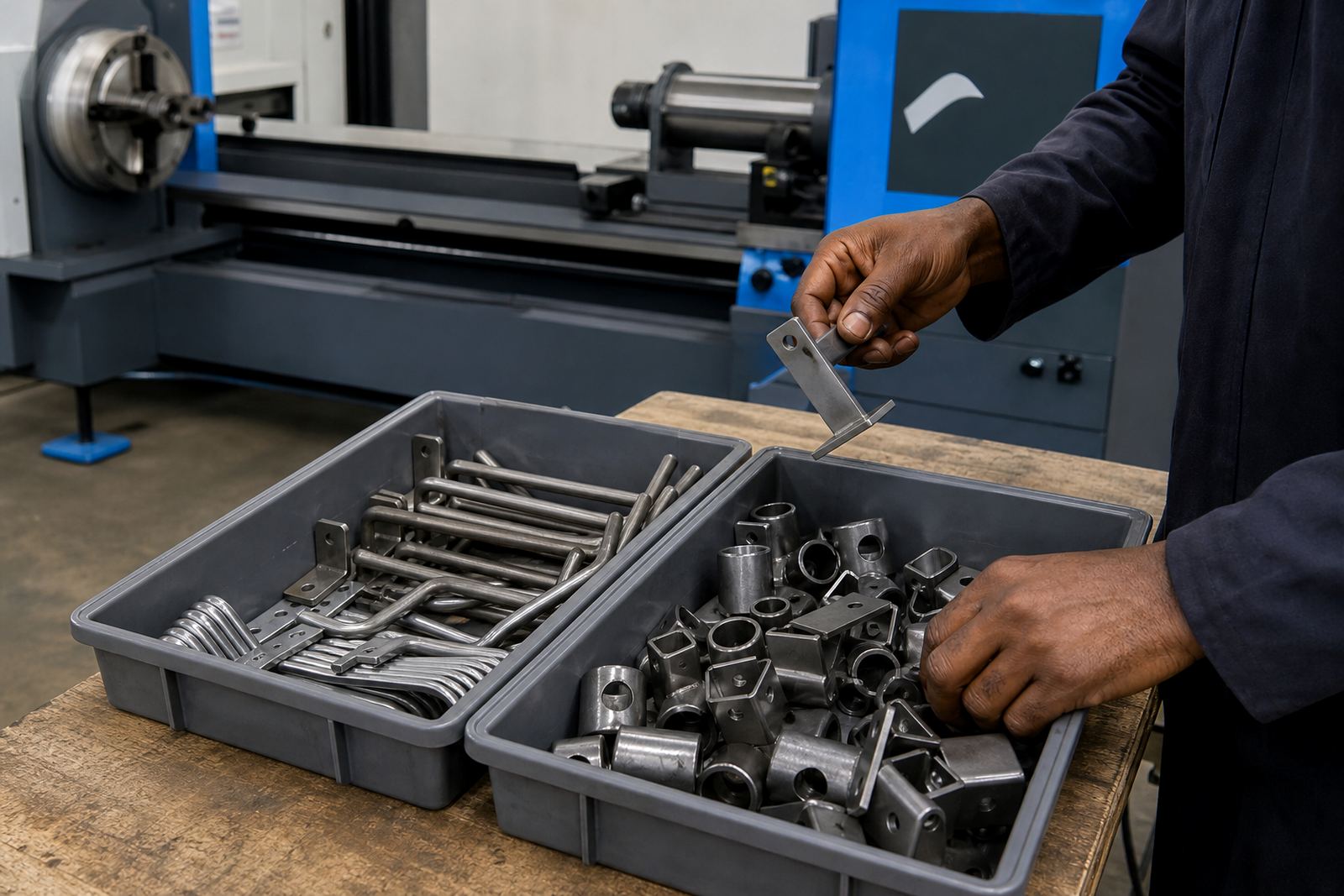
A fabricator in Johannesburg or Durban may be cutting for rooftops one week and open ground arrays the next. That changes the stock lengths, the hole pattern and the way the team stages material. A tube laser helps keep those parts in order, and it reduces the hand finishing that usually creeps into solar frame work when a saw line or manual drill takes over.
Machine set-up that suits this work
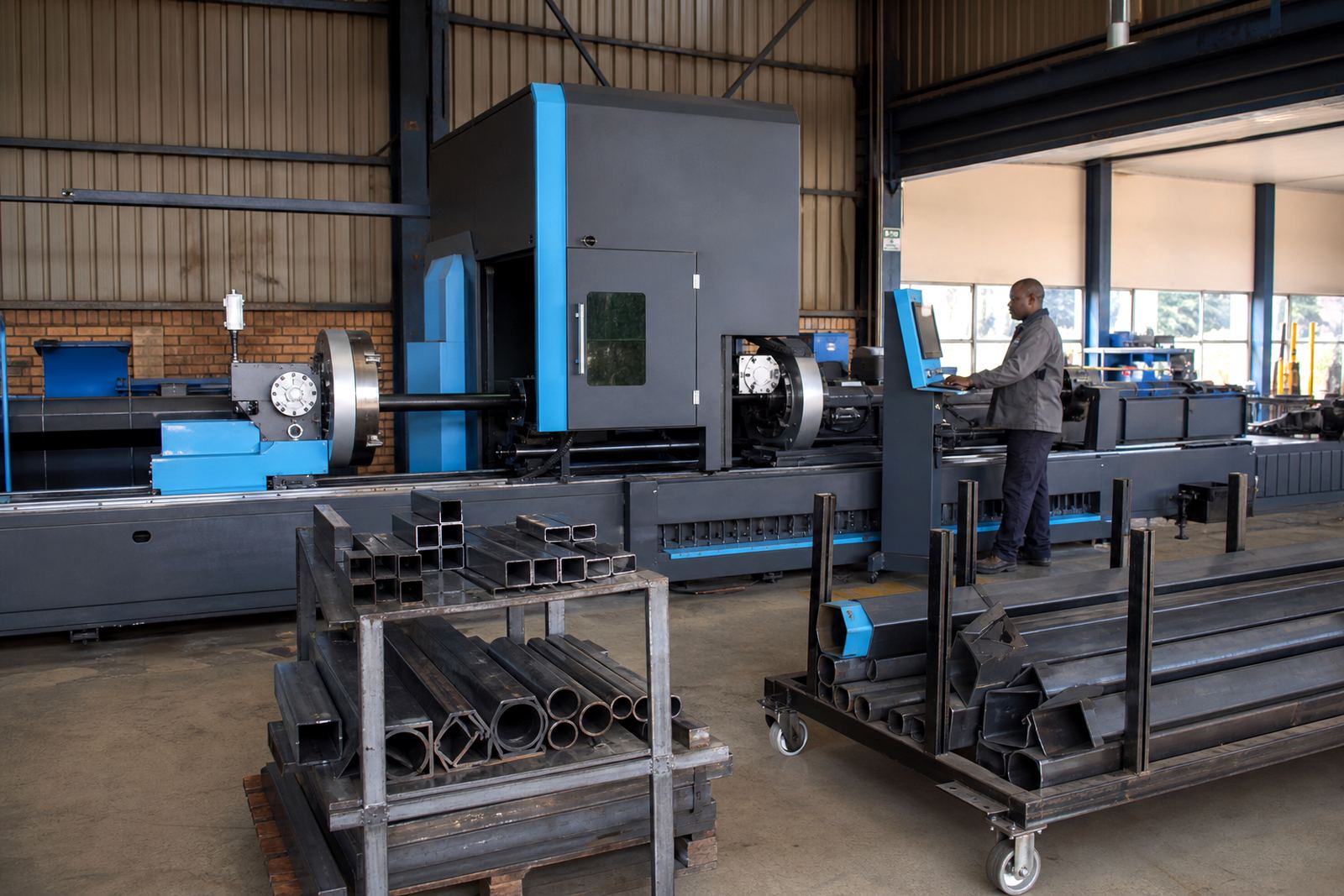
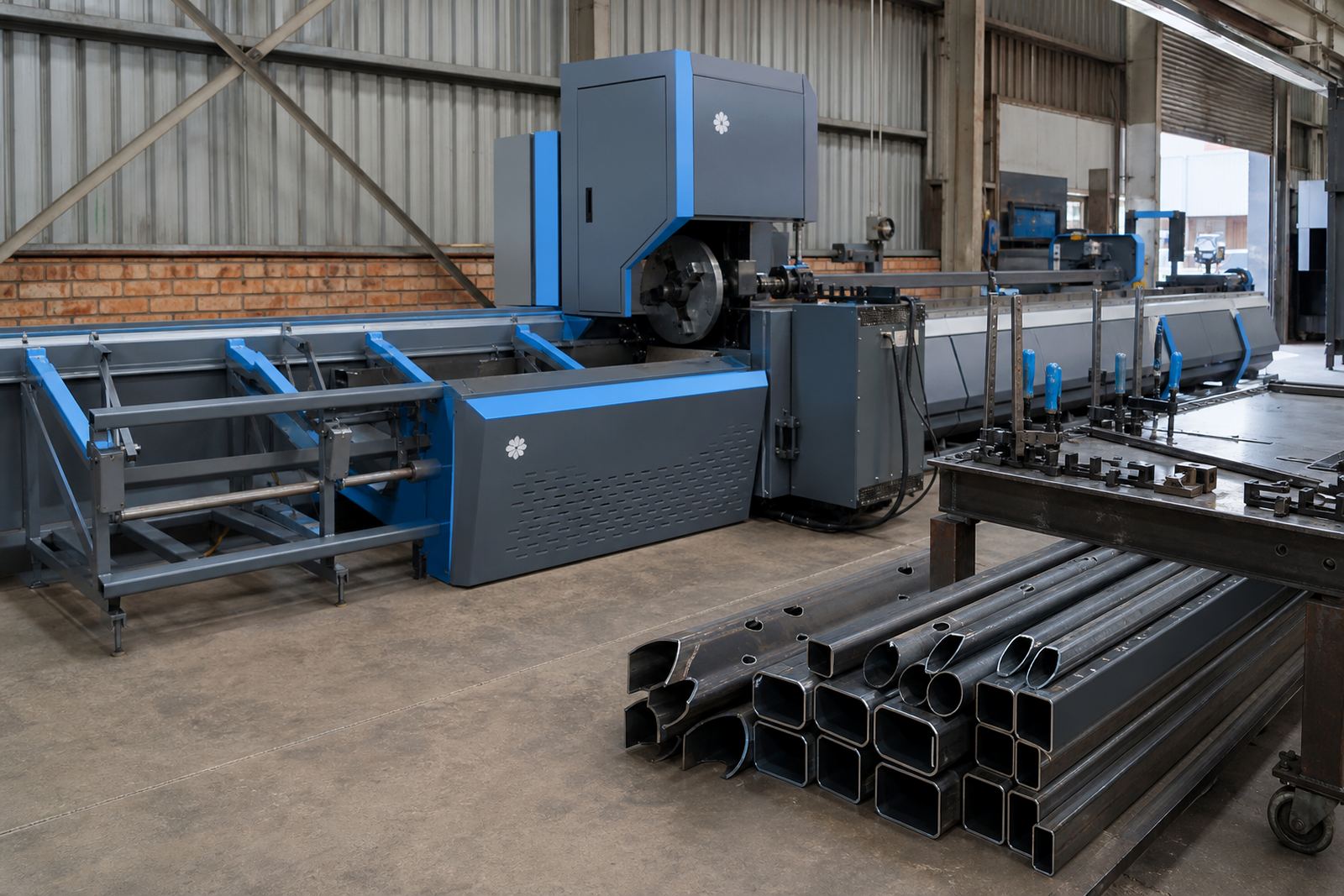
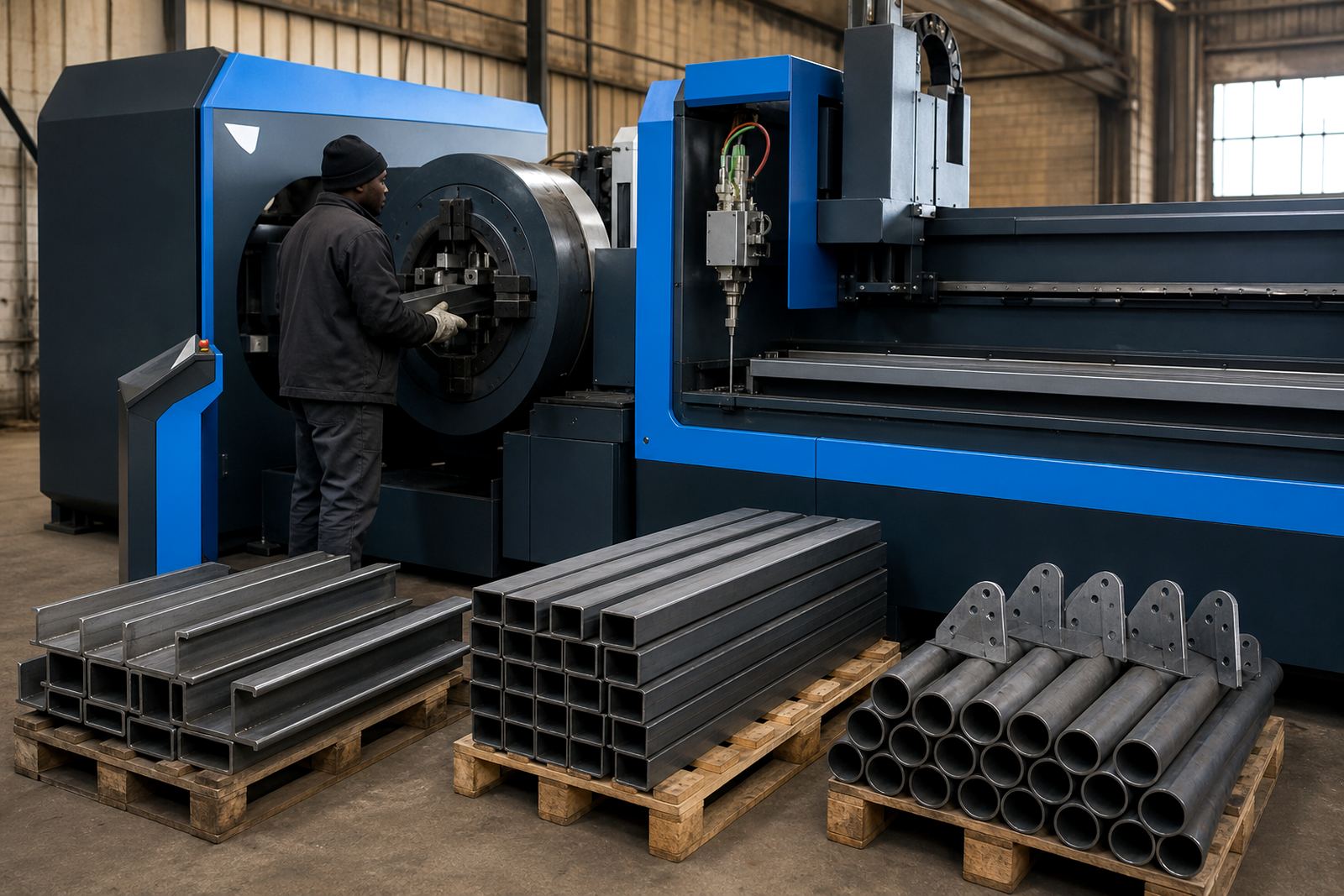
For solar frame production, the usual setup is a fibre laser tube and profile cutting machine with automatic loading support, multi-chuck clamping, nesting software and a cutting head suited to tube and open profile work. Bevel heads are useful where a frame needs a cleaner weld prep or a special joint angle. The right assist gas setup also matters, because clean edges and steady cut quality help when sections are going straight from cutting to fabrication bays in Wadeville, Pretoria or Cape Town.
- Round tube for posts, braces and bracing members
- Square and rectangular tube for rails, frames and support legs
- Angle and channel for brackets, cross members and mounting runs
- Nesting software for material use, cut order and part labelling
- Chucks and supports to hold longer sections without chatter
When a machine is planned around these parts, the fabricator gets less trial and error on the floor. That matters when one order uses short sections for rooftop frames and the next one needs longer runs for carport style structures.
Layout choices that save time in the workshop
Solar frame cutting works best when material flow is planned before installation day. A clear infeed area, enough straight length for stock, and a sensible offload point all help the operators keep movement under control. In plants where tube arrives in mixed sizes, the store area should be marked by section size and wall thickness so the wrong bundle does not end up at the machine.
It also helps to separate cutting, deburring and assembly. If the same bay is used for all three, small parts go missing and finished parts get scratched or bent. In coastal towns like Durban and Gqeberha, storage should also allow for humidity and surface protection so tube and channel do not spend too long sitting exposed before fabrication begins.
- Keep the loading side clear for long stock and forklift movement
- Mark separate zones for tube, channel, angle and finished parts
- Allow space for nesting printouts, part sorting and checking lengths
- Set the machine where operators can watch the cut path and the offload tray
Common mistakes on solar frame jobs
One common mistake is treating solar frame work like light general fabrication. The parts may be simple, but the job still needs repeatable holes, accurate slot positions and consistent edge quality. If the cut sequence is not planned well, long sections can move under heat and the last hole in a batch no longer matches the jig.
Another problem is poor chuck alignment or weak support on longer tube lengths. That leads to marks on the tube and inconsistency in the cut. Bevel calibration also gets ignored more often than it should, yet it affects weld fit on brackets and joint faces. Assist gas setup is another area where shortcuts show up quickly, especially when the team wants clean edges and fewer burrs on production frames.
Training matters because the machine can only do what the operator sets it up to do. When nesting, clamp positions, cut order and maintenance checks are not understood, scrap rises and the frame line slows down.
What a typical project budget looks like
The budget for a solar frame cutting setup depends on tube size range, the need for bevel cutting, the level of automation, and whether the line must handle mixed profiles. For a smaller job shop working mostly on manual loading and standard tube sizes, the equipment spend can sit in the lower millions of Rand. A production plant with automation, stronger material handling and broader profile capability will usually be higher, often into a wider multi-million Rand bracket.
Installation, commissioning, training and first-run support should be included in the plan from the start. Preventive maintenance, chuck alignment and service access also belong in the budget, because the machine has to keep delivering consistent parts after the first project is completed. For sites in Bloemfontein, Nelspruit or Johannesburg, delivery rigging and floor preparation can also affect the final figure.
- Entry-level cutting cell: suited to smaller solar frame batches
- Mid-range setup: better for mixed work and steady production
- Heavier-duty line: for higher output, longer stock and more complex profiles
- Added costs: rigging, commissioning, operator training and maintenance planning
Support that fits a fabricator’s rhythm
LaserTube works with metal fabricators that need a practical setup for solar frames, mounting structures and support parts. That includes site assessment, delivery rigging, machine installation, commissioning, operator training, nesting training, preventive maintenance, chuck alignment, bevel calibration, assist gas setup, remote diagnostics and breakdown response. Based in Wadeville, Germiston, our team provides support throughout South Africa, with customers in Cape Town, Durban, Gqeberha, Johannesburg and Pretoria.
For solar frame work, the useful point is not just cutting capacity. It is whether the machine matches the way the workshop stores material, moves parts and finishes frames for site installation. When the machine, software and training line up with that workflow, the job runs with fewer stoppages and less rework.
Solar frame projects can be briefed on the contact form.