Frames that need the same cut, over and over
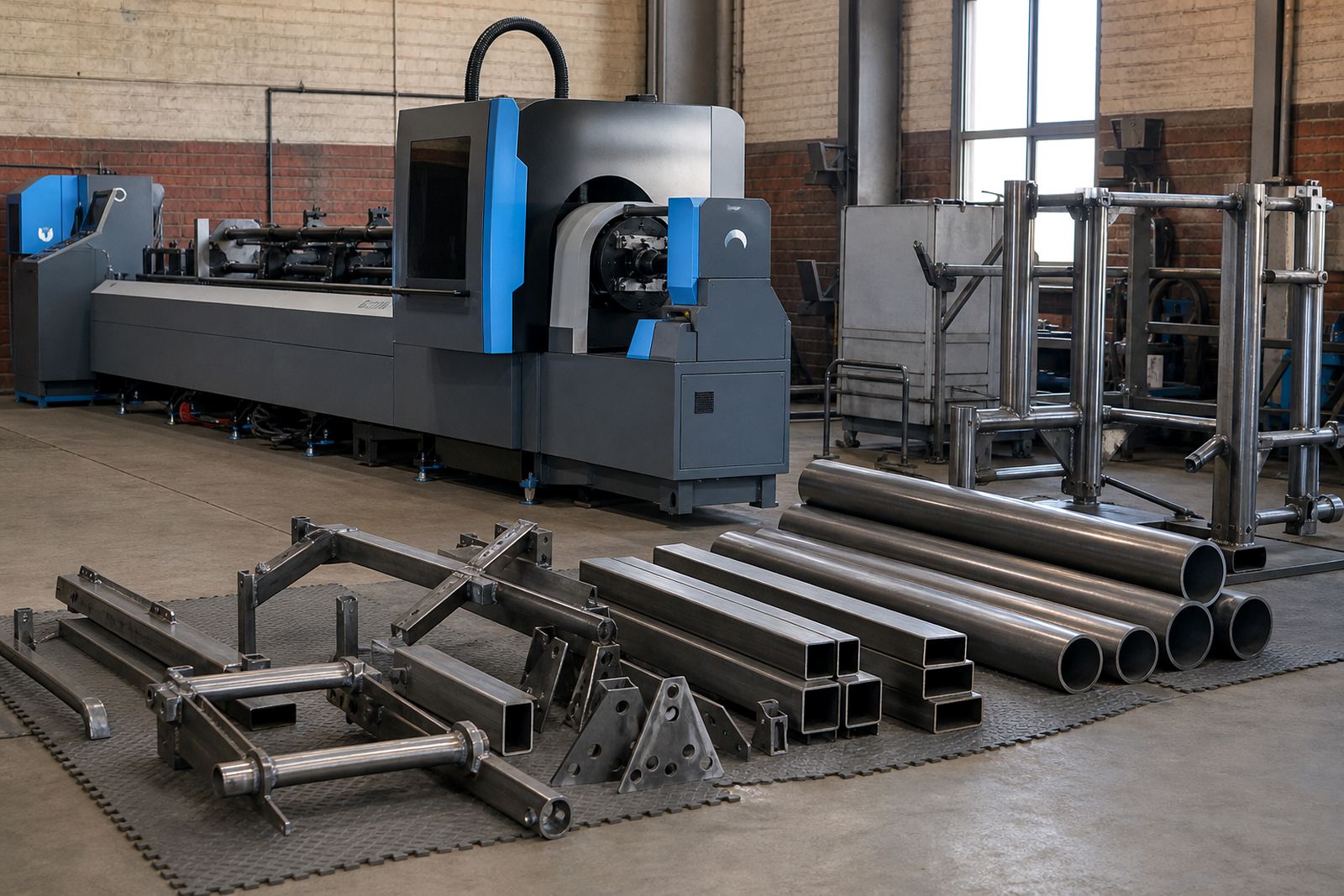
Conveyor and handling equipment lives on repeat parts. Side rails, crossmembers, brackets, uprights and support feet all need the same dimensions so welders can tack and assemble without chasing gaps. A fibre laser tube machine suits this work because it cuts tube and profile sections with a clean edge and accurate hole placement, even when the order contains many small parts from one drawing.
On local fabrication floors in Wadeville, Germiston, Johannesburg and Pretoria, these jobs often start as a stack of cut lengths in mild steel or stainless steel. A good tube cutter helps keep the parts consistent from the first length to the last one. That matters when a conveyor line has to sit level, carry load evenly and line up with rollers, guards and drive stations.
Typical machine set for conveyor frame work
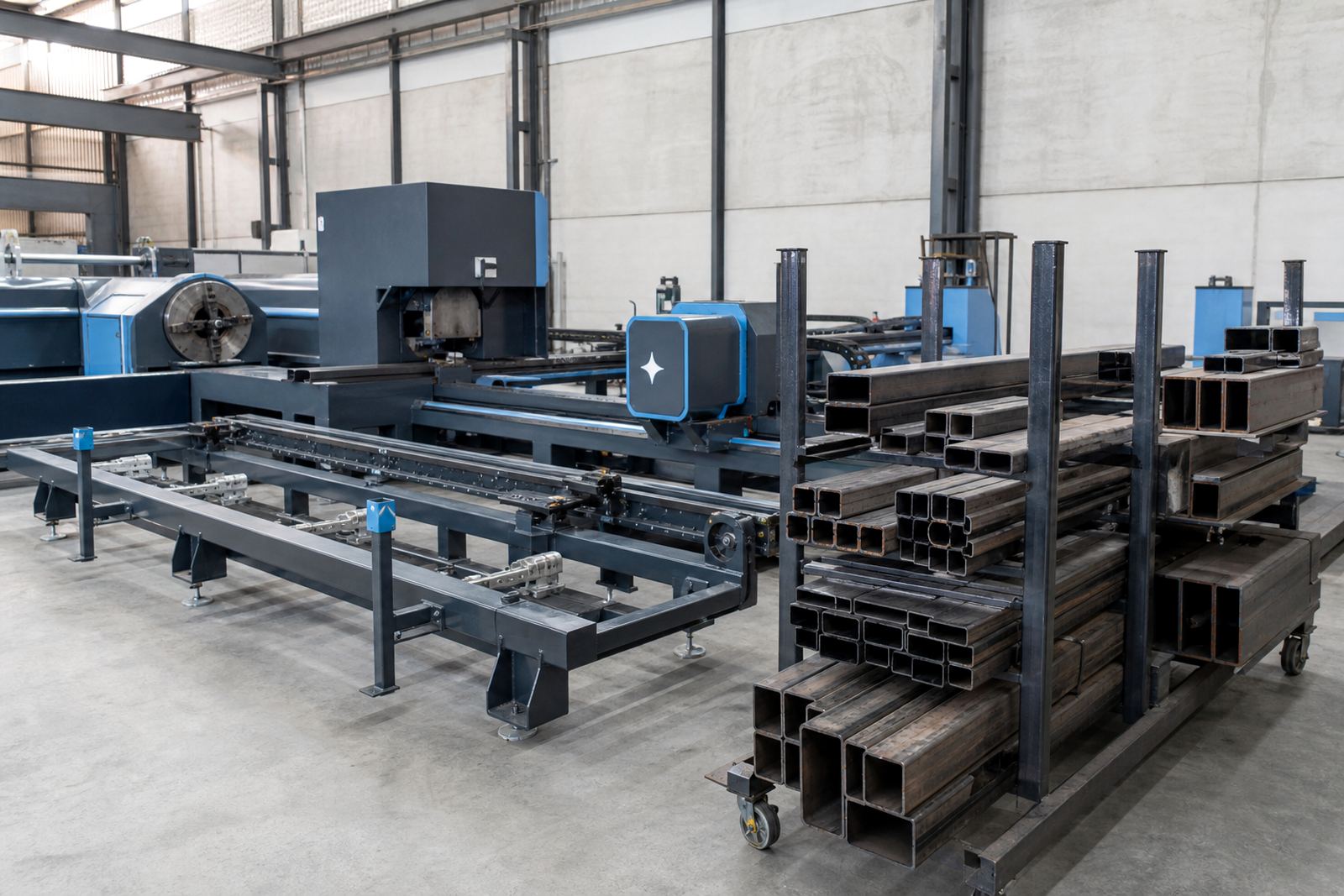
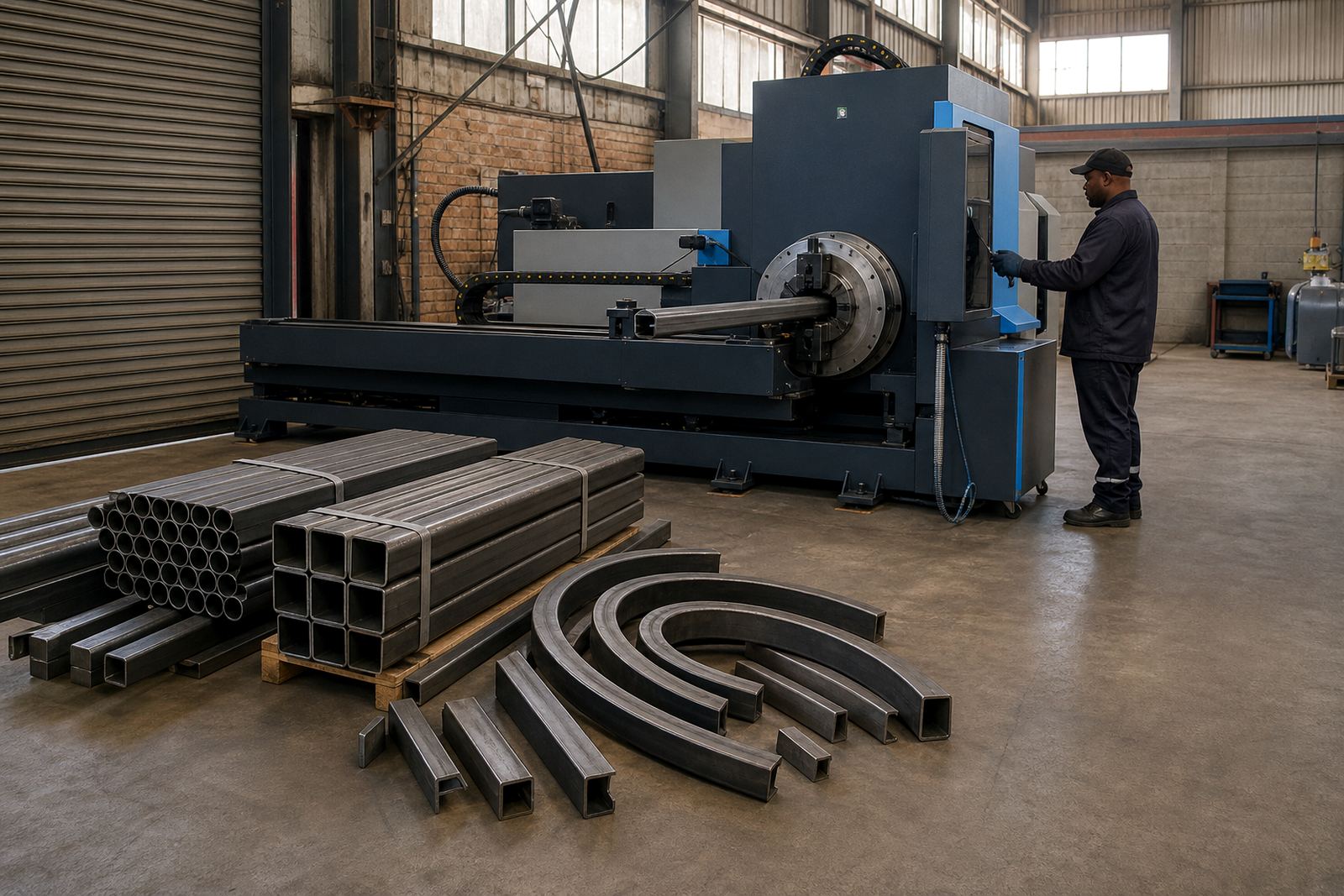
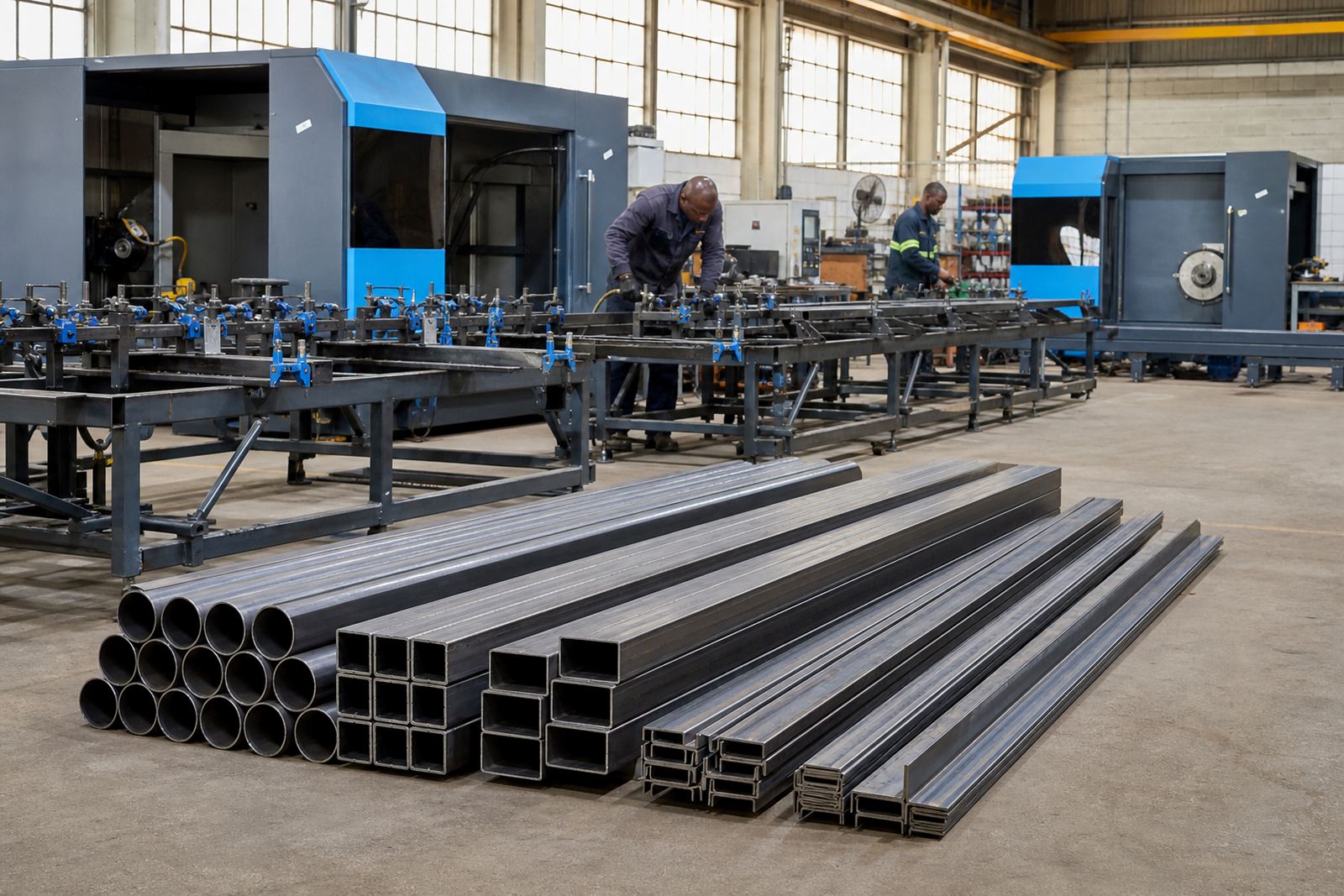
Most conveyor frame jobs use a machine set up for round, square and rectangular tube, plus angle and channel. Some production lines also call for bevel cuts on thicker members, or for marked holes and slots that make welding and bolting easier. A chuck system grips the tube through the cut cycle, while nesting software arranges parts along each length to reduce offcuts and keep material use sensible.
- Tube and profile cutting machine for repetitive frame parts
- Chuck system for secure holding of long sections
- Bevel head for prepared weld edges where the drawing calls for it
- Nesting software for drawing parts from each length of stock
- Assist gas setup for clean cutting across the chosen material
- Extraction and guarding to support safe workshop use
For plants building conveyors in batches, the machine usually sits near the preparation area, not far from drilling, bending and welding stations. That keeps material movement short and reduces damage to freshly cut edges.
Layout notes for a conveyor frame line
A tube cutting machine works best when the material flow is planned before the first job lands on the screen. Long stock needs straight infeed space, a clear run for finished parts and enough room for bundle handling. If the workshop handles mixed lengths, the rack layout should separate raw tube from cut parts so operators are not sorting through the same stack twice.
In Durban and Gqeberha, coastal humidity can affect storage and handling, so covered racking and sensible stock rotation help protect material quality. In inland sites like Bloemfontein or Nelspruit, dust control matters just as much. The machine area should allow for gas cylinders or bulk gas connections where fitted, plus clear access for maintenance and chuck checks.
- Allow straight access for long tube loading and offloading
- Keep cut parts and raw stock in separate marked areas
- Plan space for welding jigs beside the cutter
- Place the control station where drawings are easy to review
- Leave service access around the chuck and cutting head
The mistakes that slow conveyor jobs down
One common mistake is treating conveyor frame work like a simple cut list. It is not. Hole positions, slot length, tube orientation and weld prep all affect how the frame sits once assembled. If the nesting plan ignores left hand and right hand parts, the workshop can lose time sorting and rotating pieces before assembly starts.
Another issue is underestimating the learning needed for nesting and setup. A machine can cut accurately, but the operator still needs to understand pierce points, clamping sequence, kerf allowance and how different profiles behave when cut. Poor chuck alignment can mark the tube or introduce errors that show up later in assembly. Bevel settings need checking too, especially where thicker sections are welded under load. Small slips here cost far more than the cut itself.
Budget ranges for conveyor frame cutting
Budget depends on tube size range, automation level, bevel capability and how much of the workflow needs to be covered. A smaller workshop building conveyor supports and light handling frames may look at entry systems from about R1,8 million to R3,5 million. Mid-range production setups with stronger automation, better nesting control and heavier material handling often sit from around R3,5 million to R7,5 million. Larger lines with advanced loading, bevel work and higher throughput can move beyond that.
Conveyor frame buyers should price site assessment, rigging, installation, commissioning and operator training alongside the machine itself. Preventive maintenance also matters, because conveyor frame work tends to run in batches and any drift in chuck alignment or gas setup shows up fast in repeated parts. If the machine will be used across different plants or contract jobs, a service plan is worth discussing while the line is being specified.
How LaserTube supports conveyor frame projects
LaserTube works with metal fabricators that need tube and profile cutting equipment for conveyor frames, machine bases, support legs and handling structures. Michael Dlamini leads the business from Wadeville, Germiston, with Anika Kajee handling sales, Sibusiso Bhengu leading installation, Leanne Mabuza coordinating training, Pieter Visser on service and Ayanda Mashaba handling applications support. That mix helps the customer move from machine selection to production work without guessing at the setup.
Support can include site assessment, delivery rigging, machine installation, commissioning, operator training, nesting training, preventive maintenance, chuck alignment, bevel calibration, assist gas setup, remote diagnostics and breakdown response. Clients across Johannesburg, Pretoria, Durban, Cape Town, Gqeberha, Bloemfontein and Nelspruit get in touch when they are planning a new conveyor line or expanding an existing fabrication floor.