Gym frame jobs are often about repeatable fit
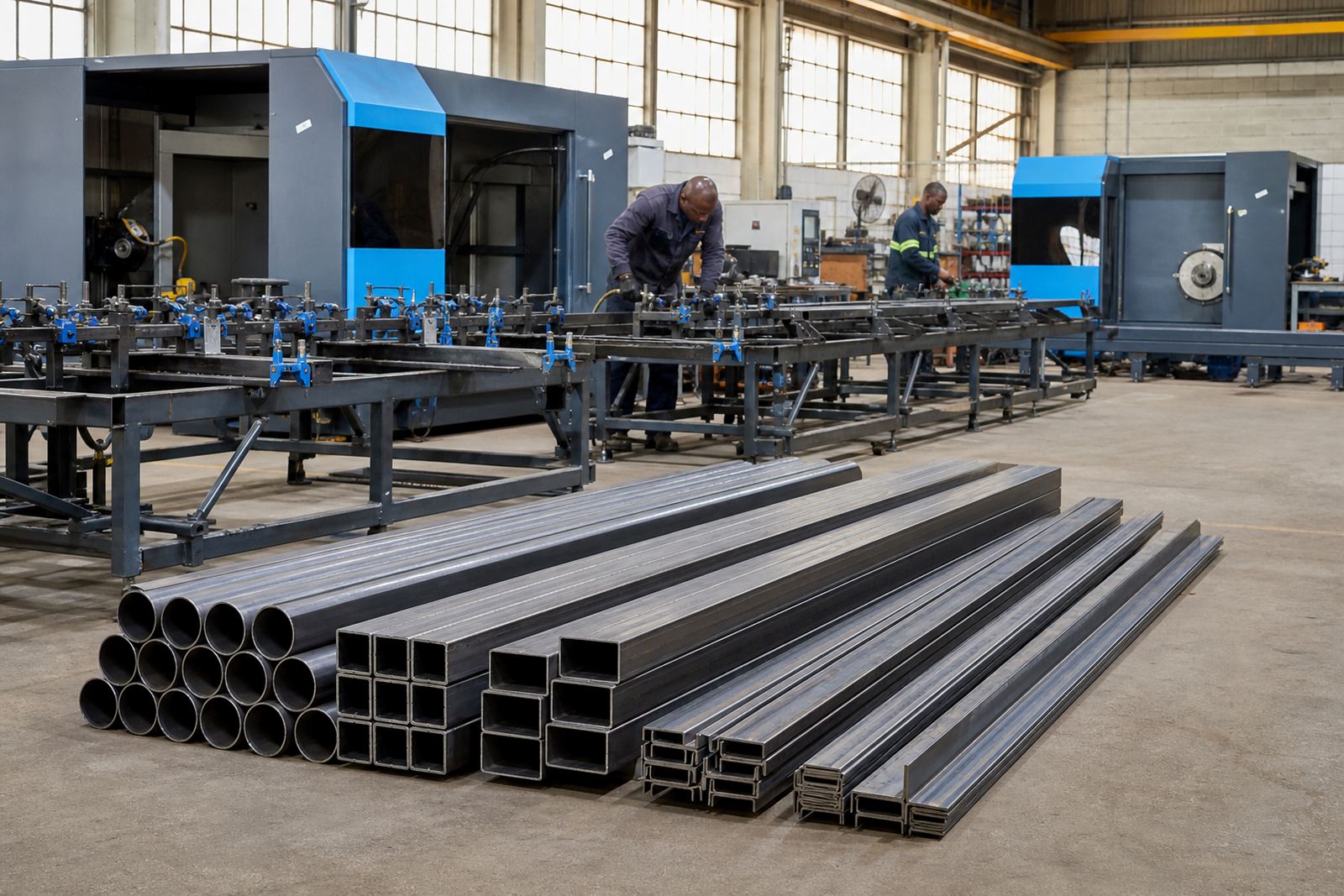
When a fabricator is building squat racks, benches, cable stations or storage frames, the problem is rarely the raw tube. The challenge is getting every hole, notch and end cut to land where the fitter expects it, without extra grinding or rework. Fibre laser tube cutting helps with round, square and rectangular tube, plus angle and channel where gym structures call for more than plain box section.
For gym equipment, that matters in places people touch every day. Hand grips, uprights, cross members and foot plates all need consistent edge quality so welders can work to a proper fit-up. In humid coastal towns like Durban or Gqeberha, cleaner cut edges also help reduce time lost on rust cleanup before assembly and coating.
Typical machine set-up for this kind of work
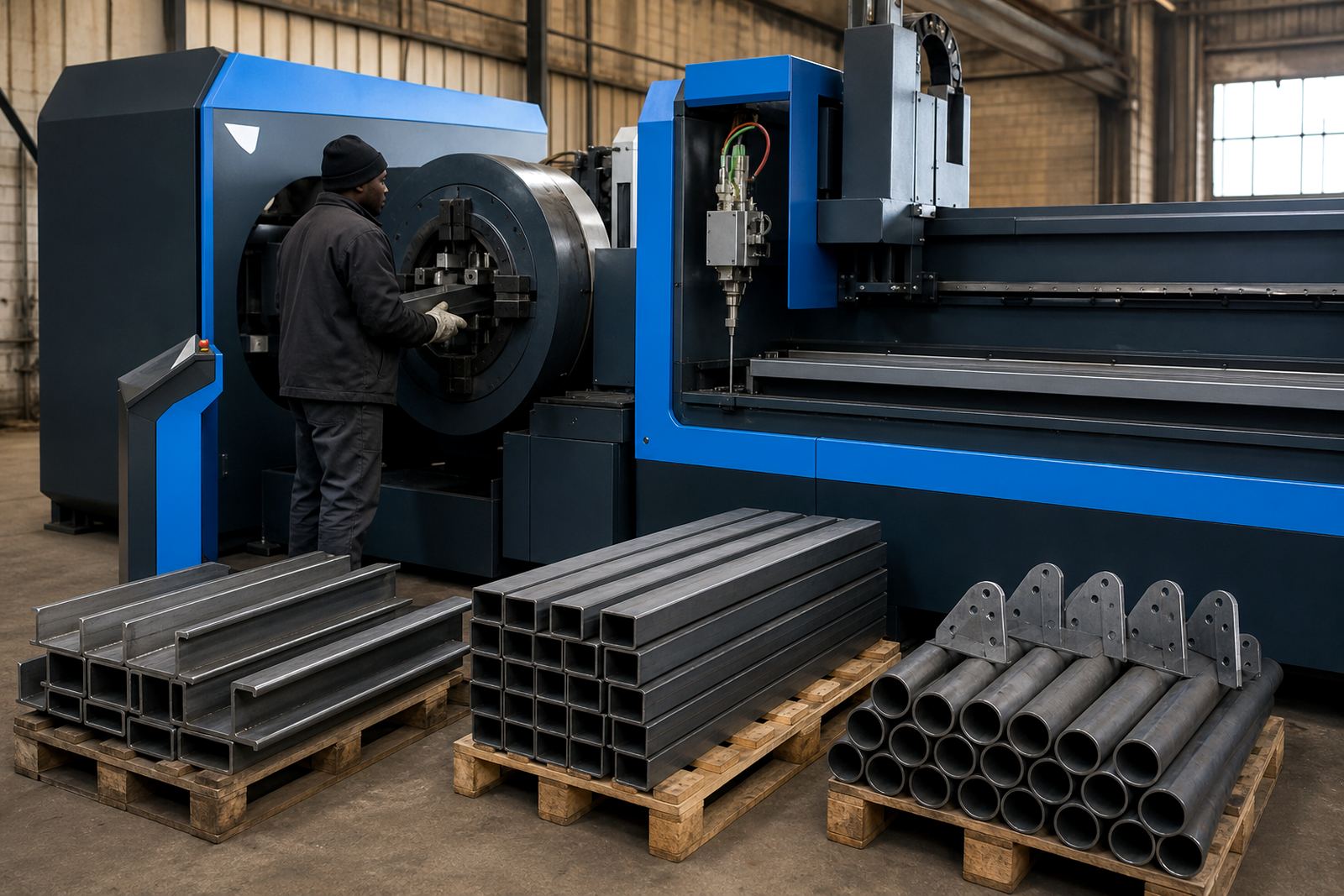
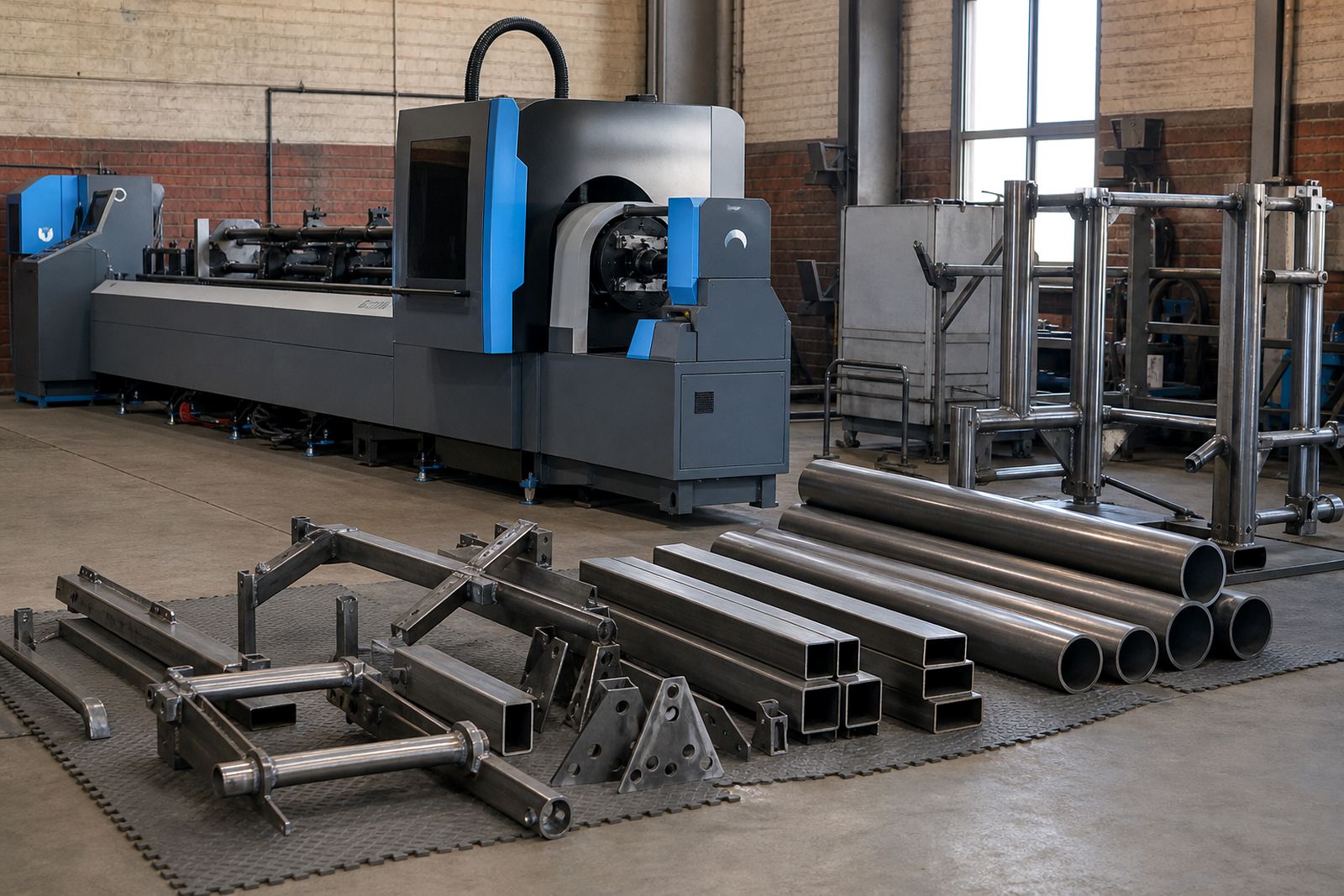
A practical line for gym equipment fabrication usually starts with a fibre laser source matched to the tube sizes in regular use, a stable bed, chucks that hold the material without distortion, and software that places holes and slots efficiently on the tube length. Bevel heads are useful where braces, joining details or angled connections need more exact preparation. Assist gas setup also matters, because the cut edge quality changes with the gas choice, pressure and tube wall thickness.
- Round, square and rectangular tube cutting for frames and uprights
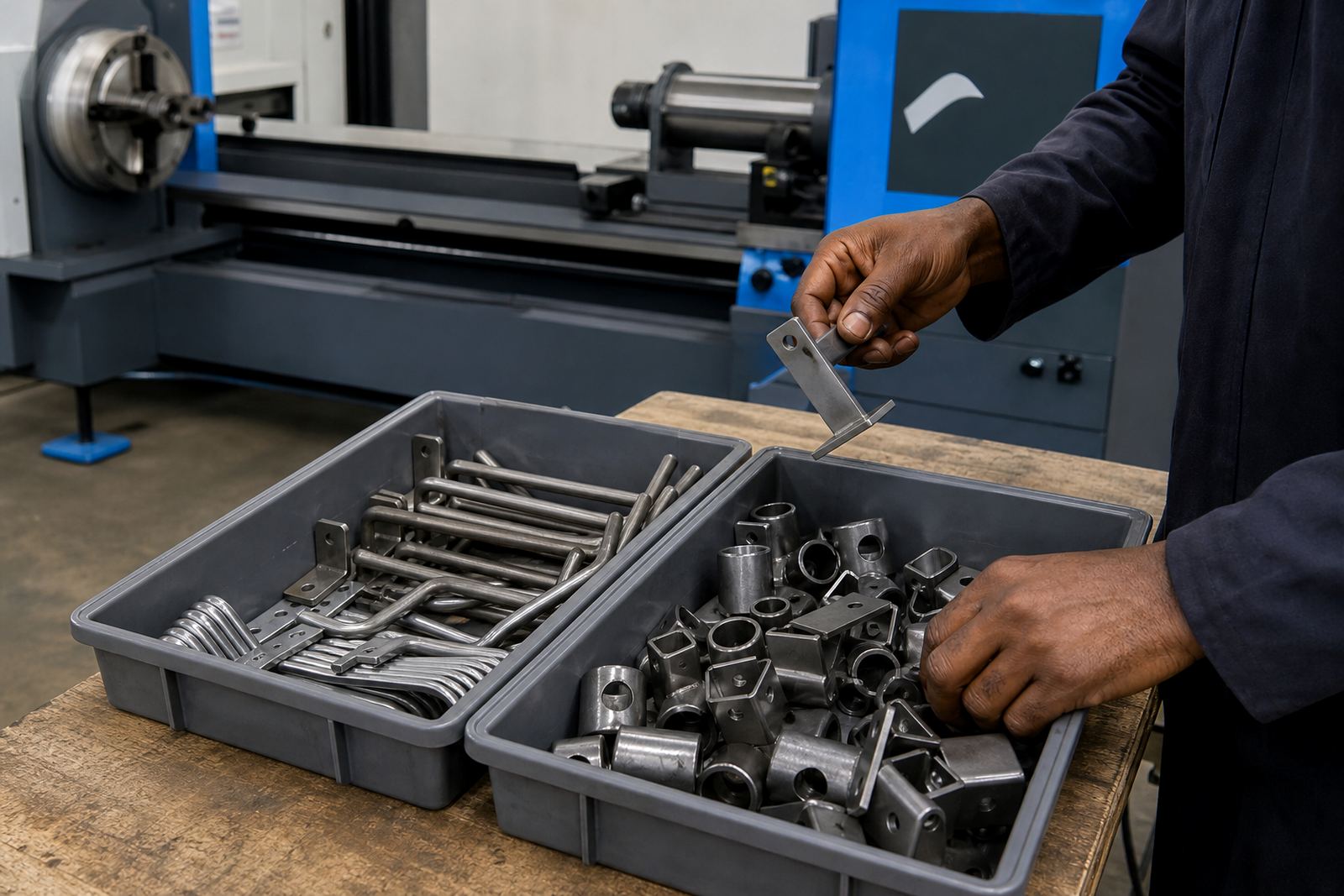
- Angle and channel cutting for brackets, supports and reinforcement parts
- Chuck systems for secure gripping and accurate rotation
- Bevel cutting where joints need cleaner weld prep
- Nesting software for tube use, part spacing and material yield
We also check how the machine will be loaded and unloaded, because long lengths need enough space for safe handling. In Wadeville and Germiston, many workshops work in tighter yards than they would like, so the machine footprint, infeed and outfeed paths should be checked against the actual floor layout, not a drawing in isolation.
Planning the floor around tube work
Gym equipment jobs often mix short brackets with long frame members, so the floor plan should allow for both. A compact shop may only need one cutting cell, a material rack, a finished-part area and a welding bay. A larger plant may add dedicated staging for raw stock, offcut sorting and pre-assembly. The order of movement matters, because double handling wastes time and can mark finished tube.
Installation planning should include floor loading, access routes for delivery rigging, extraction or dust control where required, and enough room for maintenance access around the chucks and cutting zone. Operator training should cover loading, fixture checks, nesting choices and basic inspection of cut quality. If the machine will run multiple profiles in one shift, the team also needs a clear way to separate jobs so tube sizes do not get mixed.
- Allow straight access for long tube lengths entering the machine
- Keep a clean path from cutting to welding and coating
- Mark storage areas for raw tube, WIP and finished parts
- Leave space for service access around the chuck and head area
Common mistakes on gym equipment projects
One mistake is treating all gym tube as if it behaves the same. Thin wall tube, heavier wall tube and mixed profiles do not cut or clamp in the same way. Another error is underestimating how much time is lost when nesting is poor and small parts are scattered across the length without a sensible cutting order. That can leave the operator with too many remnants and a pile of parts that still need sorting.
We also see jobs where the holes are sized for one fastener but the welding method changes later, which forces adjustments on site. If the bevel is not set correctly, fit-up gets awkward and the welder spends more time dressing joints than building frames. Poor gas setup can also leave more dross on the bottom edge, especially on heavier wall sections.
Preventive maintenance helps here. Chuck alignment, bevel calibration and regular inspection of the cutting head keep tube work repeatable. On a busy shop floor, a small alignment issue can show up as a visible mismatch on multiple rack uprights before anyone notices the cause.
Budget ranges in rand for this use case
For South African gym equipment fabricators, the budget depends on tube size range, automation level, bevel requirements and the amount of support needed during start-up. A smaller tube cutting set-up for a job shop can sit in the lower millions of Rand, while a more advanced machine with larger capacity, bevel capability and stronger automation can move much higher. What matters is that the machine handles your day-to-day work without pushing extra secondary operations back onto your production line.
It is also worth budgeting for site assessment, rigging, installation, commissioning, operator training and nesting training as part of the full project. Some shops focus only on the machine price and leave out the cost of floor changes, part handling, or planning for production flow. That gap can create pressure after delivery when production is meant to start moving.
For plants in Johannesburg, Pretoria, Durban, Cape Town and Gqeberha, the right figure often depends on the mix of tube diameters and lengths, plus whether the machine will also handle profile work for custom frames and accessories. We help with machine selection, installation and support from Wadeville, Germiston, with service across South Africa.
When gym fabricators ask for support
We work with fabricators that need cleaner production on racks, benches, pull stations and related steel structures. That usually means checking the tube range, the part mix, the cut quality target and the available floor space before any machine is installed. If the shop already has welders and fitters in place, the next step is making sure the cutting cell feeds them parts in the right sequence.
Our service team handles commissioning, remote diagnostics, breakdown response and preventive maintenance, while training covers operators and nesting staff. If the job calls for assist gas setup, bevel calibration or chuck alignment, those details are built into the support plan. For recurring gym frame work, that kind of setup keeps the cutting process more predictable and easier to manage.