Greenhouse frame work that starts with straight tube and steady repeat cycles
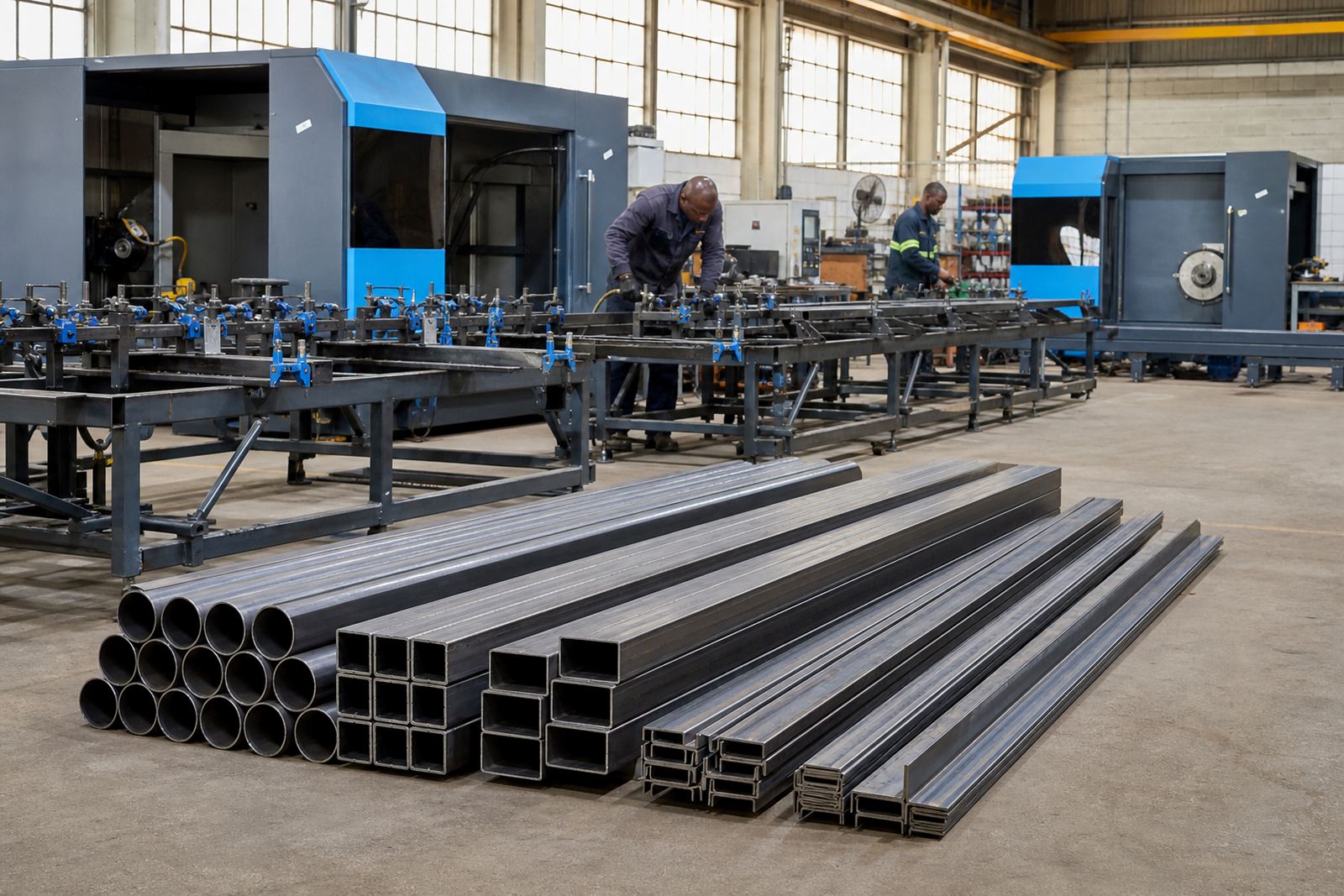
Greenhouse fabricators usually work with light wall round tube, square tube and rectangular tube for arches, rafters, purlins, base rails and bracing. The job looks straightforward on paper, but the frame only fits well when every cut length is controlled and the hole positions stay consistent from one batch to the next. A fibre laser tube machine helps keep that repeat work under control, especially when the same frame sizes are produced for farms, nurseries, tunnel growers and commercial sites.
For smaller shops, the machine often sits between a manual cutting bay and a full fabrication line. For larger plants, it becomes part of a planned flow where raw bundles move in, cut parts move out, and sub assemblies are welded with less rework. That matters when the same greenhouse profile is ordered in runs, because short variations at the cutting stage can show up later as gaps, twisted corners or uneven cover support.
LaserTube works with fabricators in Wadeville, Germiston and across Johannesburg, Pretoria, Durban, Cape Town and Gqeberha where greenhouse frame work is tied to site schedules and transport planning. The setup can be matched to the sizes you run most often, including light gauge material for small structures and longer lengths for larger spans.
Machine set-ups that suit tube frames and light profile work
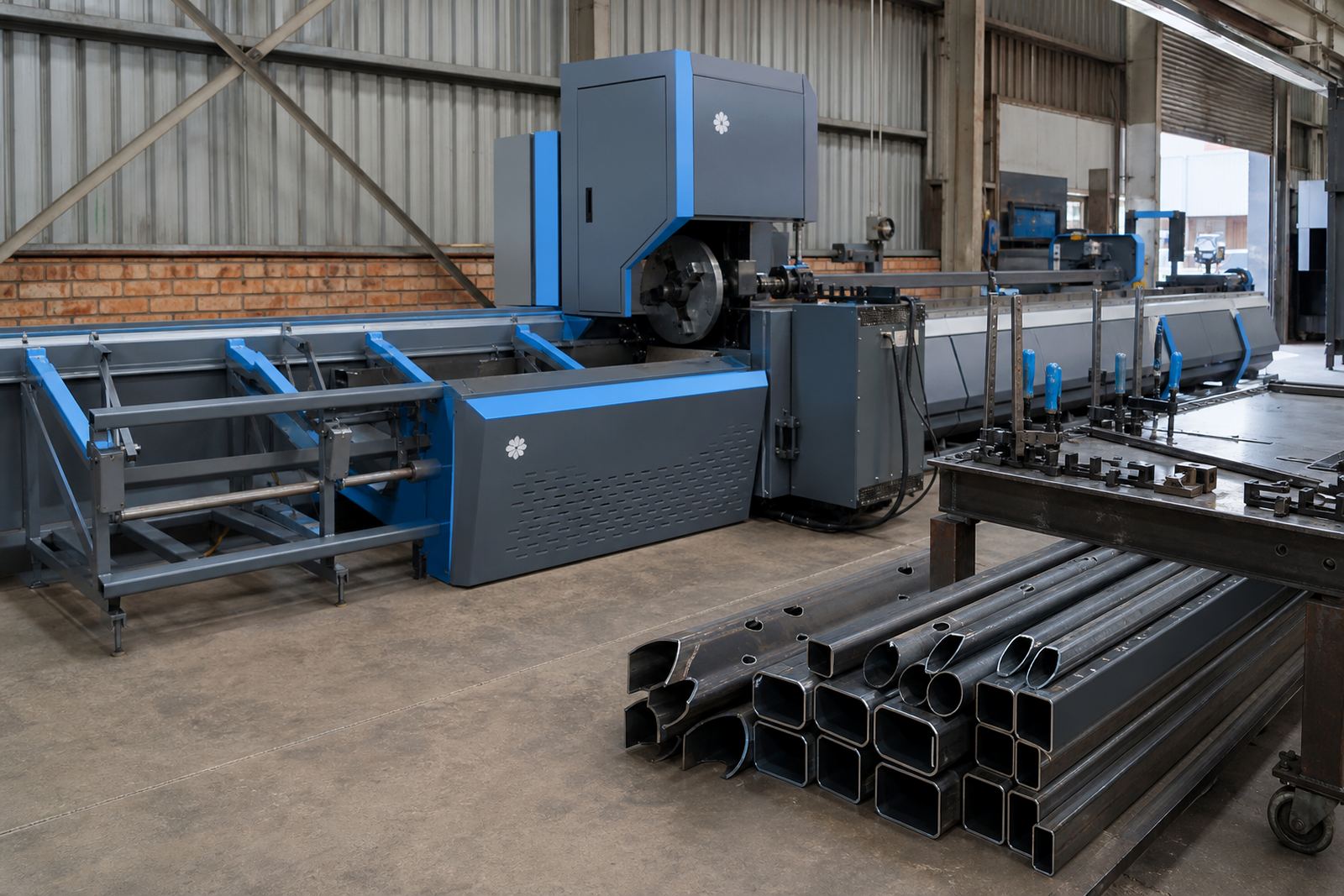
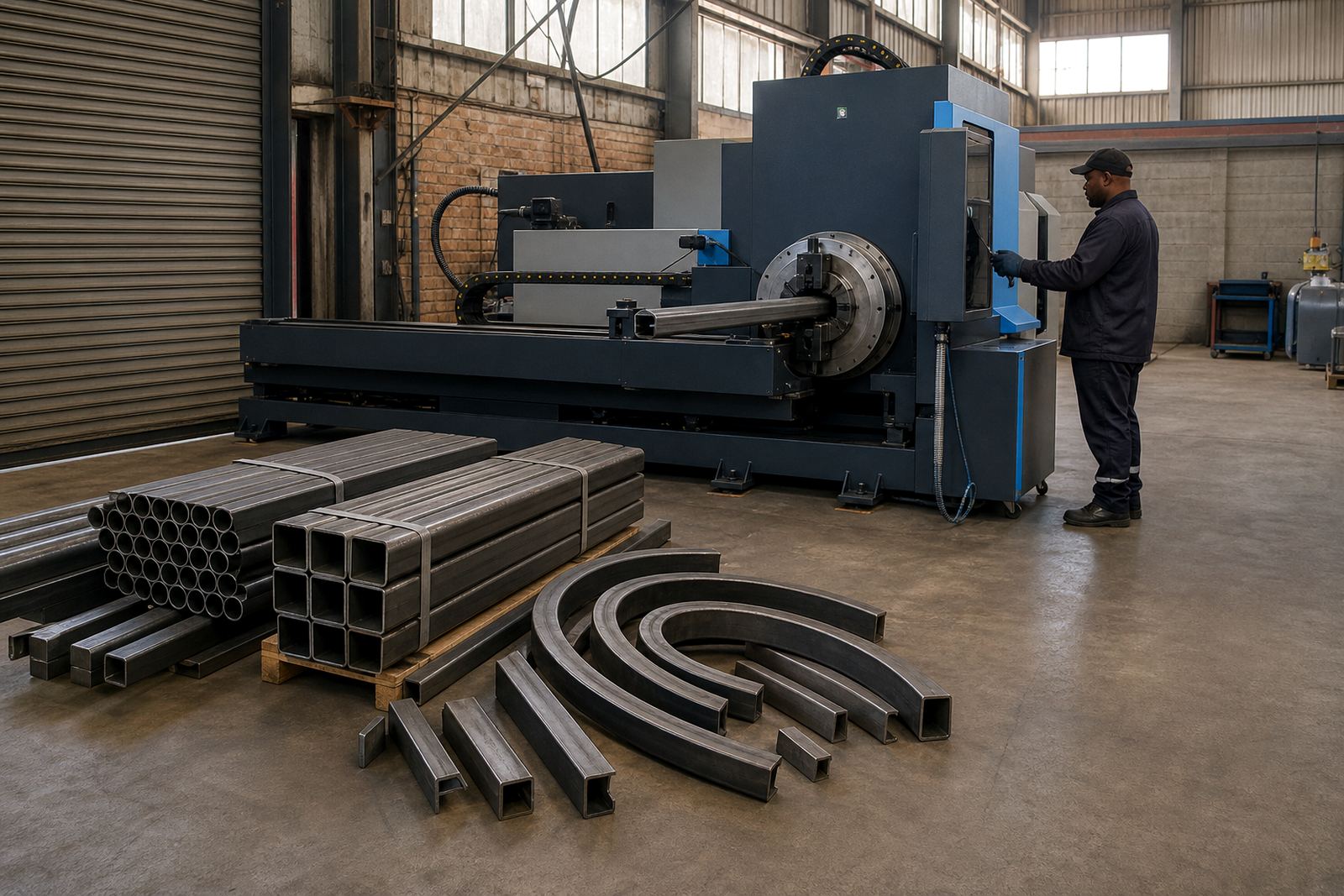
Greenhouse parts are usually best handled on a machine with reliable tube support, stable clamping and software that can repeat part libraries without endless manual adjustment. Round, square and rectangular tube are the usual starting point, and some jobs also include angle and channel for base frames, brackets and stiffeners. Where tube ends need fit-up for welding, the cut quality and burr control matter just as much as the cutting speed.
A practical machine set for this work often includes:
- Dual chucks for long tube support and stable rotation
- Profile loading that suits light and medium sections
- Software nesting for material use across repeated frame parts
- Bevel heads where joint geometry calls for better weld access
- Assist gas setup matched to material type and cut quality needs
- Safety guarding, interlocks and clear operator access around the cutting zone
For some greenhouse jobs, bevel cutting is unnecessary. For others, it helps on joins that need more welding clearance or where corner details are built for strength. The right machine choice depends on tube sizes, batch count, weld method and whether the same frame family is repeated through the year or changed often.
Layout planning when the frame shop also handles prep and welding
Good planning around a greenhouse line starts with the material path. Tube lengths should be easy to receive, stage, cut, mark and move on without clutter. If the shop handles steel for several product lines, the tube area needs enough space for loading, offcut sorting and finished part stacking. Long members can be awkward in tight yards, so the bay layout should account for turning room, overhead clearance and safe movement around bundles.
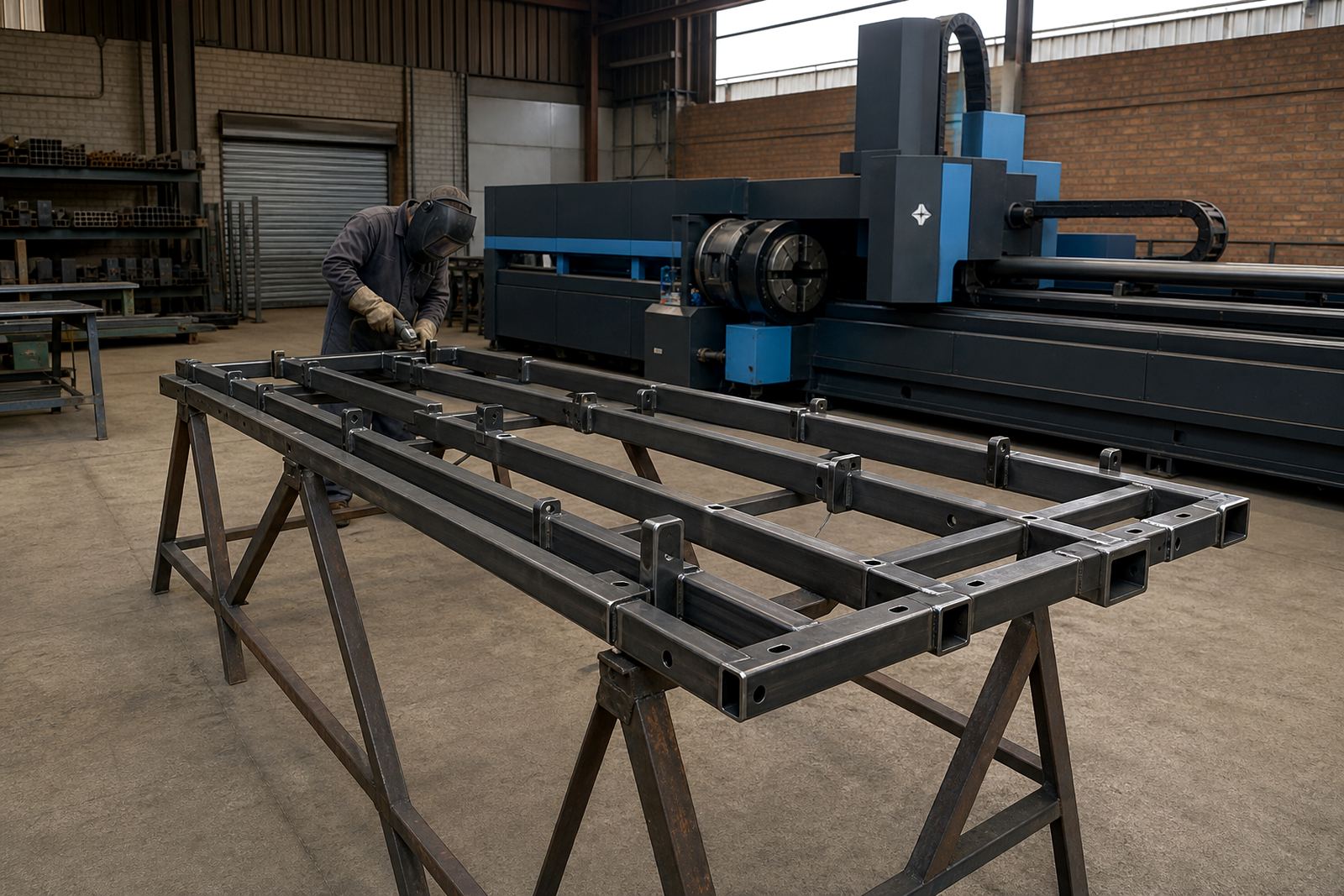
In many South African workshops, the best results come from keeping the cutting machine close to the next step in the process, usually deburring, drilling checks, tack welding or sub assembly. That reduces handling and lowers the chance of bent parts or mixed bundles. It also helps when jobs are split between different crews and the frame schedule changes through the season.
For farms near the coast, humidity can affect storage and handling of raw material, so the receiving area needs a sensible order. Tube should not sit on wet ground, and cut parts should move to the welding side without waiting in the open. Municipal site rules and yard access also matter when delivery rigging is needed for a machine that sits inside a live fabrication plant.
Common mistakes that slow greenhouse frame production
Many greenhouse jobs run into trouble before the first frame is welded. The usual issues are not dramatic, but they cost time and steel. A machine can cut cleanly and still create trouble if the team has poor nesting habits, loose material references or no agreed part naming system. The same problem shows up when different tube sizes are mixed in the same run without a clear process for sorting and labelling.
- Using the wrong clamp pressure for thin wall tube
- Leaving too little allowance for weld shrinkage on fitted joints
- Poor nesting that wastes offcuts on repeated frame parts
- Cutting from a drawing set that has not been checked against the weld plan
- Skipping chuck alignment before long runs of tube work
- Choosing a machine size that is too small for the longest members
Assist gas also needs proper setup. Too much focus on speed and too little attention to edge finish can leave a rough fit that gives the welders extra work. Training matters here, because the operator needs to understand how the tube behaves, how the nesting was set up and how to spot a drift in cut quality before the batch gets too far.
Training, installation and support for a greenhouse production line
LaserTube handles site assessment, delivery rigging, machine installation, commissioning, operator training, nesting training, preventive maintenance, chuck alignment, bevel calibration, assist gas setup, remote diagnostics and breakdown response. That mix is useful on greenhouse work because the machine is only part of the result. The team still needs the settings, the part library and the handling routine to stay consistent through ongoing production.
Michael Dlamini leads the business from Wadeville, Germiston, with Anika Kajee on sales, Sibusiso Bhengu on installation, Leanne Mabuza on training, Pieter Visser on service and Ayanda Mashaba on applications. For greenhouse fabricators, the point is not fancy features. It is getting tube cut parts that fit, nests that save material and a workflow that suits the shop floor you already have.
South African fabricators usually ask about budget in broad bands. A compact entry-level tube cutting setup for lighter greenhouse work can sit around R2.5 million to R5 million, depending on tube capacity, automation and support equipment. Mid-range production machines often fall around R5 million to R10 million, while larger systems with more automation, longer bed capacity or bevel capability can move well above that. Final costing depends on the tube sizes, the loading method, the gas package and the level of training and commissioning required.
When a greenhouse job is ready for fibre laser tube cutting
This use case suits fabricators who repeat the same frame families, need cleaner fit-up than a saw and drill line can give, or want better use of steel on light tubular work. If the greenhouse line includes arches, legs, cross members, end frames and joining details in a steady flow, fibre laser tube cutting usually gives the shop more control over part consistency and material use. It also helps when production needs to move between small custom jobs and larger repeat runs without changing the whole process.
For fabricators in Johannesburg, Pretoria, Durban, Cape Town, Gqeberha, Bloemfontein and Nelspruit, the key question is whether the machine layout suits the tube sizes you buy most often and the weld sequence your team already uses. A good setup keeps the shop moving, keeps offcuts under control and gives each greenhouse batch a better chance of fitting first time.
Fabricators usually get in touch when they want to discuss a greenhouse frame line or a tube cutting machine suited to that work.