Where truck body work benefits most
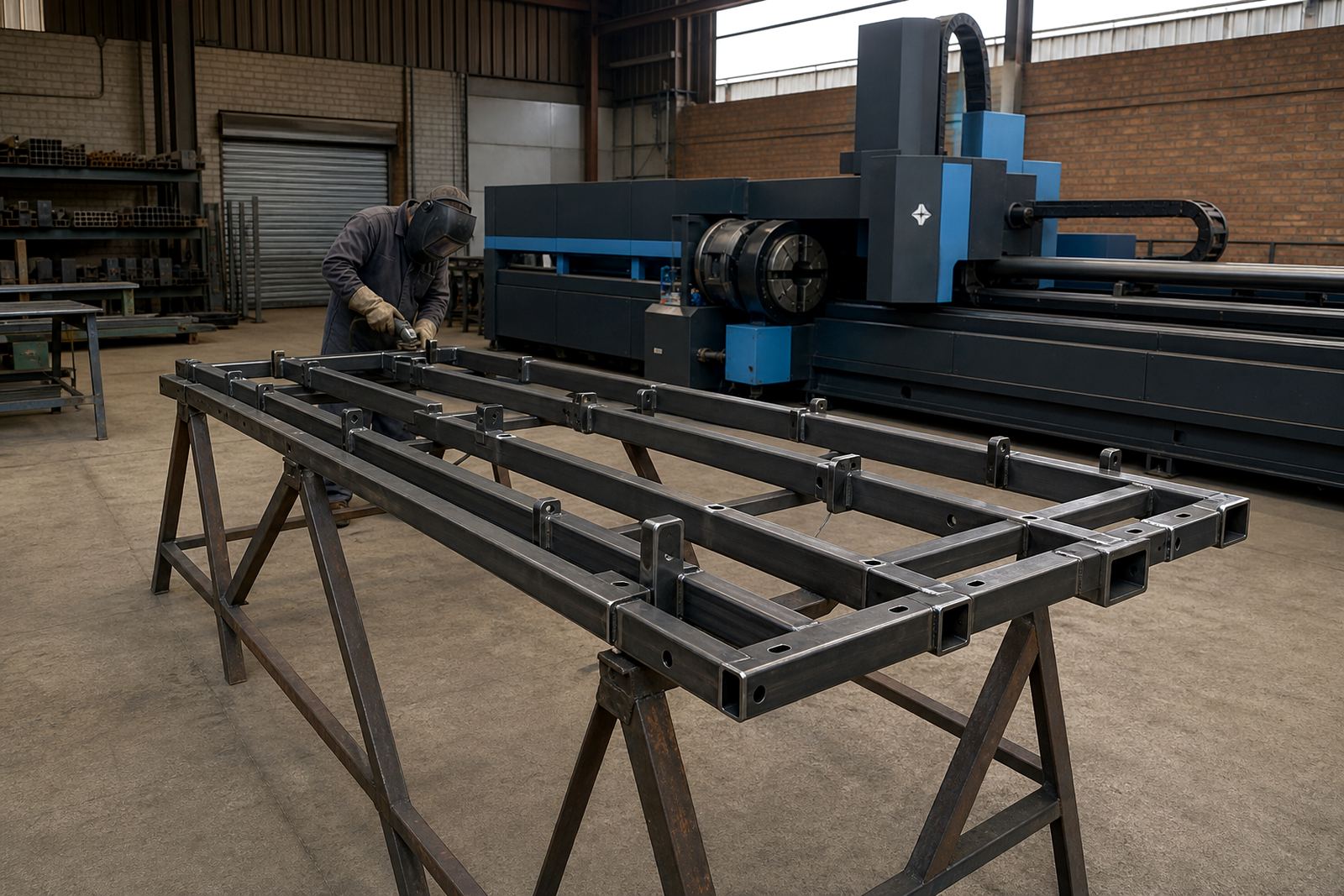
Body builders work with chassis extensions, side members, cross braces, tool compartments, mounting plates and canopy supports. On that kind of work, cut quality matters as much as speed because a small error in a tube end or notch shows up when the frame is squared and welded. Fibre laser tube cutting helps with round, square and rectangular tube, plus angle and channel, so the shop can prepare parts for tray bodies, dropsides, load bins and service bodies without relying on multiple manual operations.
In Wadeville and other busy fabrication areas, many shops need a machine that can move between short-run repair work and repeated batch parts. The right set-up reduces rework on slot positions, fishmouth joints and bolt holes, and it keeps the weldment closer to drawing. That matters when the body builder is working to municipal, fleet or commercial requirements and there is no room for a frame that pulls out of line during assembly.
Typical machine set-up for body frame parts
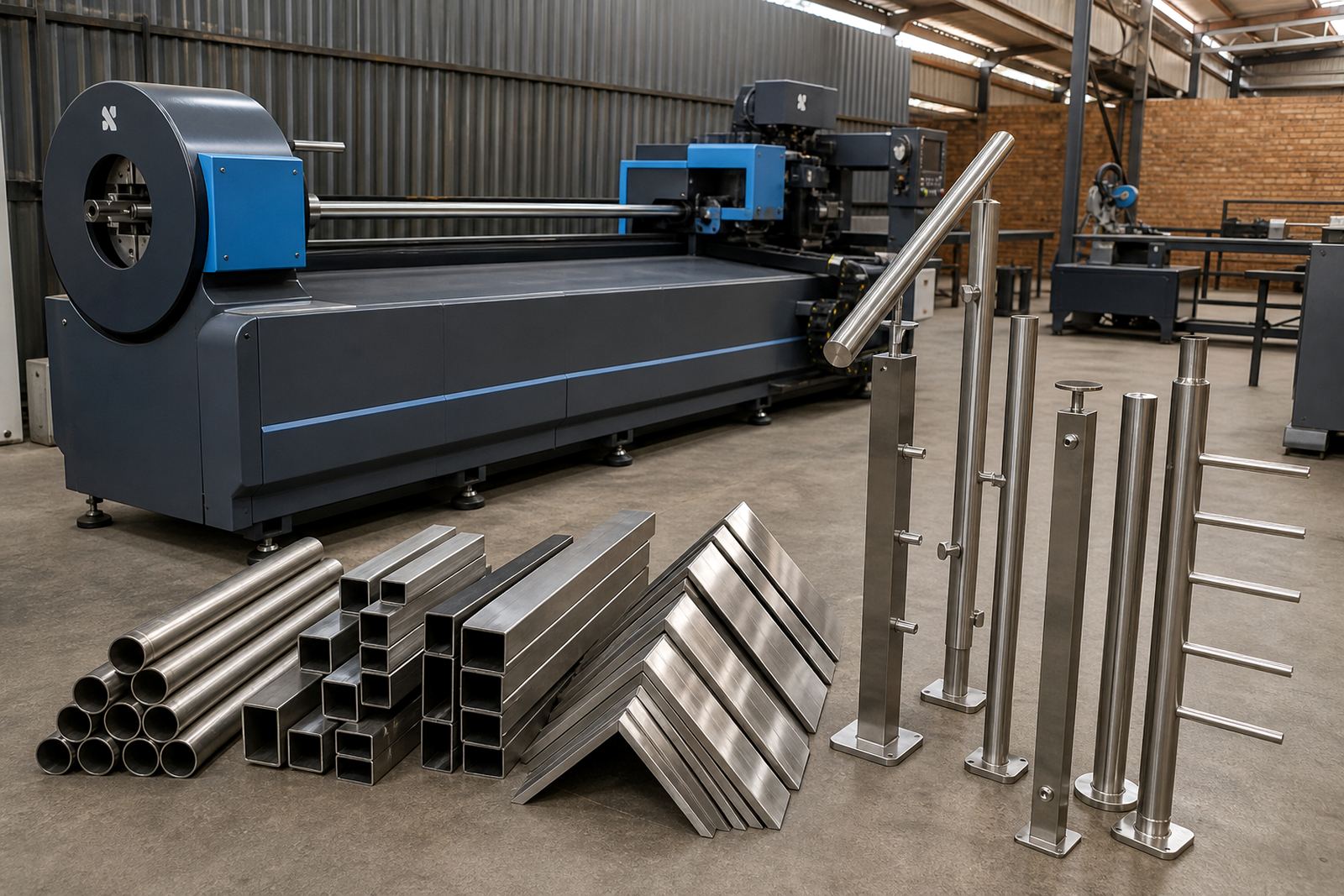
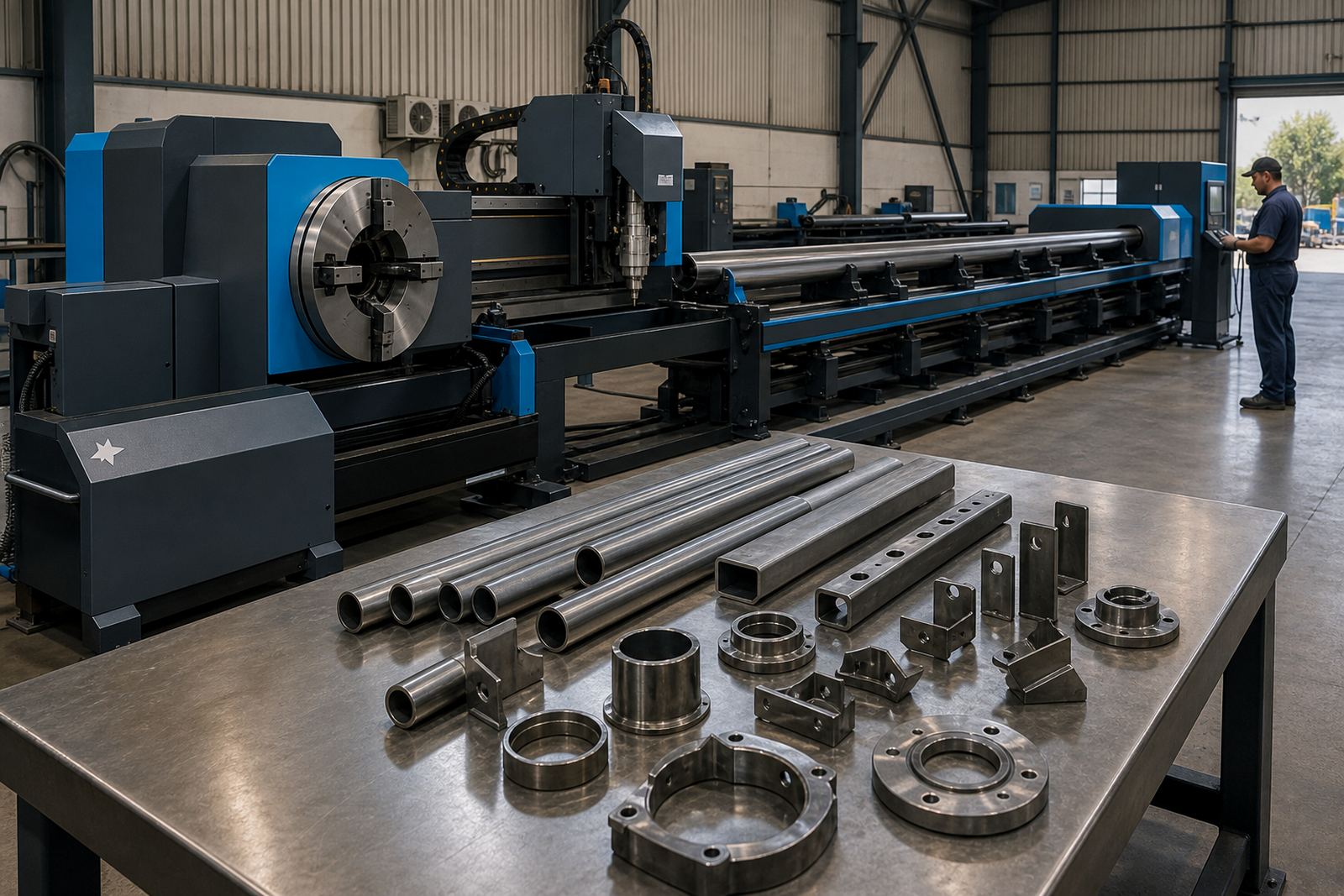
A truck body frame job normally starts with a fibre laser tube and profile cutting machine fitted with chucks that hold the work securely while the tube rotates and moves through the cut zone. For most body members, the machine should handle a spread of section sizes so the shop can process light brackets, heavier rails and mounting pieces on the same platform. Where bevelled ends are needed for weld preparation or tighter fit-up, a bevel head gives more flexibility on joint design.
Nesting software is part of the picture too. It helps place parts along the length of tube or profile so offcuts are reduced and the nesting pattern suits the order list. Assist gases, usually selected for the material and edge finish needed, help control cut quality and dross. Safe guarding, extraction and proper operator routines must be built into the work area, especially where hot cut pieces are handled next to welding bays and steel stock.
- Round, square and rectangular tube for frame rails and supports
- Angle and channel for brackets, stiffeners and attachment points
- Chucks sized for stable holding on longer sections
- Bevel head options for weld prep and special joints
- Nesting software for tube length planning and lower scrap
- Assist gas setup matched to the material and cut finish
Planning the bay before the machine arrives
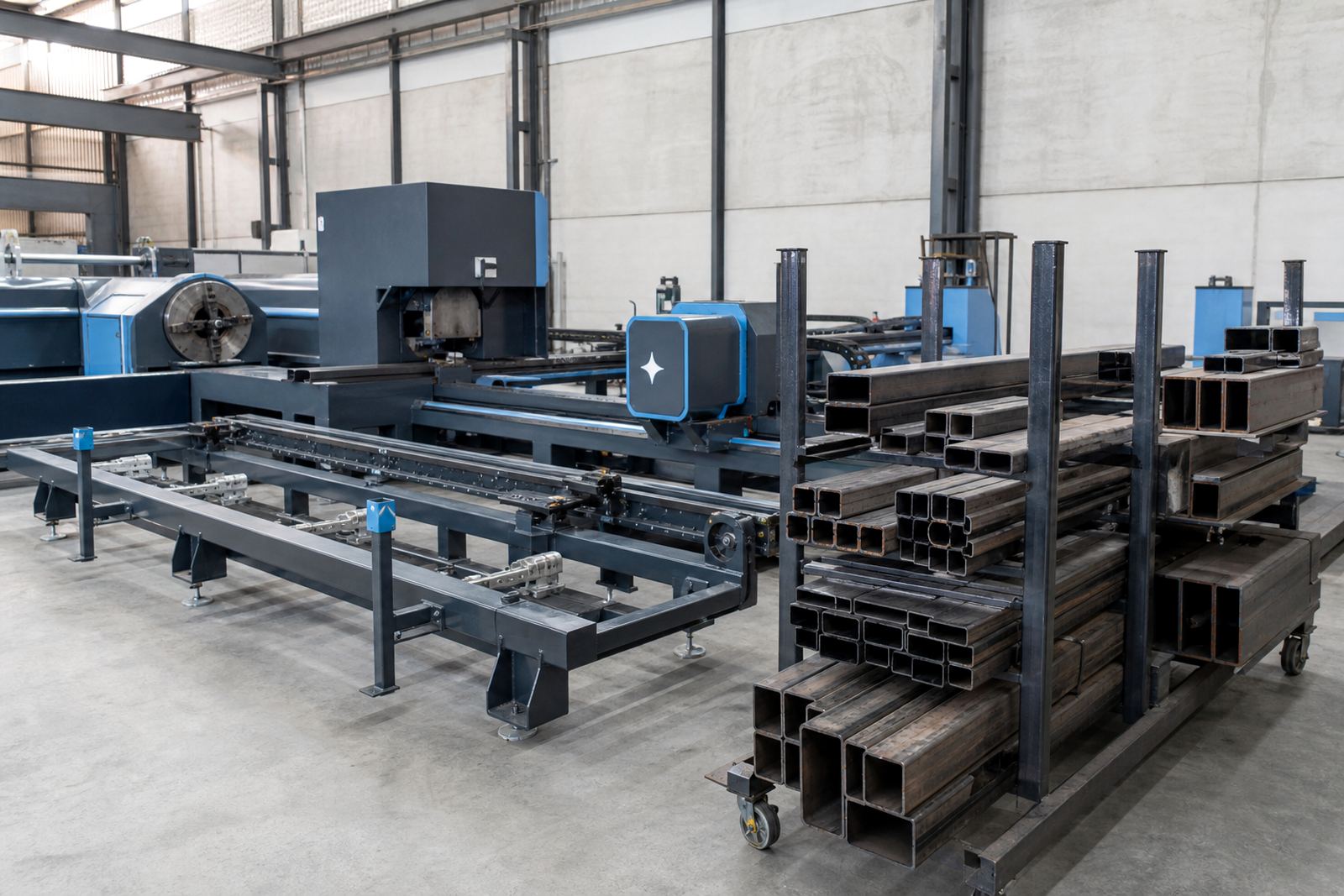
A truck body frame machine needs a clear bay with enough length for loading, cutting and offloading without crossing the path of forklifts or raw stock. The floor must be level enough for accurate alignment, and the material flow should suit the way the shop actually builds frames. If a business handles long chassis members, ladder rails or canopy subframes, the loading side and offload side need enough clearance for full-length pieces and finished sections.
Site assessment helps with more than footprint. It covers access for delivery rigging, ceiling height, anchoring, ventilation, gas positioning and the route parts will take from cutting to welding. In Germiston, Pretoria or Durban, the shop layout often has to fit into an existing production line, so the machine position should support a clean flow from cutting to marking, deburring and assembly. If the team will process both tube and flat profile material, the storage racking and barcode or label flow should be set up at the same time.
Mistakes that slow a body shop down
The most common problem is buying a machine around the biggest tube size only, then finding that the day-to-day work sits at smaller sections and repetitive hole patterns. Another issue is underestimating how much operator training is needed for nesting, chuck set-up and bevel calibration. If those steps are rushed, the machine can still run but the parts may not suit the jig and the weld team starts correcting errors downstream.
Some shops also leave assist gas setup too generic. That often leads to rough edges on thinner sections or extra finishing on heavier profiles. Chuck alignment should be checked carefully, because a small offset can affect the true cut on longer members. Preventive maintenance is not only about keeping the machine alive, it protects cut accuracy on regular truck body work where the same dimensions are repeated over and over.
- Choosing a machine with too little working length for frame members
- Skipping proper nesting training and wasting tube offcuts
- Ignoring chuck alignment on long profiles
- Using the wrong assist gas for the finish required
- Placing the machine where material handling becomes awkward
Typical truck body project costs in rand
For truck body frame production, budget depends on tube size range, automation level, bevel capability, loading and offloading arrangement, and the level of installation support needed. Entry-level set-ups for smaller job shops often begin around R2.5 million to R4.5 million. Mid-range machines suited to busier body builders and mixed-profile work often fall between R4.5 million and R8 million. Larger production set-ups with higher throughput, stronger automation and more advanced cutting functions can move beyond R8 million.
Those figures usually sit alongside rigging, commissioning, operator training, nesting training and a maintenance plan. If the shop needs assist gas setup, layout checks or integration into an existing cutting and welding flow, that can add cost too. A proper site assessment gives the clearest picture because the real budget is shaped by the floor space, the material mix and the daily part count, not just the machine model.
Support across the production cycle
LaserTube works with body builders from the first layout discussion through to machine installation, commissioning and practical training on the shop floor. That includes help with the way parts are programmed, how tubing is loaded, how operators handle cut sequences and how the team maintains consistent quality on repeated frame sets. For sites in Johannesburg, Pretoria, Durban, Cape Town, Gqeberha, Bloemfontein and Nelspruit, the support plan can be matched to local production conditions and the type of truck body work being done.
When a machine is already in service, support covers preventive checks, breakdown response, remote diagnostics, chuck alignment, bevel calibration and cutting set-up. For a truck body operation, that matters because the parts are often linked to vehicle build schedules and repair deadlines. Michael Dlamini leads the business from Wadeville, with Anika Kajee on sales, Sibusiso Bhengu on installation, Leanne Mabuza on training, Pieter Visser on service and Ayanda Mashaba on applications work. Body builders can send drawings and section sizes on the contact form.