Round tube parts that fit the first time
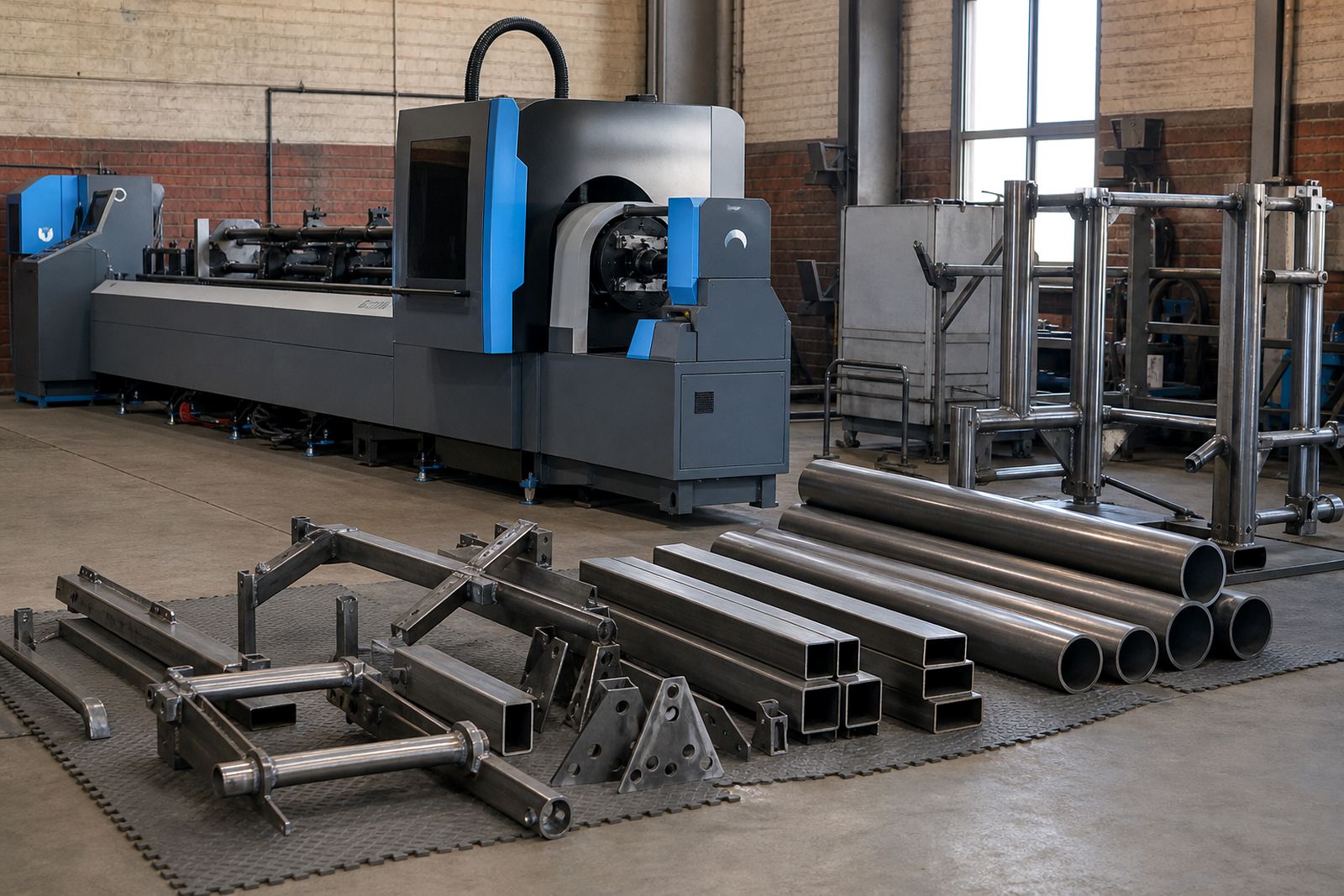
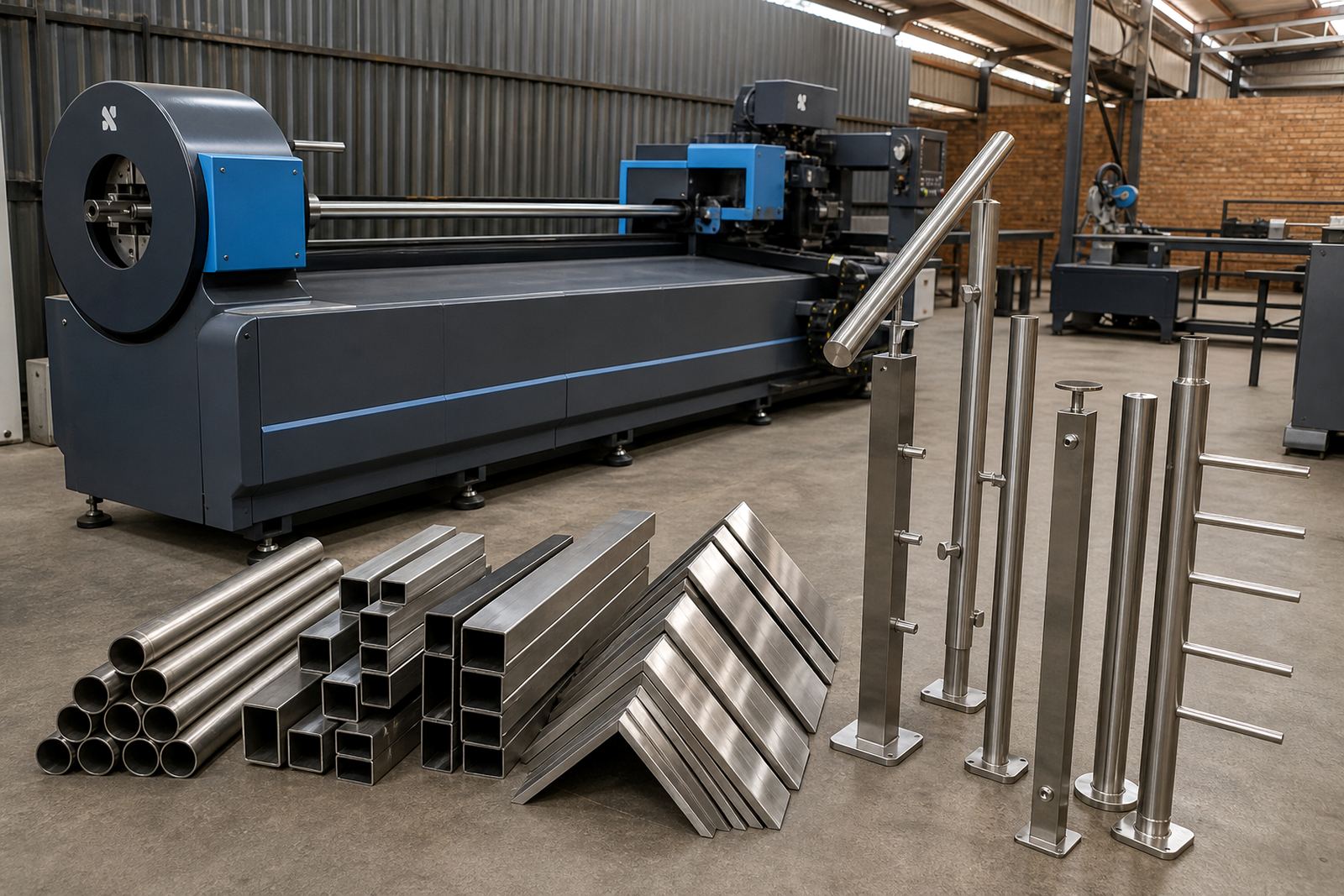
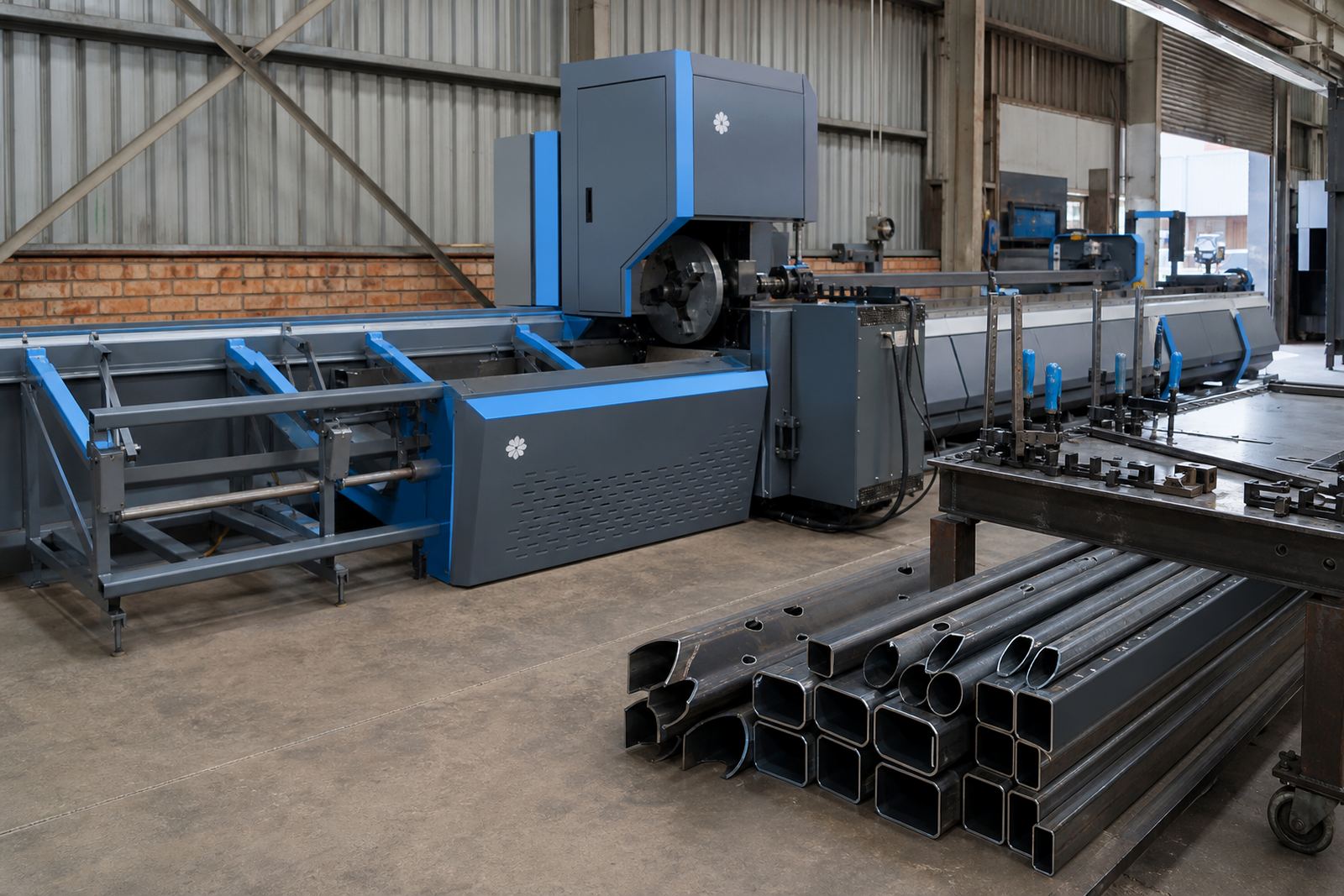
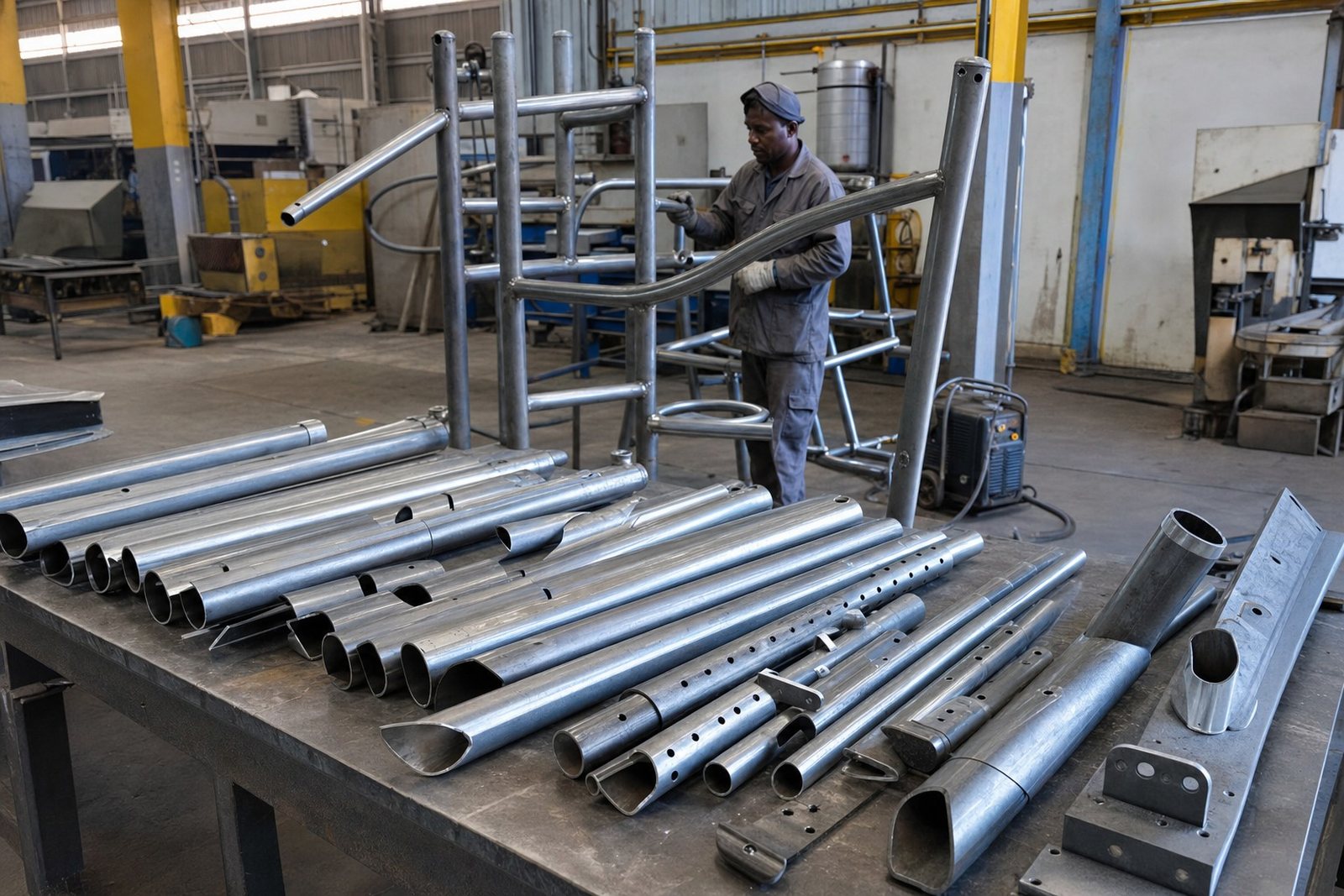
Playground frames usually start with round tube, then move into square and rectangular members where bracing, handrails and ladder sections tie in. A fibre laser tube machine is well suited to that mix because it can cut fishmouth joints, slots, holes and end profiles in one setup, with fewer hand-finished edges and less marking out on the floor.
For schools, estates, parks and private play areas, the value sits in repeatability. If a swing bay or climbing frame needs six matched side rails and ten identical cross members, the tube program keeps the cuts consistent from part to part. That helps when frames are welded in batches and sent to different sites around Johannesburg, Pretoria, Durban, Cape Town or Gqeberha.
- Round tube for hoops, arches and perimeter frames
- Square tube for uprights, braces and ladder sections
- Rectangular tube for longer spans and base members
- Angle and channel for support pieces and mounting frames
- Drilled features for fixings, brackets and safety hardware
Machine set-up that suits playground fabrication
A practical machine set for this type of work normally includes a stable tube bed, automatic chucks for gripping different sections, and a cutting head that can handle straight cuts plus shaped ends. Bevel cutting matters on some joints, especially where thicker tube meets a plate or where an angled brace must land neatly without forcing the fitter to grind the fit.
Nesting software is part of the daily rhythm too. It helps organise cut lengths from stock tubes, reduce offcuts and keep similar parts grouped for welding bays. Where a fabricator works on many short sections for child-safe railings, the software also helps balance material use across common tube sizes such as 25 mm, 32 mm, 40 mm and larger structural members.
- Automatic chuck alignment for round and shaped tube
- Bevel head where joint prep needs a cleaner weld face
- Nesting software for part grouping and stock control
- Assist gas setup for cleaner cuts and reduced dross
- Safety guarding and access control around the cutting area
Layout planning for a clean fabrication flow
Playground work benefits from a straight path between design, cutting, welding and finishing. If the machine sits too far from the welding tables, cut parts start piling up and the job slows down. If the stock rack is cramped, operators spend time shifting tube lengths around instead of loading the next bundle. A clear layout keeps the machine fed and the finished parts moving.
At a Wadeville plant or a smaller shop in Bloemfontein, the setup should allow for incoming stock, cut staging, welding prep and powder coating or paint handover if that is part of the workflow. For municipal or commercial playground jobs, it also helps to keep part labels readable so each post, rail and bracket can be traced to the drawing set without guesswork.
Outdoor play equipment has its own practical pressures. Tube ends need to be neat, drain points should be considered where water can sit, and weld access should be generous enough for a proper clean-up. Coastal fabricators working in Durban or Gqeberha often give extra attention to corrosion protection and the way cut parts are handled before coating.
Mistakes that create rework on playground frames
The most common problems are simple ones: using the wrong tube size for the span, allowing sloppy holes for fixings, or cutting joints that look fine on paper but leave poor contact at weld-up. When a part is intended for child use, the margin for rough fitting is small. Sharp edges, hidden burrs and poor hole placement can all lead to delays at assembly.
Another issue is overcomplication. Some shops try to do every joint by hand because the job looks small, then spend hours adjusting each frame. A fibre laser tube machine is strongest where the same pattern repeats across many parts. Once the drawings are set properly, the machine can remove a lot of marking, grinding and measuring from the shop floor.
- Incorrect allowance for weld shrinkage and assembly fit
- Holes placed without checking bracket thickness
- Mixed tube lengths that confuse the nesting plan
- Poor edge finish that forces extra grinding before weld-up
- Skipping test pieces on a new frame design
Budget bands for South African fabricators
For a workshop that only makes occasional playground items, a used or smaller tube machine may be enough if the frame range stays modest and the loading is light. Once output rises and the work shifts into regular production, a machine with better tube handling, stronger chucking and a cleaner bevel option becomes more relevant. The cost picture changes with cutting capacity, automation, head features and the level of installation support needed.
Broadly, local buyers often compare three bands: entry-level systems for lighter fabrication, mid-range machines for mixed tube and profile work, and larger production systems for higher throughput and more complex joints. Installation, commissioning, operator training and tooling setup should sit in the budget as well, because a machine without proper set-up will not give steady results on playground components.
For South African buyers, planning should also include delivery rigging, floor space, gas supply and maintenance access. A shop in Pretoria may need a different stock flow to one in Durban or Cape Town, but the logic stays the same. The machine must fit the frame mix, the team must understand the cut library, and the maintenance plan must keep chucks, guides and alignment in good order.
Support for teams that build to a drawing set
LaserTube works with metal fabricators that need installation, operator training and ongoing support after the machine is in place. Our Wadeville, Germiston base supports projects across Johannesburg, Pretoria, Durban, Cape Town, Gqeberha, Bloemfontein and Nelspruit, with site assessment, delivery rigging, commissioning, nesting training and preventive maintenance where needed.
For playground frame production, the useful starting point is usually a review of the tube sizes, hole patterns, joint styles and monthly output target. That tells the team what chuck size, head type and software flow makes sense for the job, and whether the plant needs a compact cutter or a fuller production set-up.
Playground frame makers can reach LaserTube on the contact form. Michael Dlamini leads the business, with Anika Kajee on sales, Sibusiso Bhengu on installation, Leanne Mabuza on training, Pieter Visser on service and Ayanda Mashaba on applications support.