What farm equipment makers cut every week
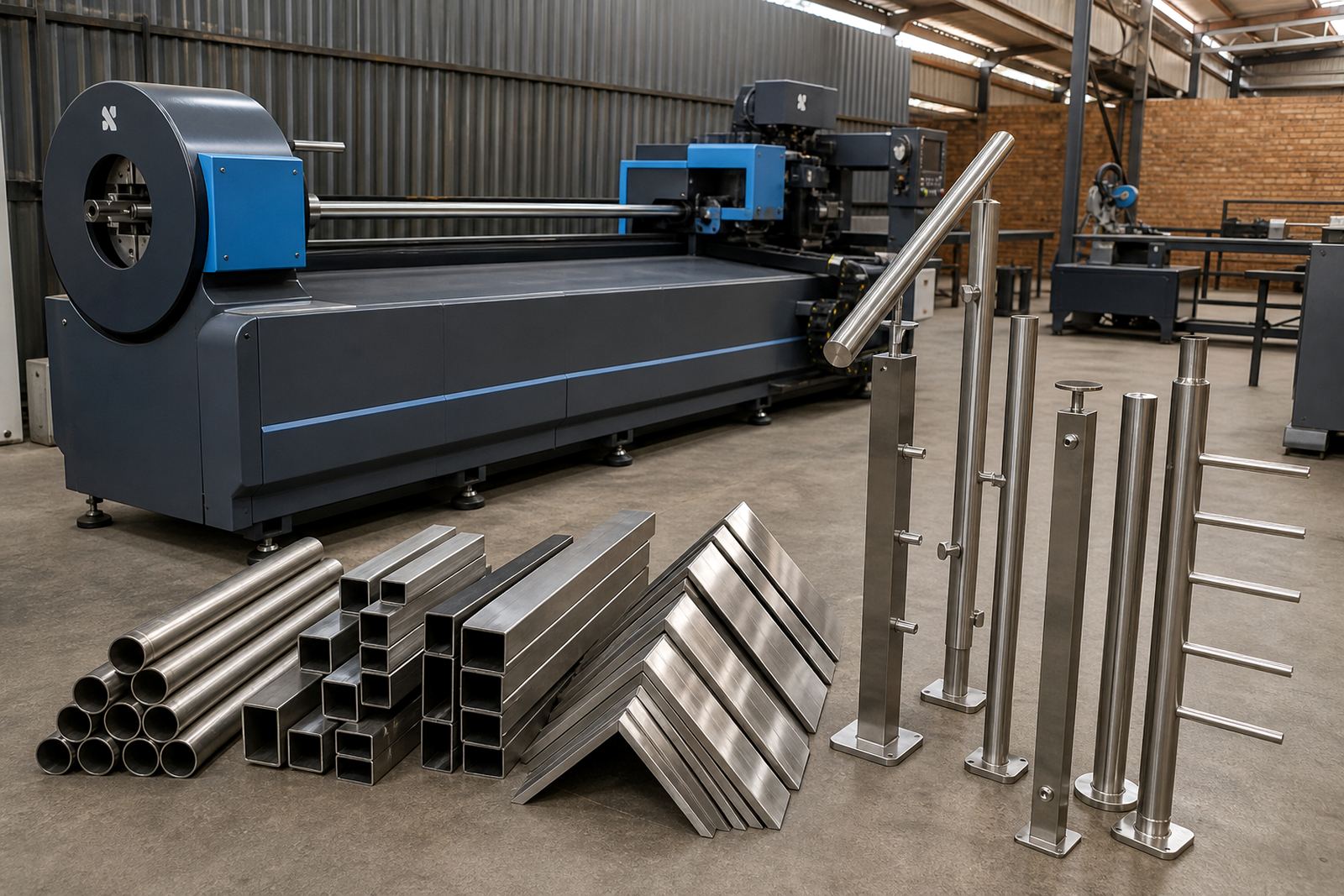
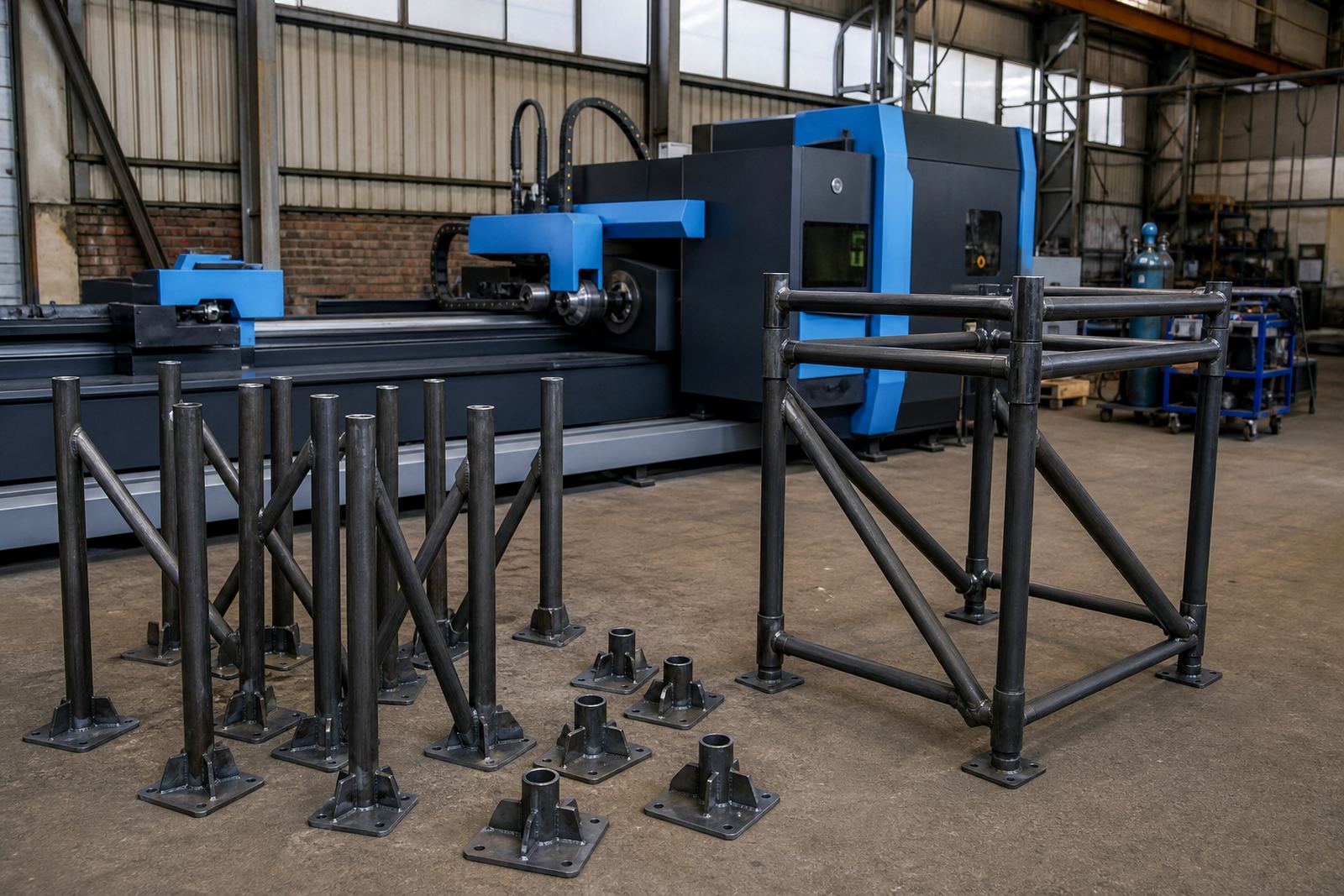
Agricultural fabrication shops work with round tube, square tube, rectangular tube, angle and channel for guards, hitch frames, implement arms, sprayer frames and mounting structures. The drawings are often practical rather than decorative, with holes, slots, mitres and weld prep all needing to land where the fitter expects them.
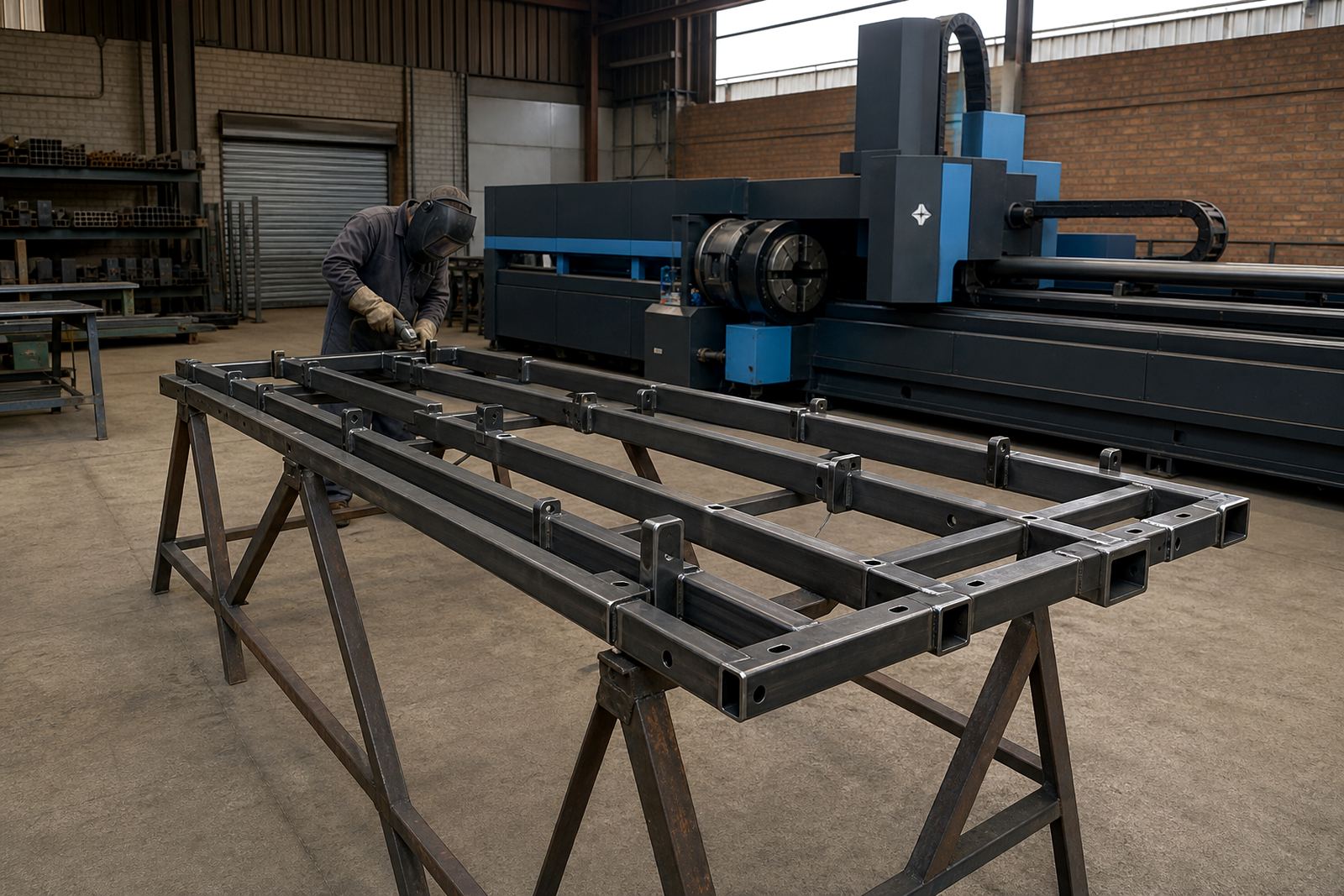
Fibre laser tube cutting helps when parts must match across batches and when a frame has more than one opening or compound cut. On farm equipment jobs, the value is in repeatable hole positions, clean edge quality and less hand marking before welding. That matters whether the work goes into a small repair shop in Nelspruit or a production line in Gauteng.
- Round tube for guards, rails and support legs
- Square and rectangular tube for frames and crossmembers
- Angle and channel for brackets, carriers and stiffeners
- Slotting and tab features for faster fit-up at the weld table
Machine set-up that suits agricultural work
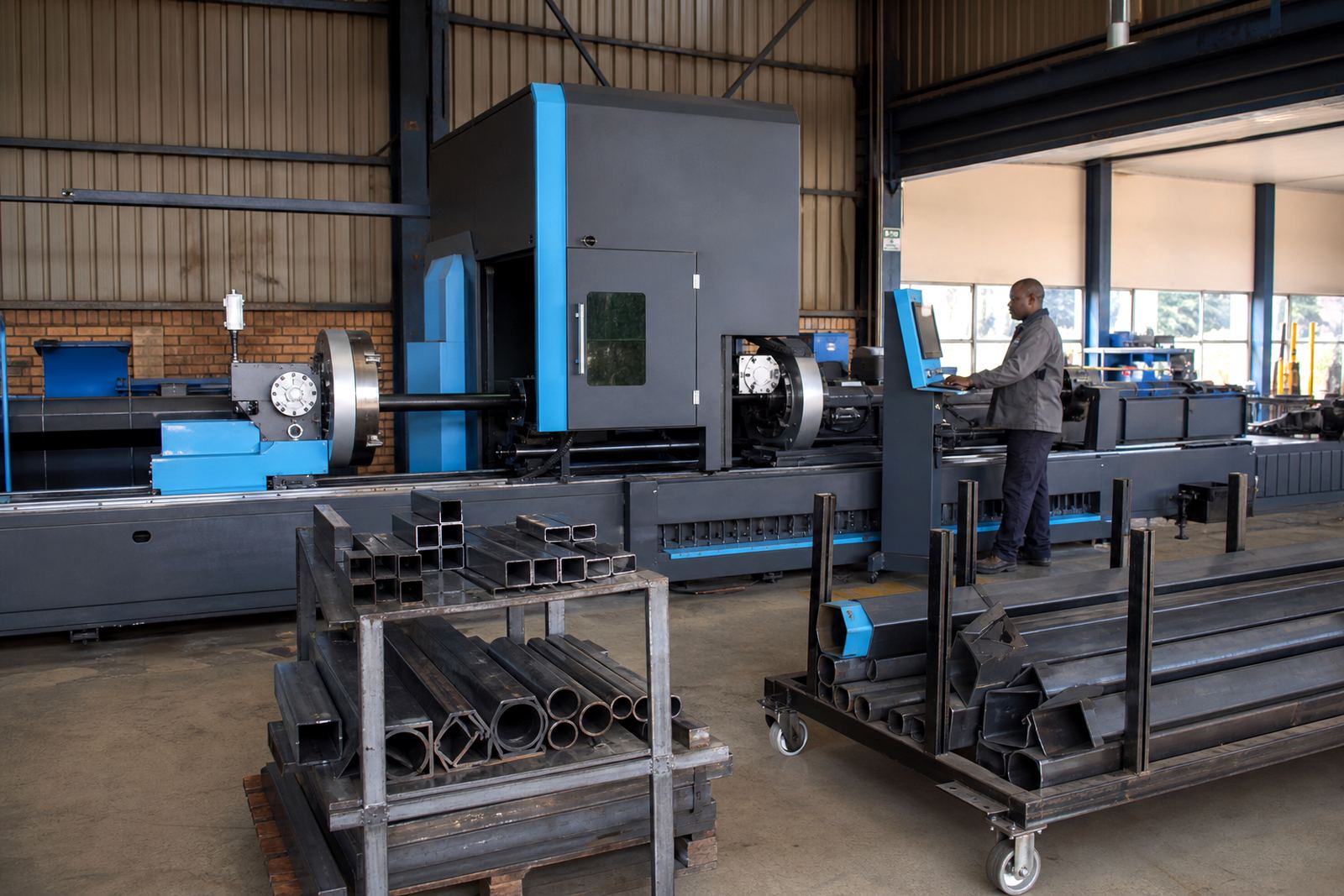
Most farm equipment cutters are set up with a tube laser bed, rotary chuck system and software that nests parts from long stock. For heavier work, a profile cutting machine can handle flat plate parts that pair with the tube components, such as gussets, wear plates and mounting lugs. Bevel cutting helps where a joint needs a cleaner weld land or where a bracket must sit at an angle.
Assist gases are part of the real workflow. Oxygen, nitrogen or air may be used depending on the material, thickness and edge finish needed. Safety also matters around laser enclosure checks, access control, fume extraction and guarding, because agricultural jobs often mix short runs with heavier sections and offcuts.
- Dual or single chuck layouts for different tube lengths
- Bevel head options for angled cuts on selected parts
- Nesting software for sheet and tube material planning
- Assist gas setup matched to the steels being processed
- Part marking for easier sorting at assembly benches
Layout decisions that save grief on the shop floor
A farm equipment workshop in Wadeville or Germiston usually benefits from a straight material flow: incoming stock, loading, cutting, sorting, then welding and finishing. If the machine sits too close to storage racks or the bundle loading point is awkward, the whole line feels cramped and handling damage starts creeping in. Floor space has to allow for long lengths, turning room and a clear path for finished parts.
When planning the site, we look at access for delivery rigging, machine levelling, extractor placement and the route for cabling. In coastal towns such as Durban, corrosion control deserves attention, especially around stored material and exposed machine surfaces. In dry inland areas, dust control around the loading zone and software station can matter just as much.
Good layouts also separate common work into a sensible sequence. That usually means:
- raw tube storage near the infeed side
- space for sorting cut parts by job or assembly
- a welding area close enough for quick transfer
- clear maintenance access around chucks and the cutting head
Mistakes that show up on farm frames
The most common mistake is buying a machine around one big frame size and ignoring the smaller repeat parts that keep the workshop busy. Another one is underestimating how much nesting skill matters when offcuts, mixed lengths and urgent repairs need to be fitted into the same stock pile. A third problem is poor chuck alignment, which can show up as slight position drift or poor concentricity on parts that should match cleanly.
Some shops also ignore bevel calibration until a job with angled joints lands on the table and the weld prep is no longer right. That is where operator training pays off. Not only on the controls, but on loading practices, part sorting, gas selection and basic inspection before a batch leaves the cutting area.
- Wrong machine size for the mix of repairs and production
- Poor nesting, leaving usable stock stranded
- Skipping chuck checks after heavy loading work
- No clear sorting method for similar-looking parts
- Training limited to buttons instead of the full workflow
Budget bands for South African fabricators
Budgets depend on tube range, profile cutting capacity, automation level and whether bevel work is needed. For smaller agricultural shops, a practical entry point can start in the low millions of Rand, especially where the work is mostly manual loading and moderate production. Mid-range systems with better nesting software, stronger chuck arrangements and more support for mixed section sizes move into a higher band. Larger plants with heavier duty, automation and fuller output planning sit well above that.
It also helps to budget for installation, rigging, gas setup, training, spare consumables and preventive maintenance from the start. A machine that is under-specced on tube capacity or software usually costs more later than doing the sizing properly at the start. For farms and fabricators running guards, frames and implements, the best spend matches the actual mix of parts, not the biggest number in a brochure.
LaserTube works from Wadeville, Germiston and supports fabricators in Johannesburg, Pretoria, Durban, Cape Town, Gqeberha, Bloemfontein and Nelspruit with site assessment, delivery rigging, machine installation, commissioning, operator training, nesting training, preventive maintenance, chuck alignment, bevel calibration, assist gas setup, remote diagnostics and breakdown response.
People around the machine
Michael Dlamini oversees the operation from Wadeville, with Anika Kajee handling sales, Sibusiso Bhengu leading installation, Leanne Mabuza coordinating training, Pieter Visser on service work and Ayanda Mashaba covering applications support. That mix matters on agricultural jobs because the machine, the part flow and the weld shop all need to line up.
For farm equipment fabricators, the right system is the one that fits the parts on your drawings, your stock lengths and your workshop rhythm. If a guard bracket takes too long to prepare by hand, or a frame keeps needing rework after cutting, the process is usually telling you where the bottleneck sits.