Shelving frames need repeatable parts, not guesswork
Storage systems look plain on paper, but the frame work is fussy. Uprights, rails and cross members have to land at the same length, with holes, slots and notch details in the same place on every part. If one side is a few millimetres off, the full run starts to drift and assembly slows down. For shelving frames, that means the tube cutting process has to hold size, angle and hole position without constant rework.
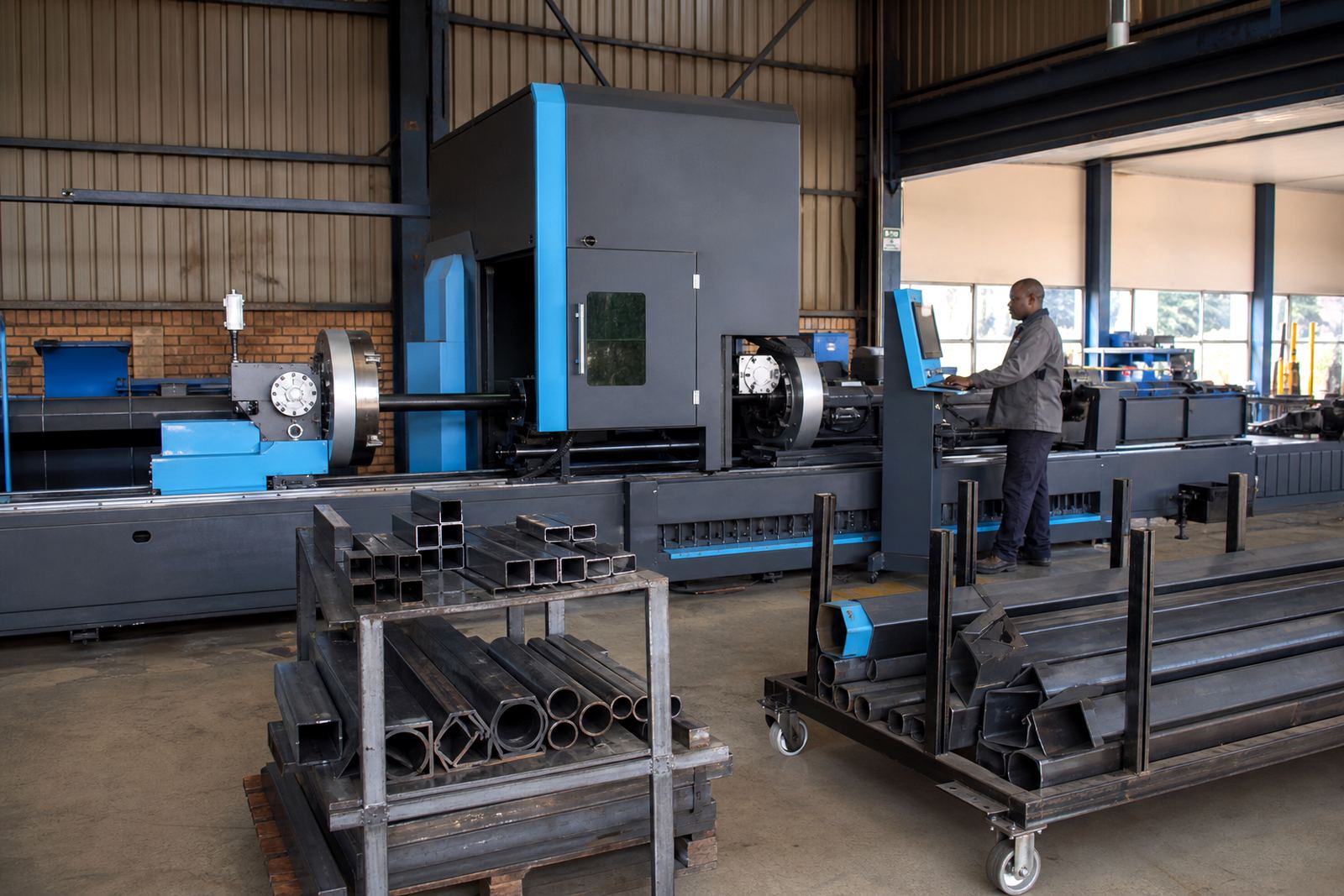
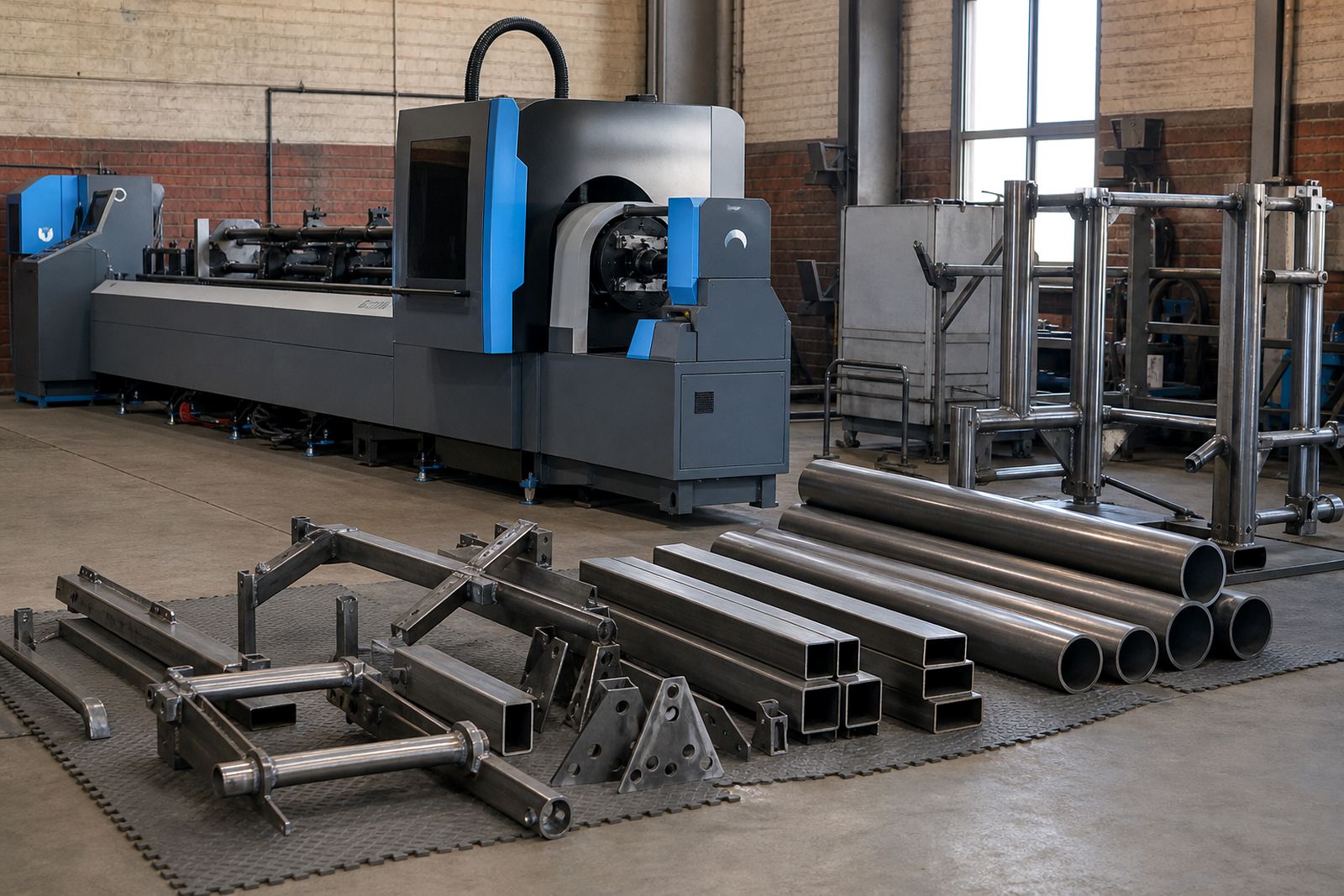
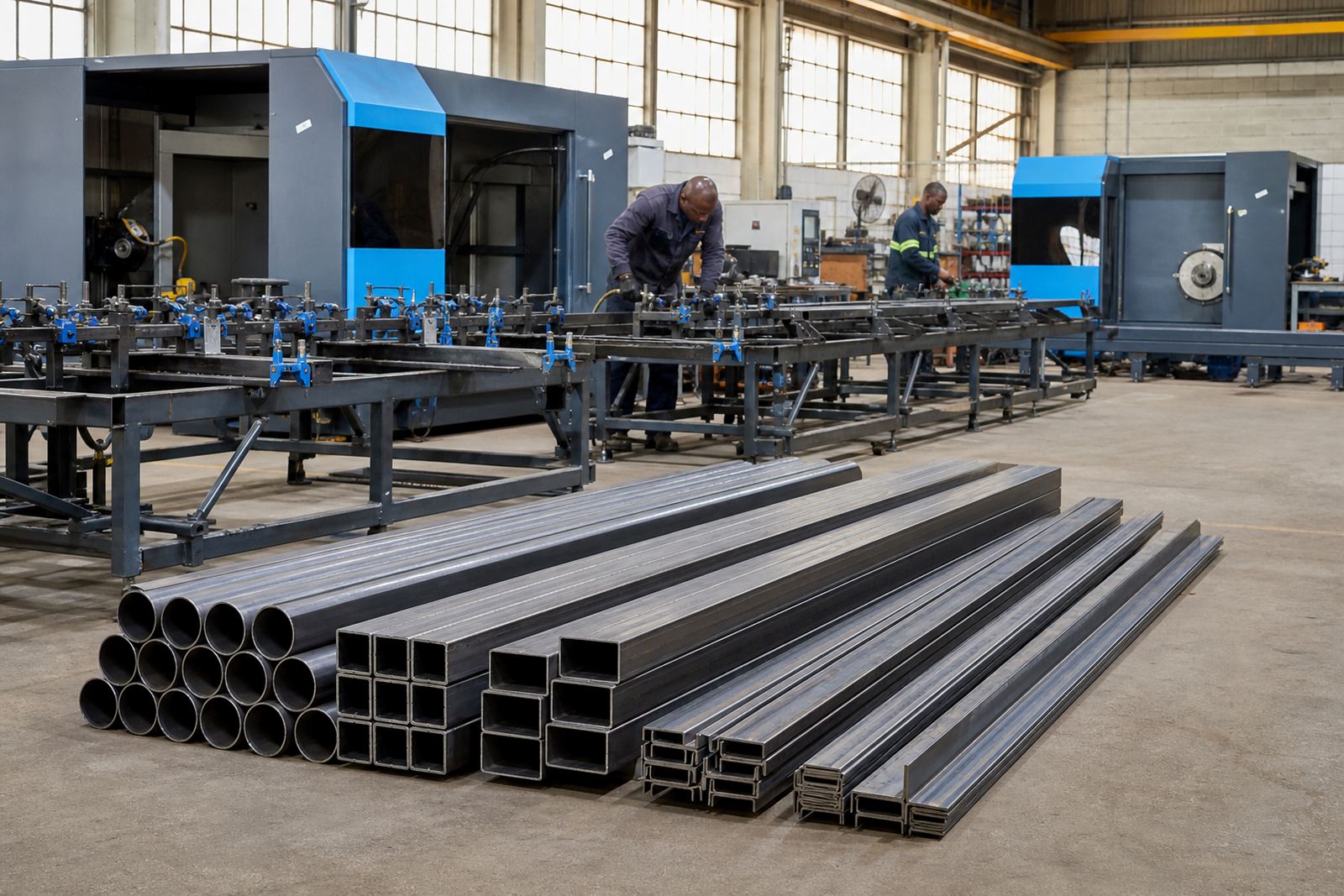
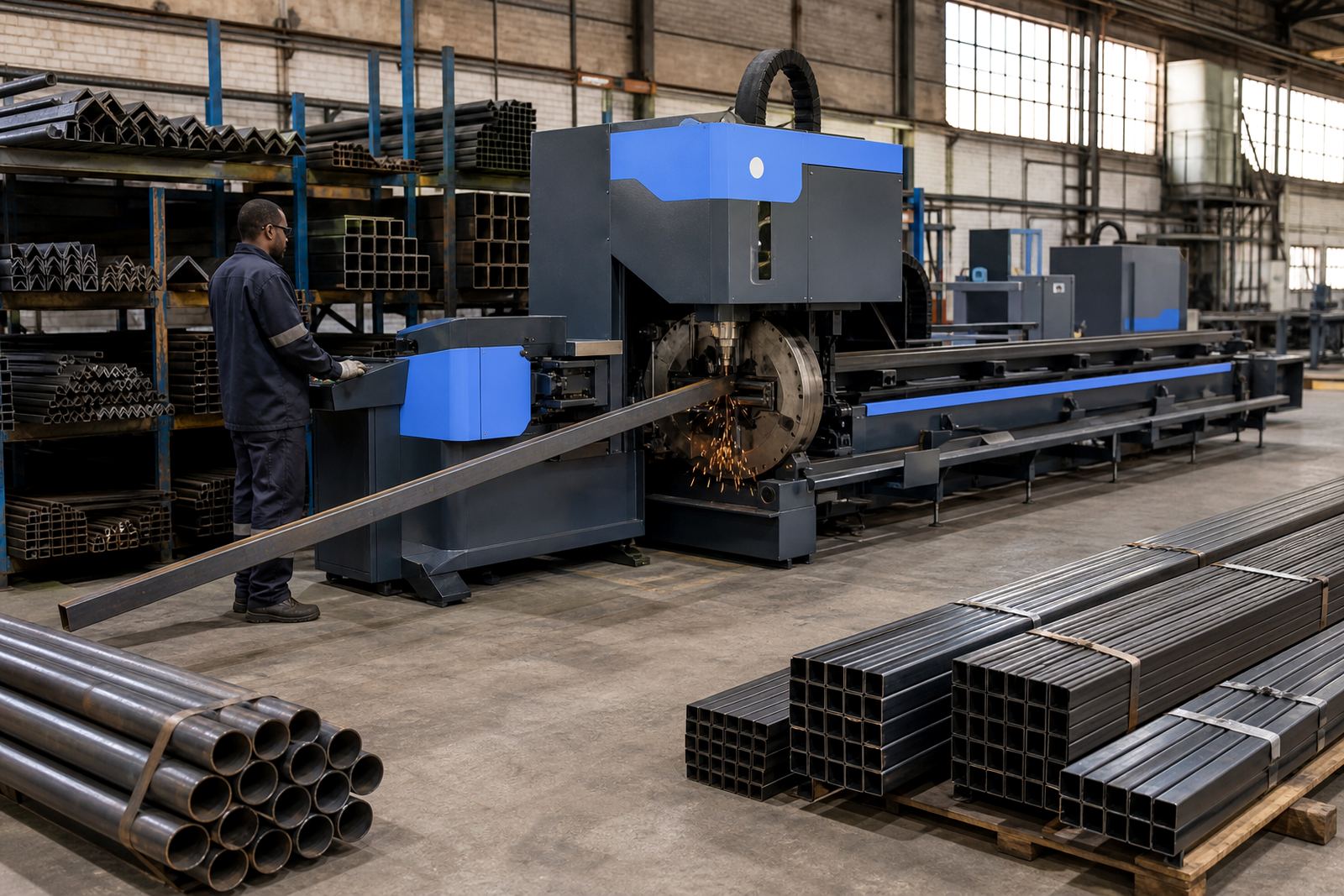
Most customers looking at this use case are making light commercial storage, warehouse bays, retail shelving and utility racks. The material mix often includes round tube, square tube, rectangular tube, angle and channel. Some frames only need straight cuts and drilled features, while others need mitres, fishmouths and marked positions for brackets or connectors. A fibre laser tube and profile cutting machine suits this work because it can handle multiple profile shapes in one setup and keep the parts aligned to the drawing.
In Wadeville and the wider Germiston area, fabricators often want a machine that can move between short prototype runs and longer batches without losing repeatability. That is where chuck control, nesting software and good operator setup matter just as much as cutting power.
Typical machine set for shelving frame work
A shelving frame line usually starts with a fibre laser tube cutting machine fitted with chucks that grip the section firmly and keep it centred through the cut. For mixed frame work, a machine with support for round, square and rectangular tube, plus angle and channel, gives more flexibility on the same floor. A bevel head can help where the frame design needs angled joints or a cleaner fit at a corner. On heavier storage structures, that extra edge control can reduce hand finishing.
Common equipment and functions for this use case include:
- Tube and profile loading that suits different lengths and batch sizes
- Dual or rotary chuck control for stable positioning during cutting
- Nesting software for arranging parts to reduce offcuts and wasted length
- Bevel cutting where frame joints need angled ends
- Assist gas setup for clean edges and a steadier cut face
- Safe guarding, light barriers and interlocks around the cutting zone
For shelving frames, assist gas choice affects edge quality and the amount of clean-up needed after cutting. The machine also needs a layout that suits your raw stock lengths and the way your team stages bundles, because poor handling around the machine can undo the benefit of accurate cutting.
Planning the line around your frame sizes
Before a machine is selected, the frame sizes need to be mapped properly. That includes the longest tube length used on your common jobs, the profile wall thickness range, the number of different connection features and whether the same machine also cuts brackets, feet or gussets. If your shelving frames use repeating hole patterns or tab-and-slot joints, the nesting plan must allow those features to stay in the right place from one part to the next.
A site assessment helps with floor space, infeed and outfeed flow, and the route for delivery rigging into the building. In Wadeville, Johannesburg and Pretoria, floor layouts often need to respect shared workshop space, aisle movement and safe storage for raw tube bundles. In coastal areas like Durban, Cape Town and Gqeberha, humidity can affect stored material and some machine surfaces, so storage and maintenance routines need to be practical from the start.
Good planning also covers training. The operator needs to understand nesting software, chuck alignment, basic cutting sequence and how to recognise when a frame batch has drifted off size. Without that, the machine can be running but the shelf parts still need a lot of correction.
Where shelving frame jobs go wrong
Most problems on shelving frame work come from small errors that repeat across many parts. A slight length error on one upright becomes a crooked bay once the full frame is assembled. Misplaced slots or holes force drilling and grinding later. Poor clamping can leave a cut face that is not square enough for clean welding or bolting. On angle and channel, poor part orientation can also cause the machine to cut the wrong face.
Another trap is treating every tube profile on the shelving line the same way. Thin-wall tube, heavier section and mixed profiles behave differently in the cut zone. If the operator does not set the right cut parameters, the edge can have excess dross, poor fit or slight distortion. For shelving frames, that matters because the parts are often repeated many times and the error becomes obvious fast.
- Wrong tube orientation in the nesting file
- Overlooking weld gaps and joint allowance
- Poor chuck alignment before a batch starts
- Using one setup for mixed wall thicknesses
- Skipping sample checks on the first parts of a run
Preventive maintenance helps keep the machine stable. Chuck alignment, bevel calibration and assist gas checks all play a part in keeping the frames consistent from batch to batch.
Budget ranges for shelving frame production
Budget depends on tube size range, automation level, bevel capability and how much production volume the machine must carry. A small job shop making shelving frames for local installers will usually look at a different setup from a plant feeding retail fit-outs or warehouse storage systems across several provinces. A shelving frame line costs more than the machine alone, so installation, commissioning and operator training belong in the first quote.
As a practical guide, shelving frame systems can fall into these broad Rand bands:
- Entry-level tube cutting setups: from about R2 million to R4 million
- Mid-range production machines: about R4 million to R8 million
- Higher-output or more automated systems: from roughly R8 million upwards
Those figures move with machine length, chuck configuration, bevel head inclusion, material handling and the level of training and support required. A site assessment helps narrow the spend to what the frame line actually needs, rather than paying for features that never get used.
Support that fits a fabrication floor
LaserTube works with metal fabricators from Wadeville, Germiston and across South Africa, including Johannesburg, Pretoria, Durban, Cape Town, Gqeberha, Bloemfontein and Nelspruit. The team can handle delivery rigging, machine installation, commissioning, operator training, nesting training, assist gas setup, preventive maintenance, breakdown response, chuck alignment, bevel calibration and remote diagnostics. That support matters on shelving frame work because the machine has to hold repeat length and repeat fit over long production runs.
Michael Dlamini leads the business from the Wadeville base, with Anika Kajee on sales, Sibusiso Bhengu on installation, Leanne Mabuza on training, Pieter Visser on service and Ayanda Mashaba on applications. For shelving frames, that mix helps with the practical parts of the job: set the machine to the profile, confirm the nesting plan, get the first batch clean, then keep the line moving without constant adjustments.
If the frame design changes often, the machine choice should leave space for future profile sizes and joint styles. That keeps the line useful when the shelving range changes, not only when the first batch goes through.