When gate frames start with awkward hand cuts
Gate makers often work with mixed section sizes, one-off designs and tight opening measurements. A hand saw and grinder can get the job done, but the cut ends usually need extra dressing before the frame lands square. That slows the weld bay and makes it harder to keep corners tidy on repeat work.
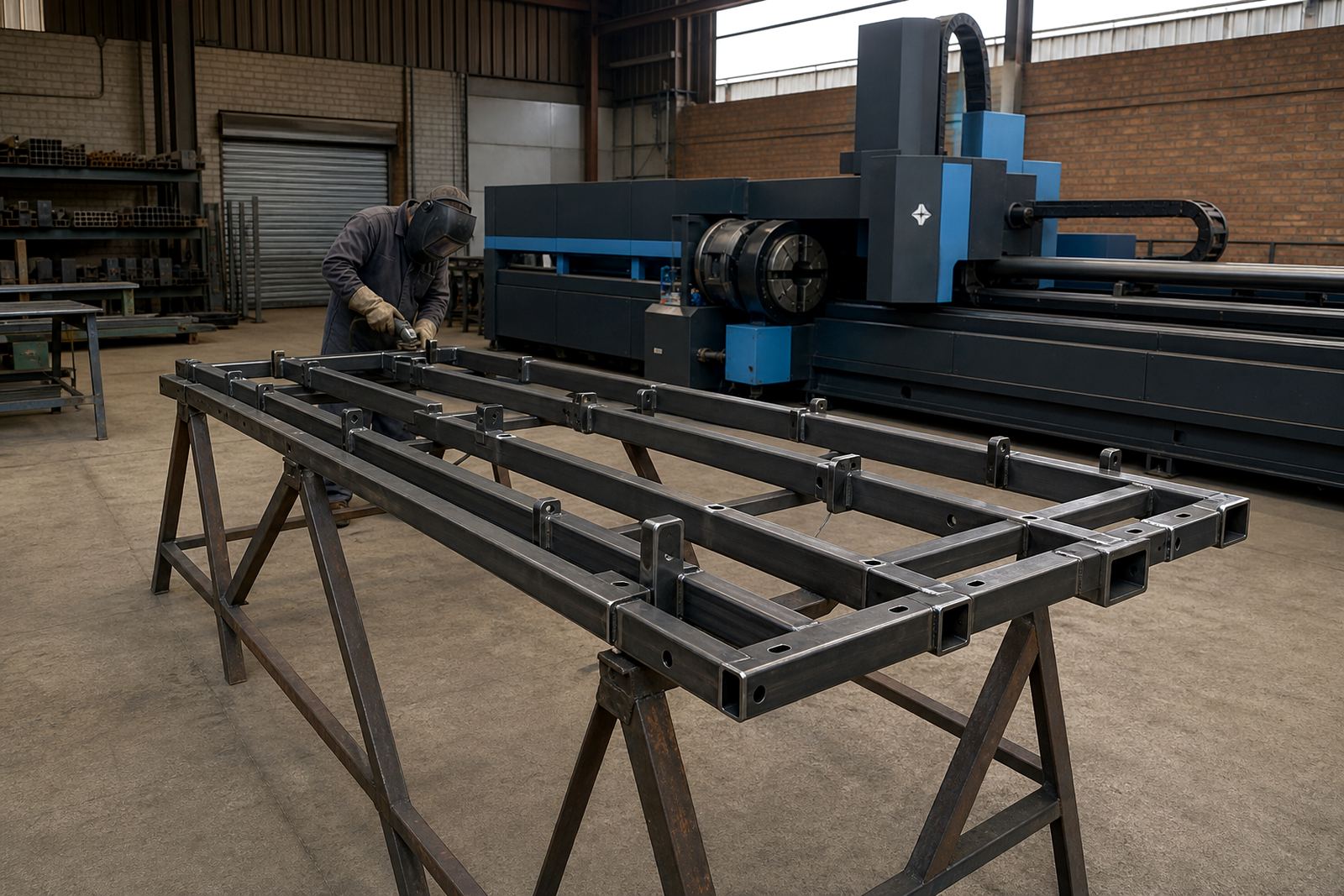
Tube laser cutting changes the start of the job. A machine can cut the members to length, put in slotting or mitre features where needed, and keep each end true to the drawing. For a gate frame, that matters on the outer perimeter, internal bracing and latch or hinge members. It also helps when a client wants the same gate style across several units, because the frame parts line up with less correction at assembly.
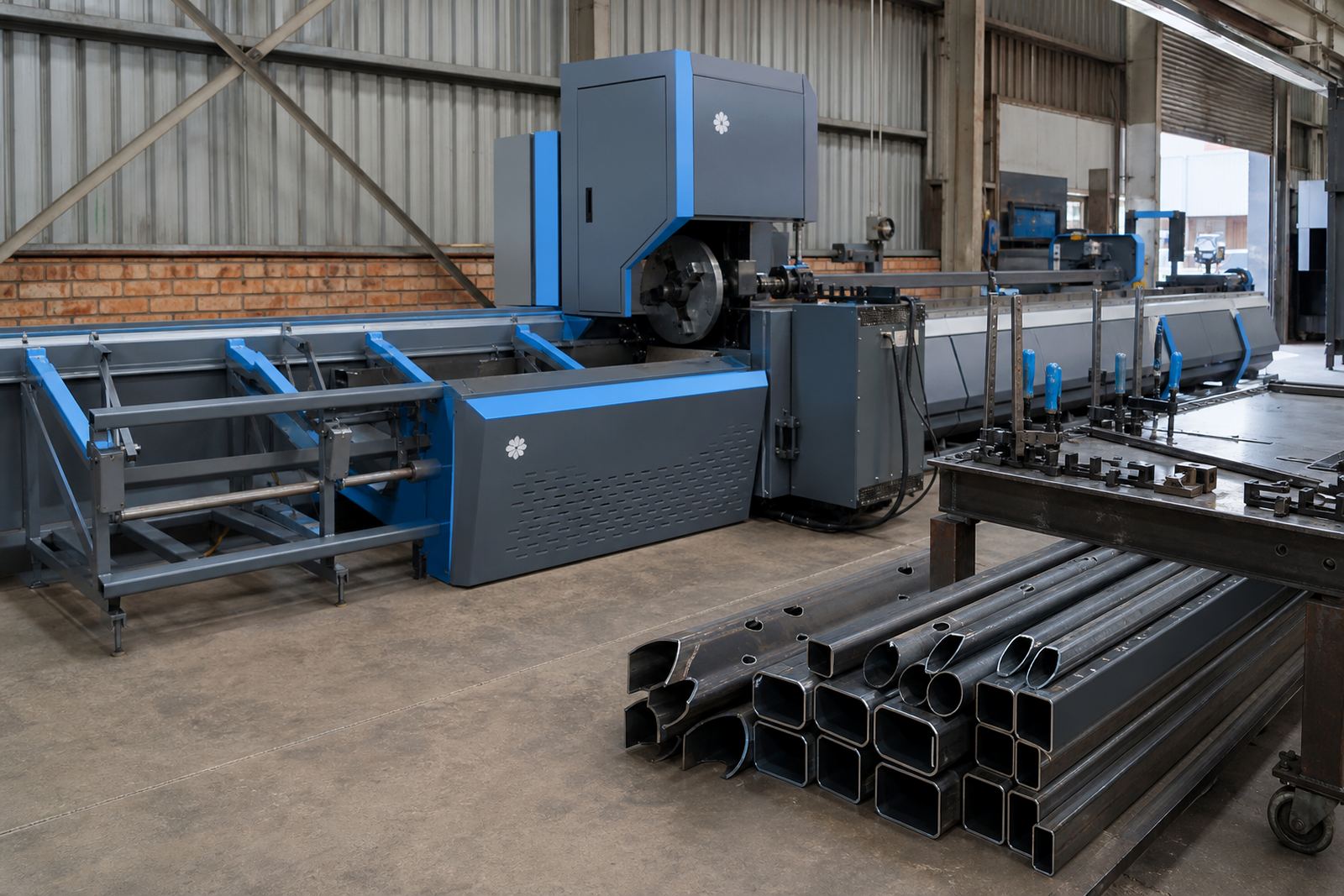
In Wadeville and across the industrial belt, many shops handle a mix of domestic gates, site security gates and light commercial work. The machine choice should suit that mix, not only the biggest job on the floor. A fibre laser tube cutter can support both short-run gate work and steady production, provided the loading length, chuck capacity and software match the parts you build most often.
Tube sections that suit gate frames best
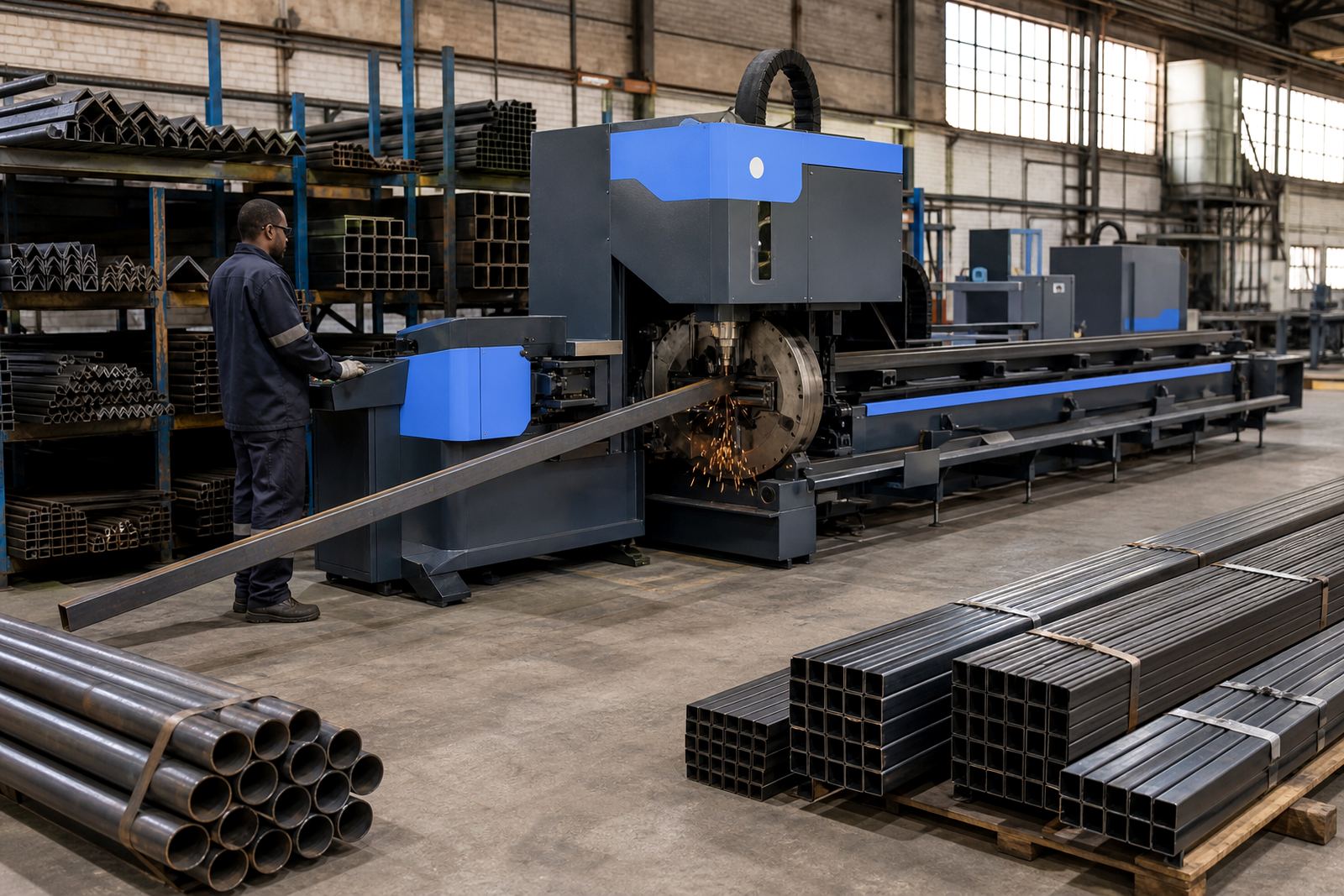
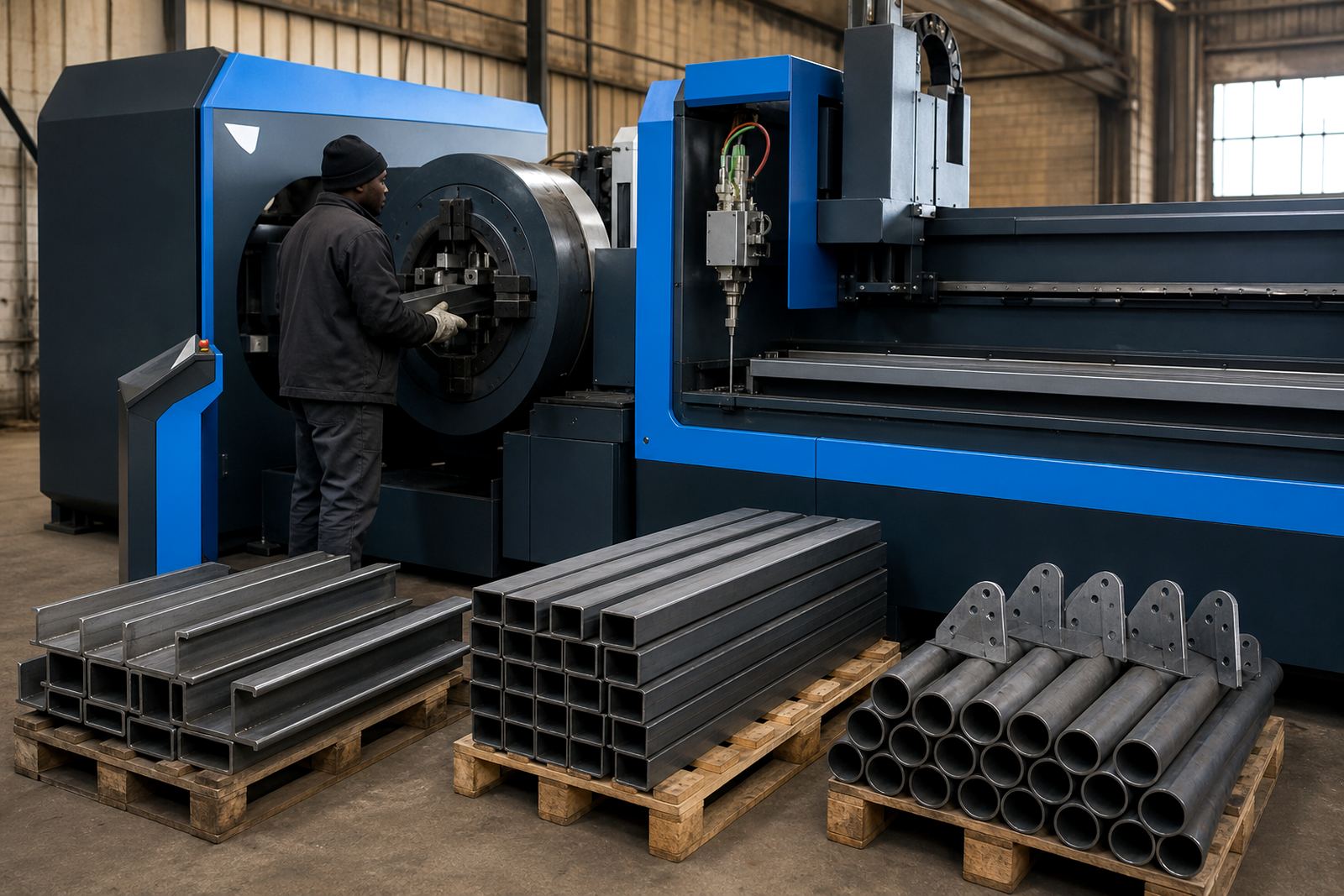
Gate frames usually use round tube, square tube or rectangular tube, with angle and channel added for stiffeners, posts or support members. The cutting head must handle these section types cleanly and hold them accurately while the tube rotates. For larger gates, a machine with stable support and proper clamping helps keep long members from sagging at the ends.
- Square and rectangular tube for the outer frame and internal rails
- Round tube for decorative bars and lighter infill sections
- Angle for edge framing, brackets and reinforcing details
- Channel for structural parts where extra stiffness is needed
- Bevel cuts where weld prep or fit-up calls for a better joint
Some gate shops need a basic tube cutter. Others want a profile machine with a bevel head so the same equipment can handle more than one fabrication pattern. If the shop already makes fencing, balustrades, trolley frames or small structural parts, the value often sits in that broader part mix. The right machine should still be judged by real gate sizes, not by the brochure lines that sound clever in a sales room.
What a practical gate-frame line includes
A working gate-frame setup is more than the laser itself. Material handling, nesting software and gas setup all shape the final cut. The software should let the operator place parts tightly on the tube, manage remnant lengths and keep common gate sections ready for repeat work. That saves material and cuts waste on short and medium runs.
On the machine side, the chucks must grip the tube firmly without marking it badly. Good clamping matters when frames are long, thin or made from light wall sections. If the work includes welded hinge plates or latch cut-outs, the system should place those features accurately so the fitting team does not spend time correcting positions by hand.
Assist gas is part of the cut quality too. The setup depends on the material and finish required, with the gas helping clear the kerf and support cleaner edges. Safety matters around the enclosure, guards, interlocks and extraction layout. A shop cutting gate frames all day needs a clear loading area, sensible part offload and a path that keeps operators out of the way of moving members.
- Nesting software for efficient use of tube lengths
- Stable chucks for consistent grip on the workpiece
- Assist gas setup for cleaner edges and steadier cutting
- Safe loading and offloading space around the machine
- Calibration checks so the cut stays true over time
Layout planning for a gate workshop that keeps moving
Gate frame production works best when raw stock, cutting and welding sit in a sensible line. Long tube lengths need room for loading, and the finished parts need a spot where they can be sorted by job before assembly. If the shop is cramped, the machine becomes difficult to feed and the whole bay starts to back up.
For a smaller job shop, a compact layout can still work well if the operator has clear access to the infeed and there is enough space to stage common tube sizes. On larger production plants, the challenge is usually flow. The machine should be placed so the cut parts move straight to kitting, then on to welding and finishing without extra handling.
In Durban or Gqeberha, coastal humidity can be part of the maintenance picture, so storage and handling need a bit more care around exposed steel. In Johannesburg and Pretoria, the mix of commercial and industrial work often means wider variation in job size. A site assessment helps match the machine footprint, rigging path and handling plan to the actual workshop, not a generic drawing.
Common mistakes that slow gate frame work
One common mistake is buying a machine around the biggest tube size only, then discovering the daily work is shorter, thinner or more varied. Another is underestimating how much setup time disappears when nesting is not properly planned. If the tube lengths are not organised by job, the operator spends time sorting material instead of cutting it.
Alignment mistakes also show up quickly on gate frames. If the chucks are off, the cut can drift and the corners no longer meet cleanly. Poor bevel calibration can cause the weld prep to look inconsistent from one part to the next. Some shops also skip preventive maintenance until something starts to bind, which usually means more downtime than planned.
- Choosing a machine that is too small for the longest gate members
- Skipping nesting training, then wasting tube lengths
- Ignoring chuck alignment on repeat-frame work
- Leaving bevel calibration unchecked on angled joints
- Storing cut parts badly, then damaging edges before welding
For gate work, the useful question is not only whether the machine can cut the section, but whether it can keep doing so under everyday workshop conditions. That means proper installation, operator training and a service plan that covers the parts the gate shop uses most.
Budget ranges for gate-frame cutting machines in rand
Budget depends on bed length, tube capacity, automation level and whether the machine needs bevel cutting. A smaller fibre laser tube cutter for light gate-frame work will sit at a lower entry point than a machine built for heavier production or larger section sizes. Add rigging, commissioning, training and tooling checks to the full project figure, because those items affect what the workshop can actually use.
For South African gate fabricators, the spend usually follows the size of the work mix. A modest system for smaller job shop use may be priced in the lower millions of Rand, while a more capable production machine with broader section handling and extra features can move into a higher band. Installation requirements, floor preparation and gas setup can shift the final figure as well.
What matters is matching the purchase to the real flow of gate orders. A well planned machine can cut cleaner joints, reduce fitting time and help the weld bay move faster without forcing the shop into a bigger system than it needs.
Support for gate-frame production across South Africa
LaserTube works from Wadeville, Germiston and supports metal fabricators in Johannesburg, Pretoria, Durban, Cape Town, Gqeberha, Bloemfontein and Nelspruit. The team handles site assessment, delivery rigging, machine installation, commissioning, operator training, nesting training, preventive maintenance, chuck alignment, bevel calibration, assist gas setup, remote diagnostics and breakdown response.
For gate frame applications, that support is useful from the first site visit through to daily production. Michael Dlamini leads the business, with Anika Kajee on sales, Sibusiso Bhengu on installation, Leanne Mabuza on training, Pieter Visser on service and Ayanda Mashaba on applications. A single contact form message keeps the job brief in one place and helps the team work from the same drawing set and part list.