Frames that need repeatable cuts, not extra grinding
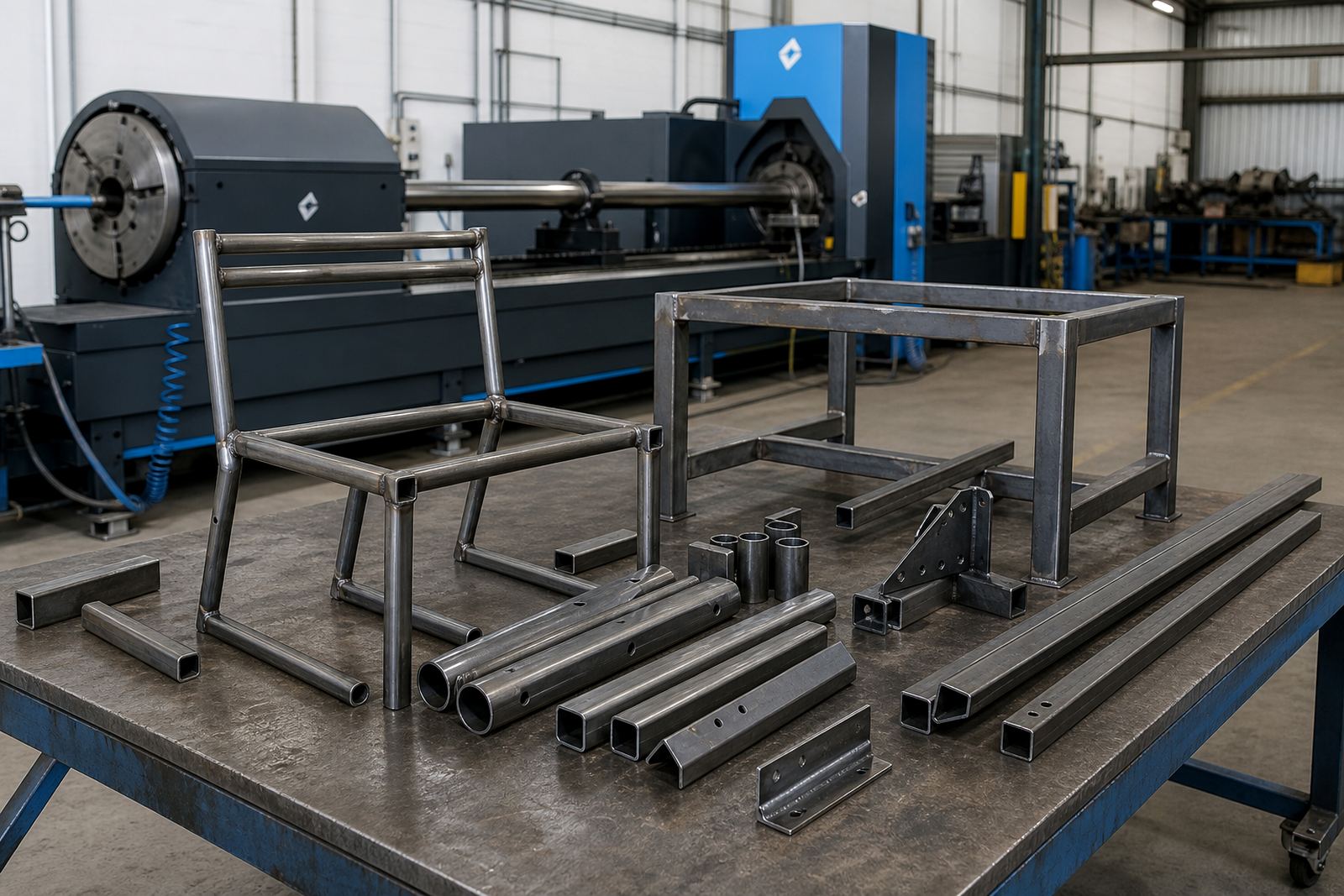
Furniture frame work asks for neat mitres, accurate slotting and tubes that land where the jig expects them. A seat base, table leg frame or shelving structure can look plain on paper, then turn fussy once angles drift or cut ends do not match. Fibre laser tube cutting helps keep round, square and rectangular tube on size, with clean ends that reduce rework at the bench.
For shops making steel furniture, the main gain is repeatability. Once the drawing is set, the machine follows the same path for every length, hole, notch and tab. That makes assembly easier, especially where frames must line up for powder coating, upholstery clearance or flat pack packing.
Typical machine set for a furniture frame shop
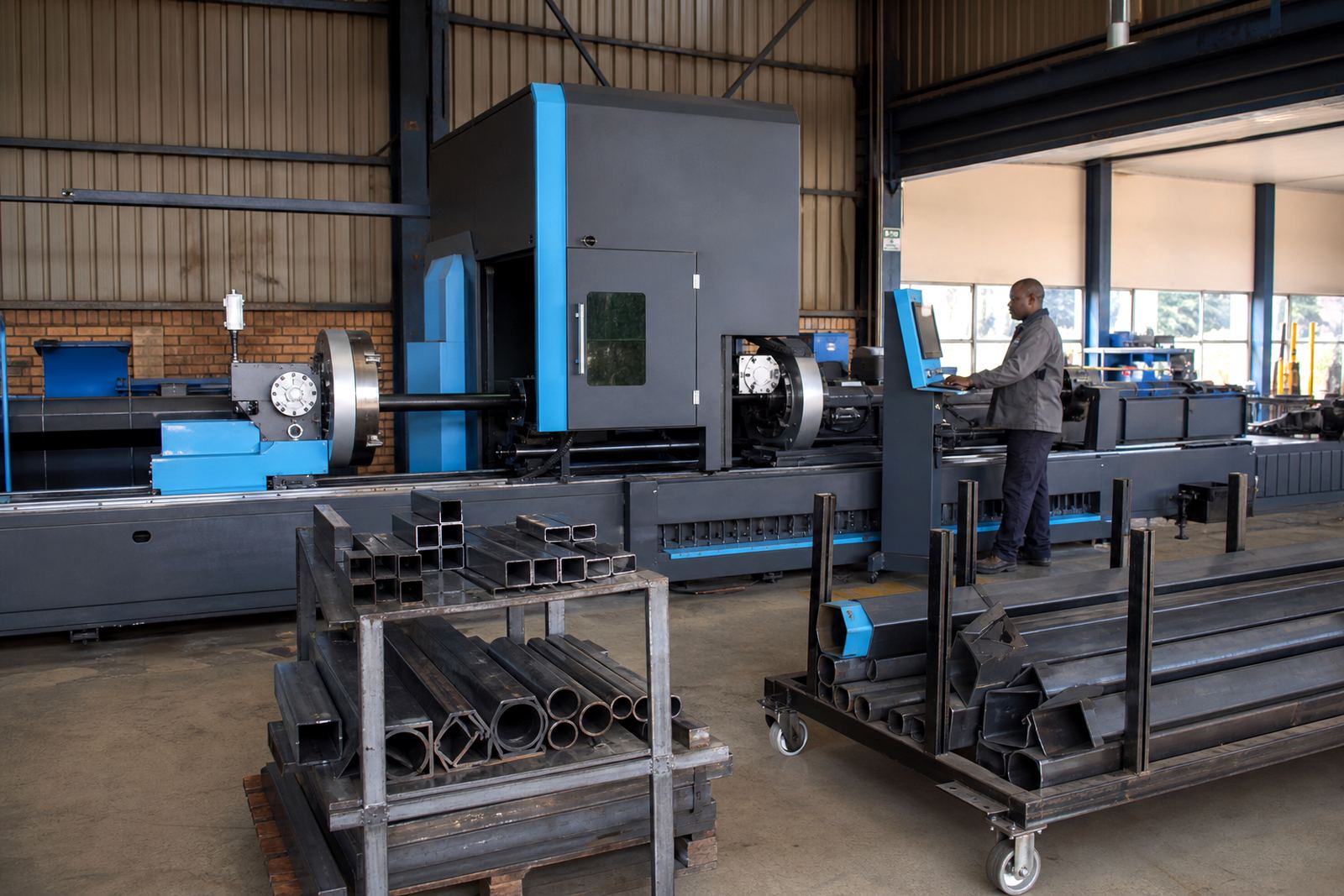
Most furniture frame operations do not need exotic equipment. A practical line usually centres on a fibre laser tube and profile cutting machine with a chuck system that grips tube firmly, nesting software for layout, and an operator station that suits day to day production. Some jobs call for a bevel head for weld prep or special joint geometry, though many frame shops run straight cuts only.
- Chucks sized for round, square and rectangular tube
- Support beds for longer lengths and better material control
- Nesting software for efficient use of stock lengths
- Assist gas setup for the selected material and finish
- Safety guarding, extraction and controlled access around the cutting zone
- Optional bevel cutting where frame details need angled prep
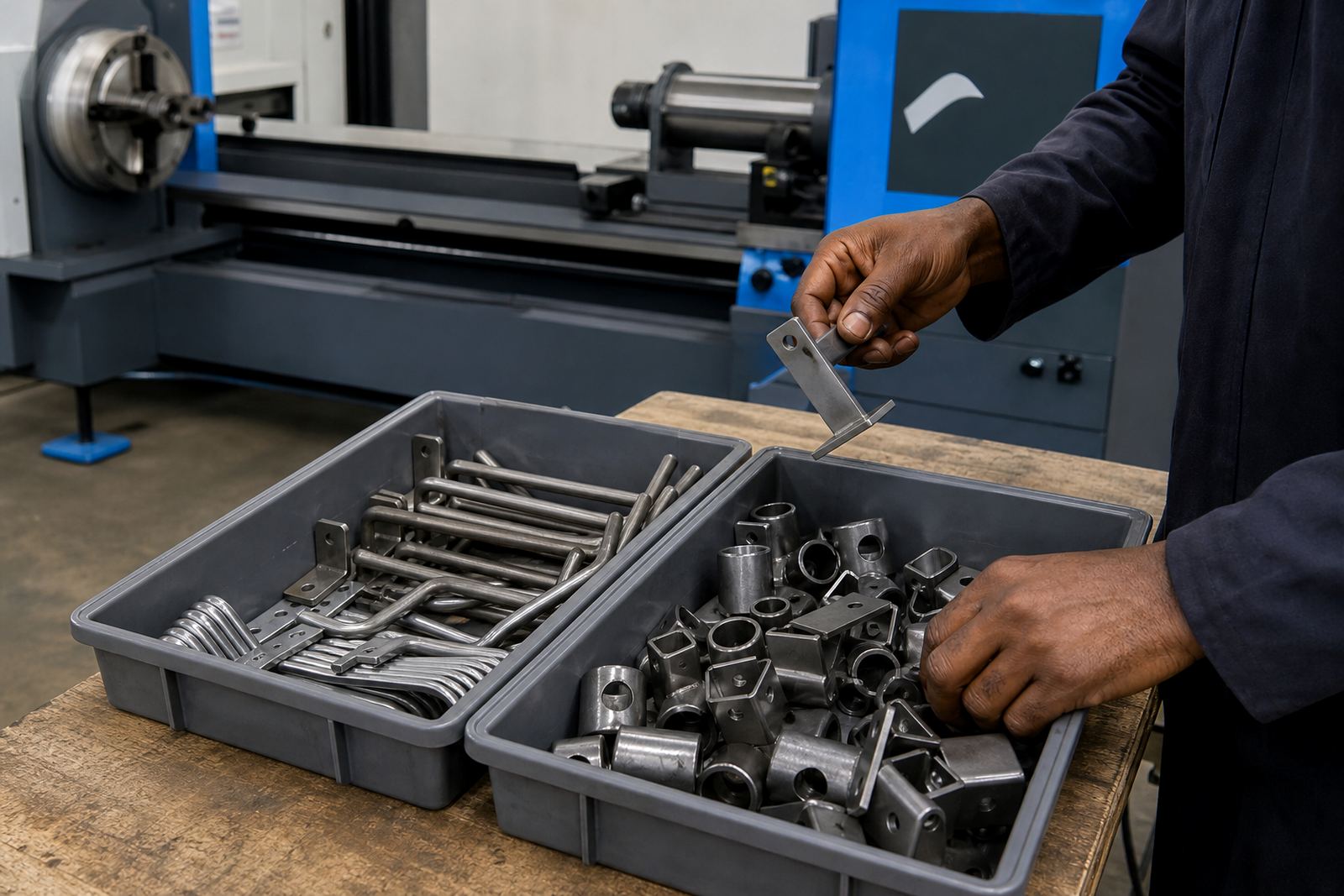
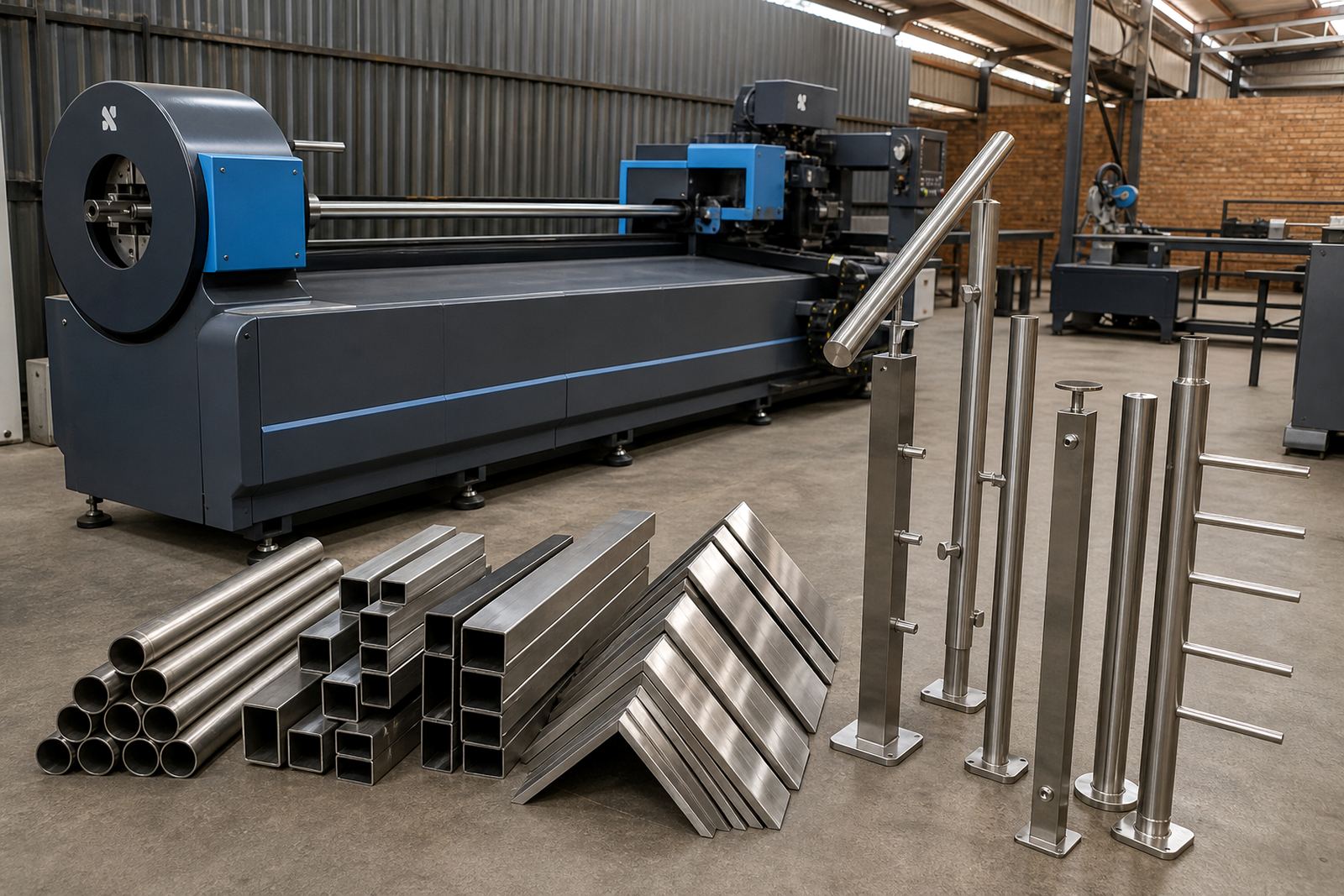
Tube and profile machines can also handle angle and channel, which helps where the same workshop makes brackets, bases and supporting members alongside furniture frames.
Planning the workshop around the machine, not around guesswork
Furniture frame work benefits from a sensible flow between raw material, cutting, deburring, welding and coating. A machine placed too close to handwork stations can slow movement of long tubes, while a cramped infeed area causes handling damage and awkward loading. In Wadeville and other industrial areas, the floor plan often has to account for long stock, overhead lifting and clear paths for finished parts.
Plan the entire material flow before installation starts. That includes material storage, cutting bed access, finished part stacking, gas cylinder placement where relevant and enough room for maintenance access on both sides of the machine. If the workshop handles mixed frame sizes, the infeed side should be able to take common stock lengths without forcing workers to twist or lift more than needed.
- Leave straight access for 6 metre or 12 metre stock lengths, depending on the machine set
- Keep finished frame parts separate from raw tube to avoid mix ups
- Plan for clamping, unloading and sorting close to the cutting area
- Allow clear space for service checks around chucks and support points
Where furniture jobs go wrong on the shop floor
Most problems on frame jobs come from small mistakes that repeat through a batch. A tube can be cut accurately and still fail in assembly if the nesting file is wrong, the material is bowed, or the operator loads the wrong profile size. Uneven tube lengths also create trouble where several frames must match for a table set or stackable chair range.
Another common issue is poor attention to chuck alignment and support. If the tube moves during cutting, the end geometry changes and the joints stop fitting cleanly. On coated or polished finishes, careless handling can leave marks that show up later and slow production. For thinner furniture sections, the cutting path and gas settings need to suit the wall thickness, otherwise edges need extra clean up.
- Mixing up square and rectangular sections in the nesting file
- Using the wrong wall thickness in the cut programme
- Ignoring bow or twist in incoming material
- Leaving burrs or slag where a clean joint was needed
- Skipping chuck checks before a long batch run
Training that suits frame fabrication rather than general theory
Furniture frame work is full of small production choices. An operator needs to know how to load tube properly, check the cut path, set repeat lengths and spot when a joint will not weld neatly. Training also covers nesting habits, so the workshop uses stock lengths properly and reduces waste on common furniture sizes.
For teams in Johannesburg, Pretoria, Durban, Cape Town and Gqeberha, the training can be aligned to the actual products being made. That may mean chair bases one week and display frames the next. The point is to keep the machine useful on real jobs, not only on test pieces.
- Operator training for loading, cutting and part sorting
- Nesting training for tube yield and batch planning
- Bevel calibration where angled prep is part of the frame design
- Assist gas setup for the thickness and finish being cut
Budget ranges for furniture frame production in Rand
Budget depends on tube size range, cutting speed, automation level and whether the shop wants bevel cutting or extra handling support. A smaller furniture frame shop may look at a more compact machine set, while a plant supplying larger runs may need stronger automation, longer material handling and more advanced software control.
As a practical guide, entry level fibre laser tube cutting setups can start in the lower multi-million Rand range, while more capable production machines with higher throughput, better automation and bevel options move much higher. Installation, rigging, commissioning, training and tooling support should be budgeted alongside the machine itself, because the workshop needs a working process not just a machine on the floor.
Preventive maintenance also belongs in the plan. Chucks, guides, alignment and gas setup need regular attention if the workshop wants stable frame dimensions and fewer interruptions during a production run.