Where trailer work stops being hand-fabrication and starts needing repeatability
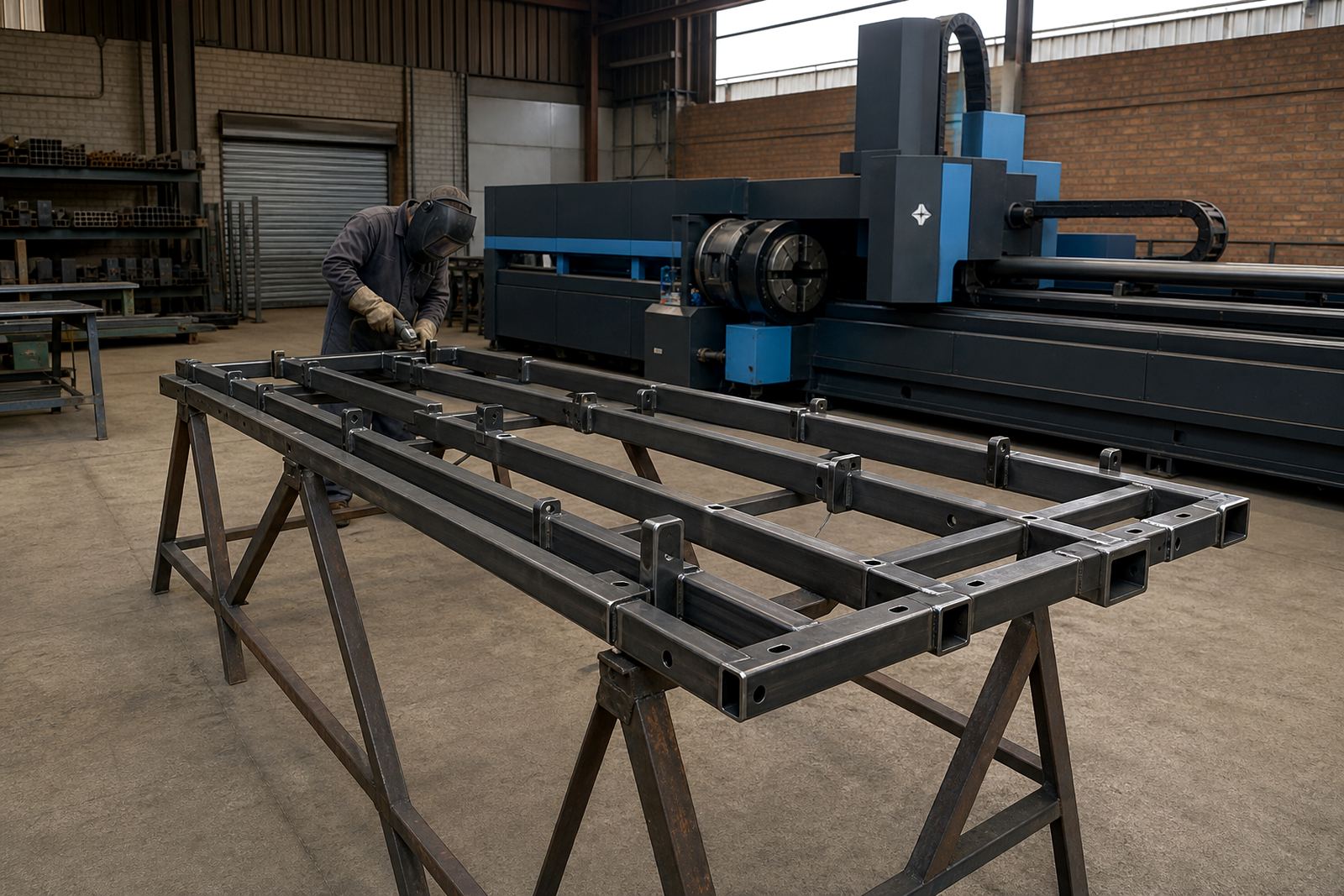
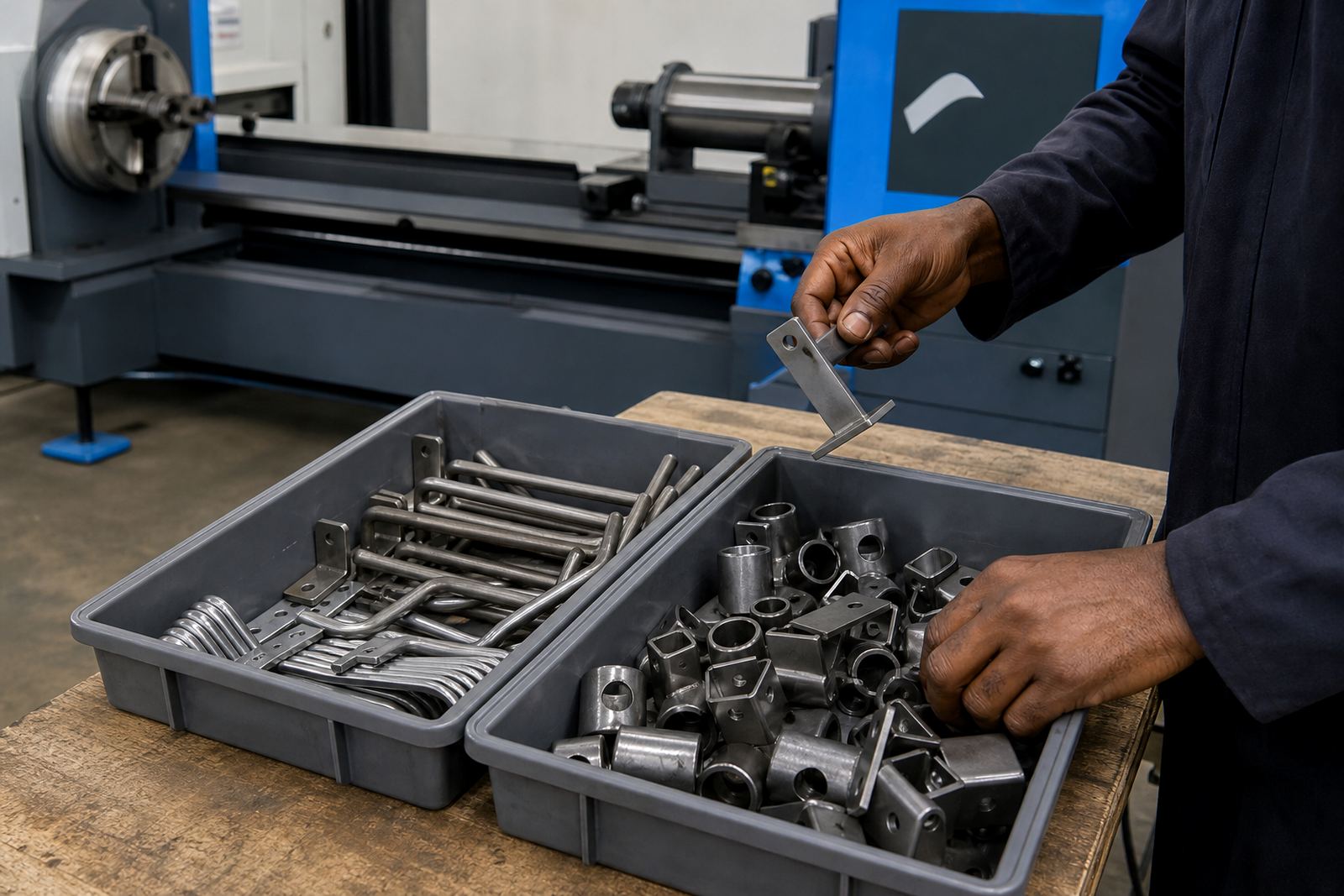
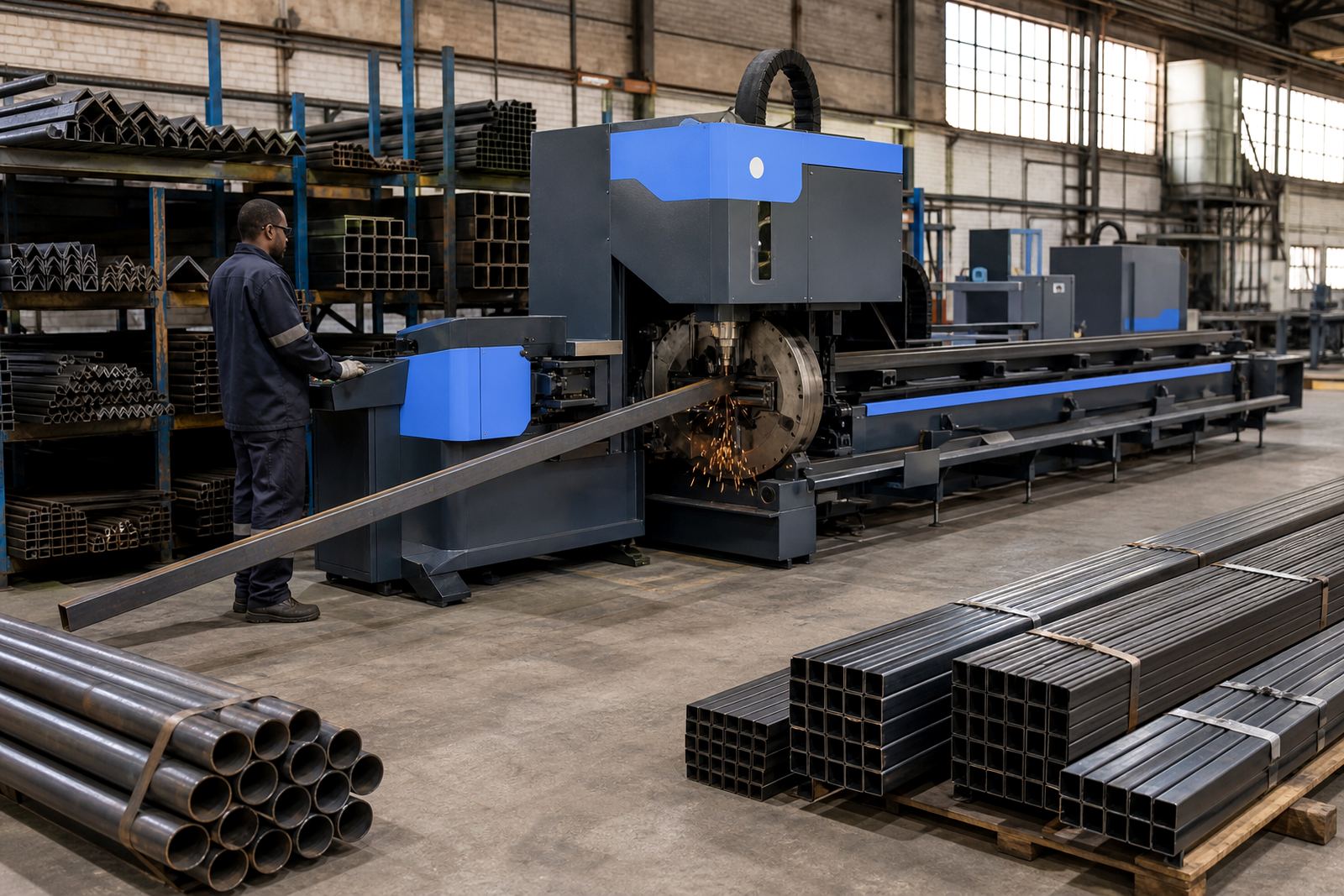
Trailer parts usually arrive as a mix of round tube, square tube, rectangular tube, angle and channel. A fibre laser tube machine handles those sections cleanly, especially where cross members, side rails, drawbar parts and support brackets must fit without much rework. For repair shops and trailer plants in Wadeville, Germiston and across Gauteng, that means less time on drilling, marking and grinding.
The real gain shows up when a job has several mirrored parts or a run of the same frame section. Holes, slots, saddle cuts and end profiles can be nested onto one length of material, which keeps part spacing controlled and helps the assembly table stay organised. On trailer jobs, a small error on one cut can move through the whole build, so the machine has to stay consistent from the first tube to the last.
For coastal work in Durban, Cape Town and Gqeberha, the choice of machine also needs to account for humidity and storage conditions. Tube stock left in the yard picks up rust quickly, and a clean cutting process does not remove the need for sensible material handling. A settled workshop layout, dry storage and clear part flow make a difference to the final fit.
Typical machine set for trailer parts production
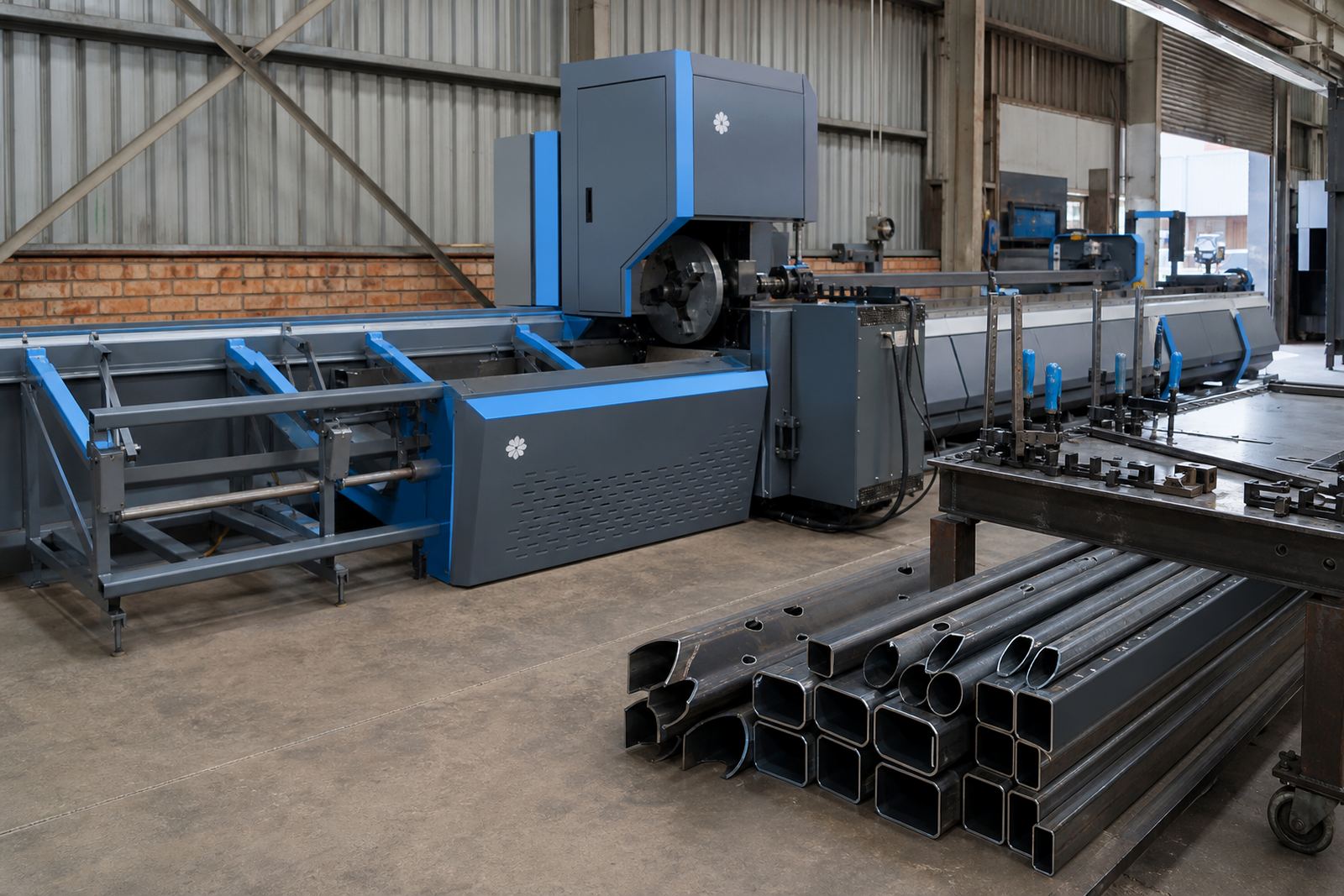
A trailer parts line does not need every possible option, but it does need the right set-up for the sections being cut. Most fabricators look at chuck capacity, bed length, cutting power, loading support and how well the machine handles short offcuts. For some trailer work, a bevel head is useful where joint prep matters on heavier assemblies.
- Tube and profile cutting machine sized for the longest stock lengths used on the trailer frame.
- Rotary chuck system for secure clamping of round, square and rectangular tube.
- Support for angle and channel where the design calls for those sections.
- Nesting software for ordering cuts and reducing waste on mixed part runs.
- Assist gas setup matched to the material thickness and finish required.
- Safety guarding, light protection and extraction arranged around the workshop floor plan.
For a smaller shop in Pretoria or Bloemfontein, one well-set machine can cover repair parts, replacement rails and small batch trailer frames. A larger plant in Johannesburg or Durban may need a longer bed, more loading support and tighter material staging so operators are not waiting on the next bundle. The machine choice should follow the actual trailer mix, not just the catalogue.
Layout planning for a trailer shop that cuts and assembles every day
Trailer production works best when the tube laser sits close to the material rack and not far from the assembly bays. Long stock is awkward to move, and every extra handover adds chance for damage or mix-ups. A practical layout leaves room for loading, offcut removal, cut part sorting and clear access for service work.
In a Wadeville or Germiston workshop, the floor often carries a mix of repair jobs and scheduled production. That calls for separate areas for raw stock, cut parts, welding and final assembly. If the machine feed path crosses forklift traffic, the layout becomes a problem very quickly. Better to mark lanes, set fixed drop zones and keep the machine operator out of the way of welding sparks and moving frames.
Site assessment matters before installation. Ceiling height, floor level, door width and rigging access all affect what can be delivered and how the machine lands in place. LaserTube also handles delivery rigging, machine installation and commissioning, so the plant is set up with the workshop flow in mind rather than squeezed into a corner.
Common trailer-part mistakes that waste material and time
Most trailer-part errors look minor, yet they still waste money. Poor nesting leaves extra scrap lengths. Loose chuck alignment gives small shifts that become visible when two frame halves meet. Wrong gas choice can leave a rough edge that needs extra finishing. If the machine is not calibrated for bevel work, the weld prep may be inconsistent from part to part.
- Mixing repair parts and production parts in the same cut queue without sorting the job list first.
- Leaving short offcuts in the loading area, which slows the next batch and creates handling risks.
- Cutting without checking the tube wall thickness and section type against the programmed path.
- Ignoring operator training on nesting, gas settings and part orientation.
- Skipping preventive maintenance until chucks, guides or optics start affecting cut quality.
Trailer shops also run into trouble when drawings are not standardised. A bracket changed three times in a month may still be called by the old name on the workshop floor. That is where a clear part library and nesting discipline help. The goal is not only a neat cut, but parts that match the frame without filing or re-drilling.
Budget ranges that make sense for trailer fabricators
Budget depends on tube size, output levels, automation and the amount of finishing the workshop wants to remove from the process. For small trailer repair shops, a more modest tube laser setup may sit in the lower millions of rand. Mid-range production machines for regular trailer frames and mixed profile work often move higher, especially where longer beds and stronger clamping are needed.
Your costing should include more than the machine alone. Site preparation, rigging, commissioning, operator training, nesting training and maintenance planning all belong in the project cost. A shop in Nelspruit, Cape Town or Gqeberha may also need travel planning for installation and support, depending on the final scope. A cheaper machine that does not suit the trailer mix can cost more over time through scrap, rework and downtime.
For many fabricators, the honest question is not the sticker price but the cost of each finished frame section. If the machine cuts the right tubes, keeps alignment steady and shortens assembly work, the business sees the value in daily output rather than in a sales pitch. That is the figure that matters on a trailer floor.
Support that keeps the trailer line moving
Trailer work is practical, and the support around the machine should be the same. LaserTube supplies site assessment, delivery rigging, machine installation, commissioning, operator training, nesting training, preventive maintenance, chuck alignment, bevel calibration, assist gas setup, remote diagnostics and breakdown response. That support matters when a workshop is balancing repair jobs, batch runs and seasonal demand.
Trailer builders get in touch on the contact form, and the work is handled from Wadeville, Germiston with coverage across Johannesburg, Pretoria, Durban, Cape Town, Gqeberha, Bloemfontein and Nelspruit. Michael Dlamini leads the business, with Anika Kajee on sales, Sibusiso Bhengu on installation, Leanne Mabuza on training, Pieter Visser on service and Ayanda Mashaba on applications.
For trailer parts, the machine has to fit the job, the floor and the people who run it. When the layout is sound and the settings are right, cross members, supports and frame sections move through the workshop with less fuss and fewer corrections.